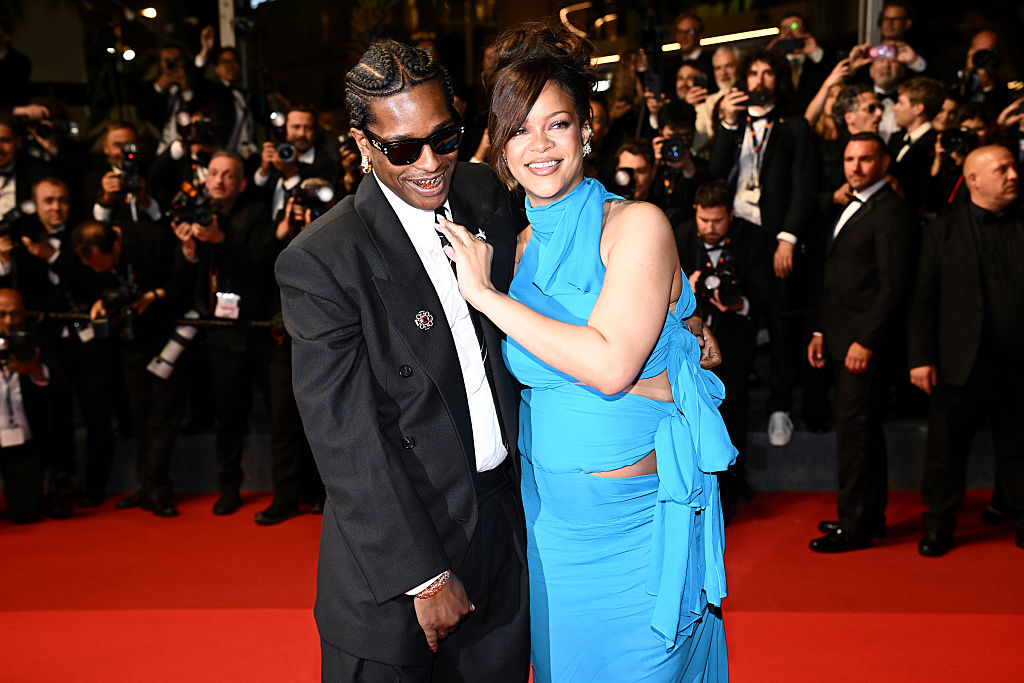
Rihanna and A$AP Rocky Share Candid Moments on Parenthood and Love in W Magazine Cover Story
A$AP Rocky shares intimate insights into how motherhood has transformed Rihanna’s life, revealing a deepened bond rooted in shared routines, mutual admiration, and quiet family moments away from the spotlight. As the global icon navigates motherhood to three children—RZA, Riot, and Rocki—her evolution reflects broader cultural shifts in how celebrity parenthood is perceived, particularly within Black communities where visibility and privacy are constantly negotiated. This personal narrative underscores the growing need for specialized support systems that help high-profile families maintain stability, privacy, and emotional well-being amid intense public scrutiny.
The couple’s journey began in 2020 during the early months of the pandemic, a period that forced many celebrities into unexpected domesticity. What started as a private connection blossomed into a family of five, with each child’s arrival marking a new chapter in Rihanna’s evolution from global superstar to devoted mother. A$AP Rocky’s recent W Magazine cover story offers rare candor, describing how Rihanna’s essence remains unchanged—“magical,” “genuine,” and “one of a kind”—even as motherhood has deepened her philosophical outlook and grounded her energy in daily rituals. Their shared love for documentaries, especially the Bob Marley film, and repeated viewings of El Cantante, reveal a relationship built not on fame but on authentic connection.
Yet beneath the warmth of these revelations lies a quieter reality: the immense pressure faced by celebrity parents raising children in the digital age. Every outing, every shared moment risks becoming viral content, blurring the line between private life and public spectacle. When Rihanna posted the W Magazine cover image of herself and daughter Rocki on Instagram, it sparked an immediate wave of admiration—but also reignited conversations about the boundaries of consent, childhood privacy, and the commodification of family images. Unlike ordinary parents, celebrities like Rihanna cannot simply opt out of public interest; their children are born into narratives shaped by paparazzi, algorithms, and fan culture.
This dynamic raises critical questions about the long-term psychological impact on children raised in the glare of fame. Studies from the American Academy of Pediatrics suggest that excessive media exposure during childhood can contribute to anxiety, identity confusion, and strained parent-child relationships—even when the attention is positive. In response, a growing number of high-profile families are turning to specialized legal and psychological professionals to establish boundaries, manage image rights, and protect their children’s developmental autonomy.
“Celebrity parents aren’t just managing fame—they’re navigating a new kind of parental responsibility where every decision about their child’s image carries legal, emotional, and ethical weight,” says Dr. Lena Torres, child psychologist at the Beverly Hills Family Wellness Center. “We’re seeing more clients seek guidance not on how to avoid the spotlight, but how to raise resilient children within it—on their own terms.”
In Los Angeles, where the couple resides and where Rihanna has deepened her business ventures through Fenty Beauty and Savage X Fenty, local ordinances offer some protections. California’s Coogan Law, originally designed to safeguard child actors’ earnings, has been expanded in recent years to include provisions around the commercial use of a minor’s likeness in parental social media content—though enforcement remains inconsistent. Entertainment lawyers note that while the law provides a framework, many celebrity parents rely on private agreements and digital hygiene practices to go beyond statutory minimums.
“The real challenge isn’t stopping the photos—it’s controlling how they’re used, who profits, and whether the child has any say as they grow older,” explains Malik Johnson, senior associate at Kaplan & Lee Entertainment Law in downtown L.A. “We help clients draft family media charters that evolve with the child’s age, ensuring consent isn’t a one-time signature but an ongoing dialogue.”
These concerns extend beyond legal frameworks into the realm of mental health and community support. In neighborhoods like Hyde Park and View Park—areas with strong Black middle-class and professional communities—there’s a rising demand for culturally competent therapists who understand the unique stresses of raising children in the public eye. Families seek practitioners who can address not just anxiety or behavioral shifts, but the erosion of normalcy that comes with constant recognition.
Meanwhile, Rihanna’s influence continues to ripple across industries. Her ability to shift cultural norms—from inclusive beauty standards at Fenty to redefining luxury fashion—has been consistently noted by peers like Mary J. Blige, who praised her for “changing the game,” and Pharrell Williams, who called her “a force.” This same transformative energy now extends into her role as a mother, where she models a new paradigm of celebrity parenthood: one that values authenticity, creativity, and intentionality over performative perfection.
The implications reach into urban economies as well. In cities like Los Angeles, New York, and London—where celebrity concentration drives ancillary industries—there’s a growing market for services that cater to high-net-worth families seeking discretion. From private pediatricians who offer home visits to secure nanny agencies with NDAs embedded in contracts, these businesses operate in a gray zone between luxury service and essential protection. Municipalities are beginning to take note, with some exploring how zoning laws and business licensing could better support family-centered enterprises that prioritize child welfare over publicity.
As the conversation around celebrity parenting evolves, so too must the infrastructure that supports it. Families like Rihanna’s aren’t just navigating fame—they’re redefining what it means to raise children with dignity in an age of omnipresent documentation. Their choices influence not only their own household but also set precedents for how society views consent, privacy, and the rights of minors in the digital era.
The real story isn’t in the viral cover photo or the sweet recollections of movie nights. It’s in the quiet, deliberate work happening behind the scenes—the therapists consulted, the legal agreements drafted, the boundaries tested and reinforced. For every celebrity parent striving to give their children a sense of normalcy, there is a growing ecosystem of professionals ready to help: from child and family therapists who specialize in high-profile dynamics, to entertainment and family law attorneys who craft media consent frameworks, to discreet, vetted nanny agencies that prioritize safety and confidentiality.
what A$AP Rocky revealed wasn’t just a glimpse into a celebrity romance—it was a window into a deeper truth: that even the most iconic figures seek the same thing all parents want—to raise their children with love, intention, and the space to become who they’re meant to be. And in a world where every moment is potential content, protecting that space isn’t just personal—it’s profoundly political.