Retrospective Analysis Suggests Electronic Cigarettes Post-Quit Smoking Increase Lung Cancer Risk
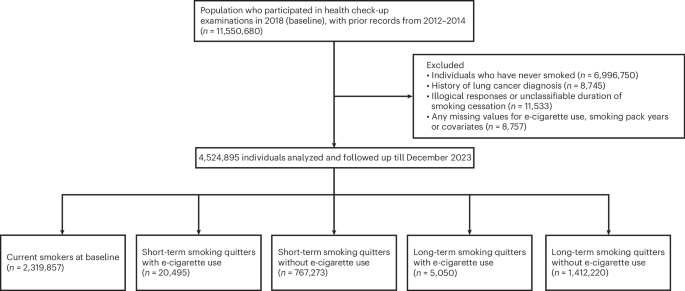
A nationwide retrospective analysis involving 4.5 million Korean adults indicates that electronic cigarette use following smoking cessation is linked to a higher incidence of lung cancer and increased mortality compared to individuals who achieve complete cessation. Published online June 8, 2026, in Nature Medicine, this study challenges the assumption that transitioning to e-cigarettes serves as a risk-neutral strategy for long-term respiratory health.
Key Clinical Takeaways:
- Electronic cigarette use after quitting combustible cigarettes is associated with elevated lung cancer risk compared to total cessation.
- The study analyzed a massive cohort of 4.5 million individuals, providing robust statistical power for the observed outcomes.
- Complete smoking cessation remains the only proven strategy for mitigating cancer risk, necessitating professional guidance for those struggling with nicotine dependence.
Epidemiological Evidence and Clinical Outcomes
The investigation into post-cessation e-cigarette use highlights a critical shift in the clinical understanding of tobacco harm reduction. By tracking 4.5 million Korean adults, researchers identified that those who replaced traditional cigarettes with electronic nicotine delivery systems (ENDS) did not realize the same protective benefits as those who ceased all nicotine consumption. This finding carries significant weight for clinicians advising patients on smoking cessation protocols. The pathogenesis of lung cancer in this cohort suggests that the sustained exposure to aerosolized chemical constituents in e-cigarettes may interfere with the reparative processes of the bronchial epithelium, even in the absence of traditional tobacco combustion.
“The data suggests that the physiological impact of e-cigarette aerosol is not benign. When evaluating long-term morbidity, we must distinguish between immediate harm reduction and the potential for secondary oncogenic pathways,” notes a leading pulmonary epidemiologist regarding the implications of the study.
Biological Mechanisms and Risk Factors
The transition from combustible cigarettes to e-cigarettes involves exposure to a complex mixture of particulate matter, volatile organic compounds, and heavy metals. Research published in Circulation (2014) by Grana, Benowitz, and Glantz underscored that while e-cigarettes may alleviate withdrawal symptoms, they introduce a distinct profile of cardiovascular and respiratory risks. The current Nature Medicine study further clarifies that these risks extend to the long-term incidence of lung malignancy. For patients currently relying on ENDS to manage nicotine cravings, this news mandates a re-evaluation of their dependence. It is essential to consult with board-certified pulmonologists to monitor respiratory function and develop a structured, medically supervised plan to transition away from all nicotine products.
Comparative Analysis of Cessation Strategies
To better understand these findings, it is helpful to categorize the health outcomes based on smoking status. The following table illustrates the clinical trajectory observed in large-scale respiratory health studies:

| Status | Relative Lung Cancer Risk | Clinical Recommendation |
|---|---|---|
| Current Combustible Smoker | Highest (Baseline) | Immediate cessation |
| E-Cigarette User (Post-Cessation) | Elevated (vs. Non-smoker) | Clinical monitoring/Tapering |
| Complete Abstinence | Lowest (Reference) | Standard of care |
Bridging the Gap: Clinical Triage and Professional Support
The complexity of nicotine addiction often requires more than willpower; it requires a multidisciplinary medical approach. For individuals struggling to achieve complete cessation, reliance on self-guided methods often leads to dual-use patterns that may inadvertently heighten health risks. Our directory provides access to specialized addiction medicine specialists who utilize evidence-based pharmacotherapy to assist in total nicotine withdrawal. Furthermore, for those who have a history of heavy smoking and are concerned about their current lung health, scheduling an evaluation with a diagnostic imaging center for low-dose CT lung screening is a prudent clinical step.
The Nature Medicine study, while alarming, provides the clarity needed to refine public health guidance. As we move away from the assumption that e-cigarettes are a terminal solution, the focus must shift toward comprehensive, verified cessation programs. Healthcare organizations and providers are encouraged to review these findings to better support patients in navigating the transition to a smoke-free life. Retaining healthcare compliance attorneys to ensure that clinical cessation programs align with the most recent peer-reviewed longitudinal data is vital for both provider liability and patient safety.
Future research will likely focus on the specific chemical constituents within e-cigarette aerosols that correlate most strongly with the observed rise in mortality. Until such granular data is available, the clinical consensus remains clear: complete cessation is the only path that eliminates the oncogenic risks associated with both traditional and electronic tobacco delivery systems.
Disclaimer: The information provided in this article is for educational and scientific communication purposes only and does not constitute medical advice. Always consult with a qualified healthcare provider regarding any medical condition, diagnosis, or treatment plan.