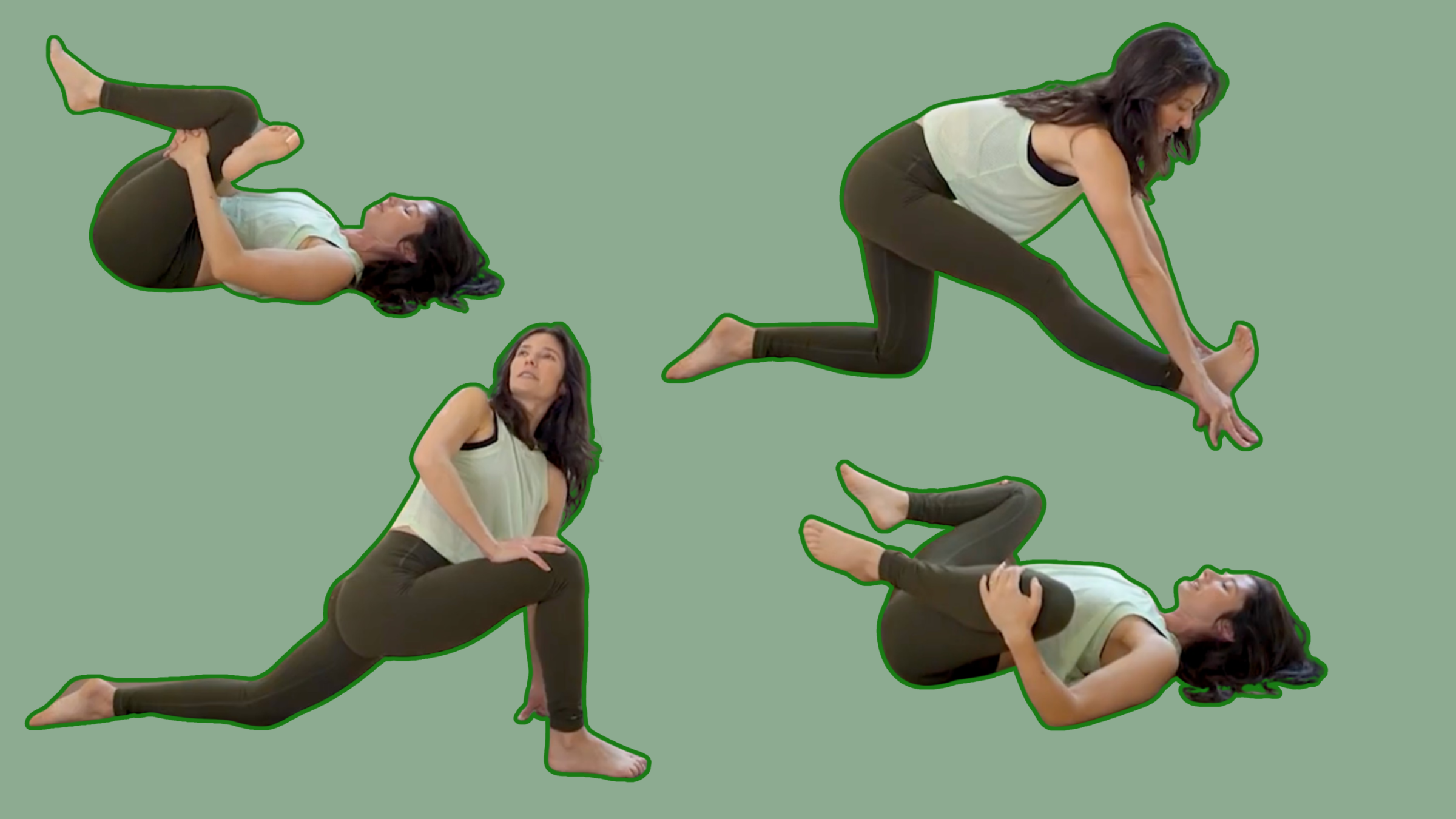
Release Tension With This Hip-Opening Yoga Flow
Chronic lower-body tension, specifically within the hip girdle, is rarely just a matter of “tight muscles.” It is a complex interplay of myofascial restriction, neural tension and systemic inflammatory responses that can significantly degrade a patient’s mobility and quality of life if left unaddressed.
Key Clinical Takeaways:
- Hip tightness often stems from the psoas and iliacus muscles, which can lead to compensatory lumbar strain and chronic lower back pain.
- Targeted mobility flows utilize the principle of reciprocal inhibition to release hypertonic muscles and restore joint centration.
- Persistent joint stiffness may indicate underlying pathology, necessitating a transition from self-care to professional clinical intervention.
The sensation of “tightness” in the hips is frequently a clinical manifestation of adaptive shortening in the connective tissues. When the body remains in a sedentary position for prolonged periods, the hip flexors enter a state of chronic contraction, which shifts the pelvis into an anterior tilt. This biomechanical misalignment increases the load on the lumbar vertebrae, creating a cycle of morbidity where the patient experiences radiating discomfort and reduced range of motion (ROM). While wellness-oriented “flows” provide immediate symptomatic relief, the underlying pathogenesis often involves deep-seated fascial adhesions that require a structured, evidence-based approach to resolve.
The Biomechanics of Myofascial Release and Joint Centration
To understand why a hip-opening routine works, one must gaze at the physiological mechanism of the Golgi tendon organ (GTO). When a muscle is placed under a sustained, controlled stretch—as seen in therapeutic yoga and clinical stretching protocols—the GTO inhibits the contraction of the muscle, allowing the fibers to lengthen. This process, known as autogenic inhibition, reduces the hypertonicity of the hip adductors and the piriformis muscle.
According to a comprehensive meta-analysis published in PubMed, consistent stretching and mobility work can significantly decrease the risk of lower-extremity injuries by improving the elasticity of the collagen matrix within the fascia. However, the efficacy of these movements depends on the patient’s baseline joint integrity. For those with pre-existing labral tears or advanced osteoarthritis, aggressive stretching without clinical supervision can exacerbate joint instability.
“The hip joint is a complex ball-and-socket system where stability and mobility must coexist. When we address ‘tightness,’ we are not just stretching a muscle; we are recalibrating the proprioceptive feedback loop between the peripheral nervous system and the musculoskeletal frame.” — Dr. Elena Rossi, PhD in Kinesiology and Lead Researcher in Musculoskeletal Dynamics.
For individuals whose stiffness is accompanied by acute inflammation or localized swelling, self-directed stretching may be contraindicated. In such cases, it is imperative to seek a diagnosis from board-certified orthopedic surgeons to rule out structural abnormalities before initiating a rigorous flexibility regimen.
Analyzing the Efficacy of Mobility Interventions
In assessing the impact of hip-opening protocols, the clinical community differentiates between passive flexibility and active mobility. While a “flow” may increase passive ROM, the goal of medical-grade rehabilitation is to ensure the patient maintains strength throughout that new range. This prevents the joint from becoming hypermobile, which would otherwise increase the risk of dislocation or ligamentous strain.
The following data represents a generalized comparison of outcomes based on standard physical therapy benchmarks and mindfulness-based movement interventions, often funded by university research grants and public health initiatives such as those supported by the National Institutes of Health (NIH).
| Intervention Type | Primary Mechanism | Clinical Outcome (Avg. ROM Increase) | Risk Profile |
|---|---|---|---|
| Passive Stretching | Mechanical Tension | 10-15% | Low (Risk of overstretch) |
| Dynamic Mobility Flows | Reciprocal Inhibition | 20-30% | Moderate (Requires balance) |
| Manual Therapy (PT) | Myofascial Release | 35-50% | Low (Clinically supervised) |
| Surgical Intervention | Structural Decompression | Variable | High (Post-op recovery) |
The data indicates that while yoga-based flows are highly effective for general wellness and maintenance, they serve as a complement to, rather than a replacement for, clinical physical therapy. The transition from “feeling tight” to “functional movement” often requires the precision of a licensed therapist who can apply manual mobilization techniques to the hip capsule.
From Somatic Release to Clinical Recovery
There is a significant intersection between psychological stress and physical tension, particularly in the pelvic region. The psoas muscle is often referred to as the “muscle of the soul” due to its proximity to the sympathetic nervous system’s fight-or-flight response. Chronic stress leads to a sustained state of muscular guarding, which manifests as the “tightness” described in the source material. By engaging in a mindful flow, patients can lower their cortisol levels and signal the nervous system to downregulate, facilitating a deeper physical release.
However, when tension is accompanied by neurological symptoms—such as numbness, tingling, or weakness in the legs—the issue may not be muscular but rather a result of nerve compression, such as sciatica or spinal stenosis. This clinical gap requires immediate diagnostic imaging. Patients experiencing these red flags should immediately consult specialized neurologists to conduct electromyography (EMG) or MRI scans to ensure that stretching does not exacerbate a potential disc herniation.
The integration of movement and medical oversight is the gold standard of care. For those navigating chronic pain, the goal is to move from a state of reactive treatment to proactive wellness. This involves a multidisciplinary approach: using mobility flows for daily maintenance, while utilizing licensed physical therapists to correct underlying postural distortions and gait abnormalities.
As we look toward the future of musculoskeletal health, the shift is moving toward “personalized mobility,” where wearable sensors and AI-driven biomechanical analysis allow providers to prescribe specific stretches based on a patient’s unique skeletal alignment. Until such technology is ubiquitous, the combination of mindful movement and expert clinical guidance remains the most effective strategy for eradicating lower-body tension and restoring systemic vitality.
Disclaimer: The information provided in this article is for educational and scientific communication purposes only and does not constitute medical advice. Always consult with a qualified healthcare provider regarding any medical condition, diagnosis, or treatment plan.