
Reboot Your PC Microsoft’s June Update for Most Windows Devices
The industry-wide shift from monolithic, annual OS overhauls to a model of continuous, granular delivery is no longer a theoretical roadmap—We see the current production reality. As Microsoft pushes the rollout of Windows 11 version 25H2 and the subsequent 26H1 builds, the “June reboot” facing most Windows environments isn’t a hardware replacement cycle, but a fundamental shift in how enterprise endpoints manage versioning and cumulative updates. For the CTO, this means the era of “set it and forget it” patching is dead, replaced by a high-frequency deployment lifecycle that demands tighter orchestration.
The Tech TL;DR:
- Deployment Velocity: Windows 11 25H2 is currently rolling out via a gradual deployment model; users can bypass the wait by enabling “Get the latest updates as soon as they’re available.”
- Feature Parity: Contrary to typical versioning hype, version 25H2 offers no new user-facing features, acting instead as a vehicle for cumulative updates and security hardening.
- Architectural Split: The Windows 11 Installation Assistant remains restricted to x64 processors, creating a deployment bifurcation for fleets utilizing Arm-based hardware.
The Myth of the Feature Release: Analyzing the 25H2/26H1 Lifecycle
If you are waiting for version 25H2 to deliver a suite of new productivity tools, you are chasing vaporware. According to official documentation from Windows Central, version 25H2 does not introduce any new features. Instead, Microsoft is leveraging the version number to facilitate the delivery of cumulative updates that are shared across both the 24H2 and 25H2 branches. This is a strategic move toward a more stable, security-centric deployment model, where the “update” is more about the underlying stack than the UI.
The latest telemetry and release data indicate that Windows 11 26H1 (build 10.0.28000.2113) was released as of May 12, 2026. This rapid succession of builds—25H2 followed almost immediately by 26H1—suggests a highly compressed development cycle designed to maintain continuous integration and delivery (CI/CD) at the OS level. For IT departments, this necessitates a move away from manual patch management toward automated, ring-based deployment strategies.
Architectural Bottlenecks and the Arm Divide
One of the most significant friction points in this rollout is the divergence in installation pathways between x64 and Arm-based architectures. While the broader Windows ecosystem supports a variety of platforms, the Windows 11 Installation Assistant—the preferred tool for those seeking an immediate upgrade—is strictly limited to x64 processors. This creates a technical hurdle for organizations that have invested heavily in Arm-based laptops for their energy efficiency and mobile performance.
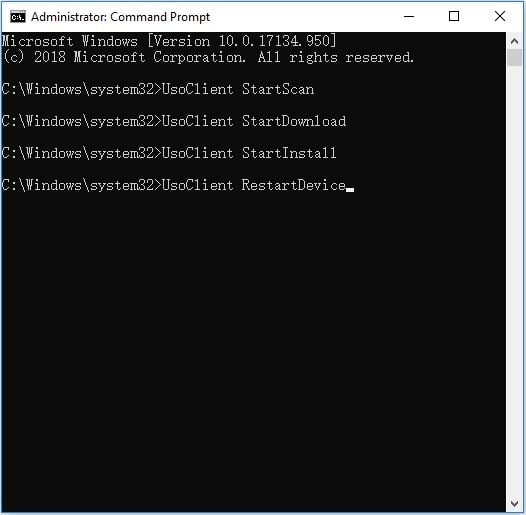
In mixed-architecture environments, admins cannot rely on a single deployment script for the Installation Assistant. Instead, they must account for the specific hardware requirements of the update method. For enterprise-scale fleets, an uncoordinated rollout across these architectures can lead to significant deployment failures and increased helpdesk tickets. This is a prime scenario where organizations should engage managed IT services to ensure that deployment rings are segmented by CPU architecture before a wide-scale push.
| Version | Release Status | Primary Deployment Focus | Architecture Compatibility (via Installation Assistant) |
|---|---|---|---|
| 24H2 | General Availability | Baseline stability and feature set | x64, ARM, ARM64 |
| 25H2 | Gradual Rollout / Opt-in | Cumulative updates and security hardening | x64 Only |
| 26H1 | Latest Release (May 2026) | Current production build | x64, ARM, ARM64 |
Implementation: The Deployment Reality
For developers and sysadmins, verifying the build version and managing the update state via the command line is far more efficient than navigating the Settings GUI. If you are auditing an endpoint to see if it has successfully transitioned to the 25H2 or 26H1 branch, you should bypass the consumer-facing menus and query the OS directly.
The following PowerShell snippet allows for a rapid audit of the current OS build and version, which is critical when verifying compliance across a distributed network:

# Audit Windows Build Version via WMI # Use this to verify if an endpoint has successfully applied the 25H2/26H1 updates. Get-CimInstance Win32_OperatingSystem | Select-Object Caption, Version, BuildNumber, OSArchitecture | Format-Table -AutoSize While the “Get the latest updates as soon as they’re available” toggle provides a fast track for individual users, it introduces a variable of uncertainty into the enterprise environment. Testing these updates in a controlled sandbox is non-negotiable. As the rollout expands to PCs not managed by IT departments, the “blast radius” of a potentially regressive cumulative update increases. To mitigate this, corporations are increasingly utilizing cybersecurity auditors to ensure that the rapid deployment of these builds does not inadvertently open new attack vectors or violate SOC 2 compliance protocols.
The Insider Shift: Moving Targets in the Beta Channel
The Windows Insider Program is also undergoing a structural shift. Recent announcements from the Windows Blog indicate an expansion of rollout changes specifically targeting the Beta Channel, moving users into a “new Beta experience.” This suggests that Microsoft is refining how it gathers telemetry from non-production environments to inform the exceptionally cumulative updates that 25H2 and 26H1 are delivering. For those in the development community, this means the gap between “experimental” and “stable” is narrowing, requiring more frequent testing cycles to maintain software compatibility.

“The move toward continuous, feature-light versioning is a double-edged sword. It solves the latency issue of long-term patch cycles, but it places an immense burden on IT orchestration to ensure that cumulative updates don’t disrupt legacy enterprise applications.”
The trajectory of Windows development is clear: the OS is becoming a living service rather than a static product. As we move through June and into the second half of 2026, the focus will shift from “what is new in this version” to “how quickly can we secure this version.” Organizations that fail to adapt their deployment logic to this high-velocity model will find themselves perpetually behind the security curve.
To stay ahead of these architectural shifts, ensure your technical stack is audited by specialized software development agencies capable of handling continuous integration testing for Windows-based environments.
Disclaimer: The technical analyses and security protocols detailed in this article are for informational purposes only. Always consult with certified IT and cybersecurity professionals before altering enterprise networks or handling sensitive data.