Rapid Spread of H5N1 D1.1 Avian Influenza in Wild Birds During 2024 Migration
The silent migration of avian populations often carries an invisible biological cargo, but the recent emergence of a new influenza genotype suggests a shift in the evolutionary trajectory of H5N1 in North America. As wild birds traversed the continent during the 2024 fall migration, they facilitated the rapid displacement of existing viral strains by a more aggressive reassortant.
Key Clinical Takeaways:
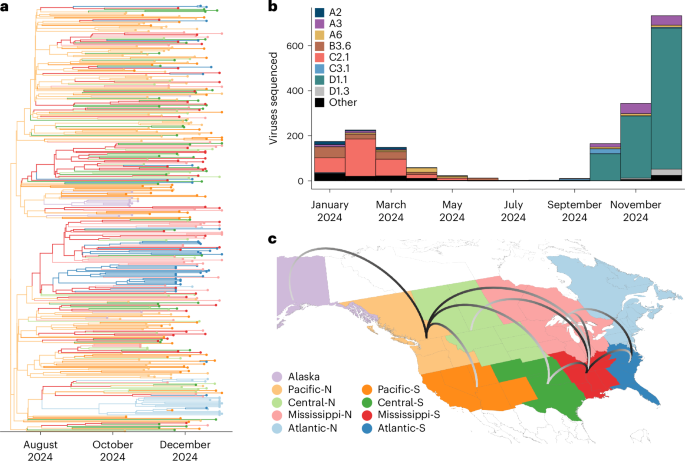
- Genotype D1.1, a novel A(H5N1) reassortant, has become the dominant strain in wild birds across North America, originating in Alaska and British Columbia.
- While the expansion coincided with 17 human infections (including 4 severe or fatal cases), genomic analysis confirms that wild bird viruses currently lack the mammalian-adaptive markers necessary for efficient human-to-human transmission.
- Existing candidate vaccine stockpiles maintain antigenic cross-reactivity with the D1.1 strain, suggesting current pharmaceutical countermeasures remain viable.
The current public health challenge centers on the high pathogenicity avian influenza (HPAI) A(H5N1) clade 2.3.4.4b, which first entered North American ecosystems in late 2021. Since its introduction, the virus has undergone extensive reassortment with endemic low-pathogenicity avian influenza (LPAI) viruses. This genetic shuffling—the exchange of gene segments between different viral lineages—has created a diverse array of genotypes with varying phenotypes, increasing the complexity of genomic surveillance.
A comprehensive study led by scientists from St. Jude Children’s Research Hospital, published on April 15, 2026, in Nature Medicine, has mapped this evolution. The research identifies genotype D1.1 as a critical new development. Detected in September 2024, this strain did not merely coexist with previous A(H5) genotypes; it actively displaced them across several migratory flyways, establishing itself as the dominant variant in wild bird populations.
The Pathogenesis and Geographic Penetration of D1.1
The spread of D1.1 followed a precise geographic arc. Genomic sequencing of samples collected across Canada and the United States reveals that the strain first emerged in the Pacific Northwest, specifically Alaska and British Columbia. From these northern hubs, the virus utilized known migratory pathways to penetrate south and east, effectively saturating the continent’s avian populations during the 2024 migratory season.
Phylodynamic analysis indicates that D1.1 viruses form a monophyletic group, meaning they share a single common ancestor and have evolved as a distinct lineage. This genetic cohesion explains the efficiency with which D1.1 outcompeted earlier strains. For clinicians and public health officials, this rapid displacement signals a highly fit virus within its primary avian host, though the risk to humans remains a separate clinical calculation.
“Combining information collected from multiple partners, we’ve documented the entire continental spread of a newly dominant strain of highly pathogenic avian influenza virus through wild bird populations,” stated corresponding author Richard Webby, PhD, of the St. Jude Department of Host-Microbe Interactions.
The emergence of this strain occurred alongside detections in other mammalian hosts, including dairy cattle and 17 human cases. The severity of these human infections—with four resulting in death—highlights the inherent morbidity associated with HPAI. However, the genomic data provides a critical point of divergence: the viruses isolated from wild birds lacked the key mammalian-adaptive substitutions found in the human cases. This suggests that while spillover events are occurring, the virus is not yet evolving toward efficient human-to-human transmission within the wild bird reservoir.
Clinical Implications for Vaccine Efficacy and Triage
One of the most pressing concerns during the expansion of a new genotype is “antigenic drift,” where mutations in the virus’s surface proteins allow it to evade the immune response triggered by existing vaccines. The St. Jude research provides a measure of reassurance, noting that candidate vaccine viruses retained antigenic cross-reactivity with D1.1 strains. This indicates that the current stockpiles managed by health agencies are likely to remain effective against this specific genotype.
Despite this, the presence of H5N1 in livestock and humans necessitates a rigorous triage and diagnostic approach. The complexity of differentiating between seasonal influenza and zoonotic H5N1 requires high-precision testing. Healthcare facilities must ensure they are utilizing certified genomic diagnostic laboratories capable of performing the deep sequencing required to identify genotype D1.1 and its associated markers.
For patients presenting with severe respiratory distress or systemic inflammation following exposure to avian or bovine sources, immediate intervention is required. The clinical progression of H5N1 can be rapid, often leading to severe pneumonia and cytokine storms. In such cases, We see imperative to coordinate care with board-certified infectious disease specialists who are experienced in managing high-pathogenicity zoonotic infections and administering antiviral protocols according to the latest World Health Organization (WHO) and PubMed-indexed clinical guidelines.
Regulatory Oversight and Future Surveillance
The rapid spread of D1.1 underscores a significant gap in real-time biological monitoring. The ability to track a virus from Alaska to the eastern seaboard requires an integrated network of active and passive genomic surveillance. For the agricultural and pharmaceutical sectors, this volatility in viral genotypes creates a precarious regulatory environment. Companies managing livestock or developing avian vaccines must navigate shifting safety protocols and reporting mandates.

To mitigate the risk of operational bottlenecks or regulatory non-compliance during an outbreak, many organizations are now engaging public health regulatory consultants to audit their biosafety levels and reporting chains. Ensuring that genomic data is shared rapidly between private labs and public health agencies is the only way to prevent a localized spillover from becoming a wider epidemic.
The trajectory of H5N1 continues to be a study in evolutionary adaptation. While the current form of genotype D1.1 is classified as low risk for human-to-human spread, the sheer volume of the virus in the environment increases the statistical probability of a future mutation. The focus must remain on the intersection of avian ecology and human clinical readiness. By maintaining a rigorous surveillance apparatus and ensuring that our diagnostic and therapeutic pipelines are agile, we can manage the risks posed by these shifting viral landscapes.
The ongoing monitoring of these flyways serves as an early warning system. The goal is to identify the transition from avian dominance to mammalian adaptation before the virus achieves the capacity for sustained human transmission. Until then, the integration of veterinary and human medical intelligence remains our primary line of defense.
Disclaimer: The information provided in this article is for educational and scientific communication purposes only and does not constitute medical advice. Always consult with a qualified healthcare provider regarding any medical condition, diagnosis, or treatment plan.