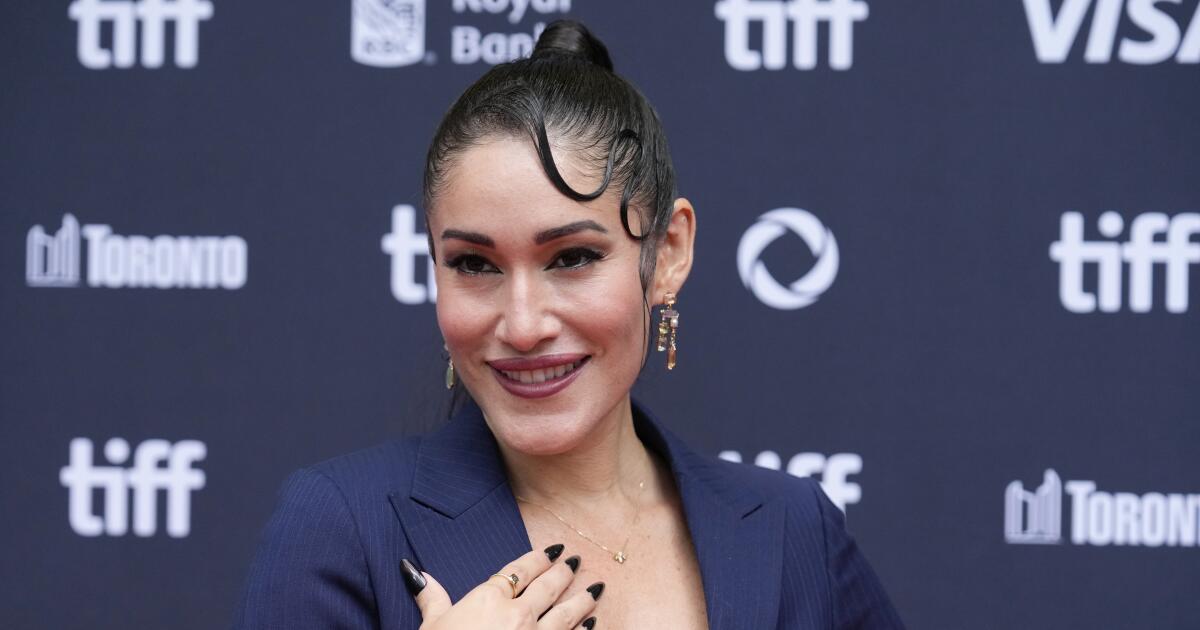
Q’orianka Kilcher Sues James Cameron and Disney Over Avatar Likeness
Actress Q’orianka Kilcher has filed a lawsuit in the U.S. District Court for the Central District of California against James Cameron and The Walt Disney Company. Kilcher alleges the unauthorized use of her facial features to design the character Neytiri in Avatar, claiming her likeness was extracted from a photograph without consent.
In the high-stakes ecosystem of global franchises, the line between “creative inspiration” and intellectual property theft is often drawn in a courtroom. For James Cameron, the architect of the highest-grossing film series in history, that line has just become a legal battleground. The lawsuit filed by Q’orianka Kilcher isn’t merely a dispute over a few pixels; it is a direct challenge to the way Hollywood harvests human aesthetics to build digital empires. When a production’s brand equity is measured in billions of dollars, the “borrowing” of a teenage girl’s face for a cornerstone character becomes a liability of massive proportions.
The core of the complaint is as specific as it is damaging. Kilcher alleges that when she was 14 years old—fresh off her role as Pocahontas in Terrence Malick’s The New World—Cameron identified her facial features in a published photograph. According to the filing, Cameron then directed his design team to use those features as the foundational blueprint for Neytiri. This wasn’t a vague artistic influence; the complaint details a rigorous technical pipeline where Kilcher’s likeness was replicated in production sketches, sculpted into three-dimensional maquettes and laser-scanned into high-resolution digital models. These assets were then distributed across multiple visual effects vendors to synthesize the final image of the Na’vi princess.
This level of granular extraction transforms a creative choice into a potential copyright and publicity rights violation. In an era where digital doubles and AI-generated likenesses are the new industry standard, the “Right of Publicity” has become the most contested terrain in entertainment law. When a studio bypasses a formal contract to “source” a face from a photograph, they aren’t just saving on a casting fee; they are risking a catastrophic breach of IP law. Studios facing these allegations typically scramble to engage specialized IP litigation attorneys to determine if the “transformative use” defense can hold up against a claim of direct theft.
“The shift toward hyper-realistic digital characters has created a legal vacuum. We are seeing a transition from ‘performance capture’ to ‘aesthetic capture,’ where the physical essence of an artist is treated as raw material rather than a licensed asset.”
The irony here is palpable. Cameron has previously spoken about the design process of Avatar, and the plaintiff’s legal team is now leveraging that narrative. The lawsuit names not only Cameron and Disney but also Lightstorm Entertainment and various visual effects houses. By detailing the movement of the likeness from a 2D photo to a 3D maquette, the complaint maps out a systemic process of unauthorized appropriation. For a franchise that prides itself on the themes of indigenous sovereignty and the protection of nature, the allegation that it began by harvesting the features of an Indigenous actress without her knowledge is a PR nightmare of the first order.
From a business perspective, the timing is precarious. As Disney continues to lean into the Avatar universe to bolster its SVOD metrics and theatrical backend gross, any cloud over the legitimacy of its primary IP can spook investors and complicate future licensing. This isn’t just about a settlement check; it’s about the precedent. If the court finds that a facial structure can be “stolen” via a photograph to create a digital character, every VFX-heavy production in the pipeline—from the MCU to the latest Star Wars iteration—could be vulnerable to similar claims. To mitigate this, studios often deploy elite crisis communication firms and reputation managers to frame the narrative as an artistic misunderstanding rather than a corporate heist.
The technical specifics of the case—the mention of laser-scans and digital models—highlight the “uncanny valley” of legal liability. In the early 2000s, a character “inspired” by a person was a common industry practice. However, as Variety and The Hollywood Reporter have noted in similar likeness disputes, the precision of modern CGI makes “inspiration” look a lot like “replication.” When the digital asset is an exact mathematical derivative of a human face, the legal defense of “artistic license” begins to crumble.
For actors, particularly those starting their careers in the periphery of the industry, the power imbalance is staggering. A 14-year-old actress has little leverage against a director with Cameron’s clout. This represents why the role of top-tier talent agencies is shifting; they are no longer just booking roles, they are acting as guardians of their clients’ biometric data. The “theft” of a face is the ultimate violation of an actor’s primary tool of trade.
As this case winds through the California court system, the industry will be watching closely. The outcome will likely dictate how “reference photos” are used in concept art and whether the “look” of a character can be owned by the person who provided the original geometry. If Kilcher prevails, the industry will be forced to implement a rigorous auditing process for every digital character, ensuring that every curve of a cheekbone and every arch of a brow is backed by a signed release form.
the Avatar litigation is a canary in the coal mine for the AI era. If a director can “extract” features from a photo today, the jump to generative AI creating “new” actors based on a composite of unauthorized likenesses is a short one. The battle for Neytiri’s face is, in reality, a battle for the future of human agency in a digital medium. For those navigating this volatile intersection of art and law, finding vetted professionals is no longer optional—it is a survival strategy. Whether you are a creator protecting your IP or a studio managing a legacy brand, the World Today News Directory remains the premier resource for connecting with the legal and PR experts capable of navigating these cinematic storms.
Disclaimer: The views and cultural analyses presented in this article are for informational and entertainment purposes only. Information regarding legal disputes or financial data is based on available public records.