
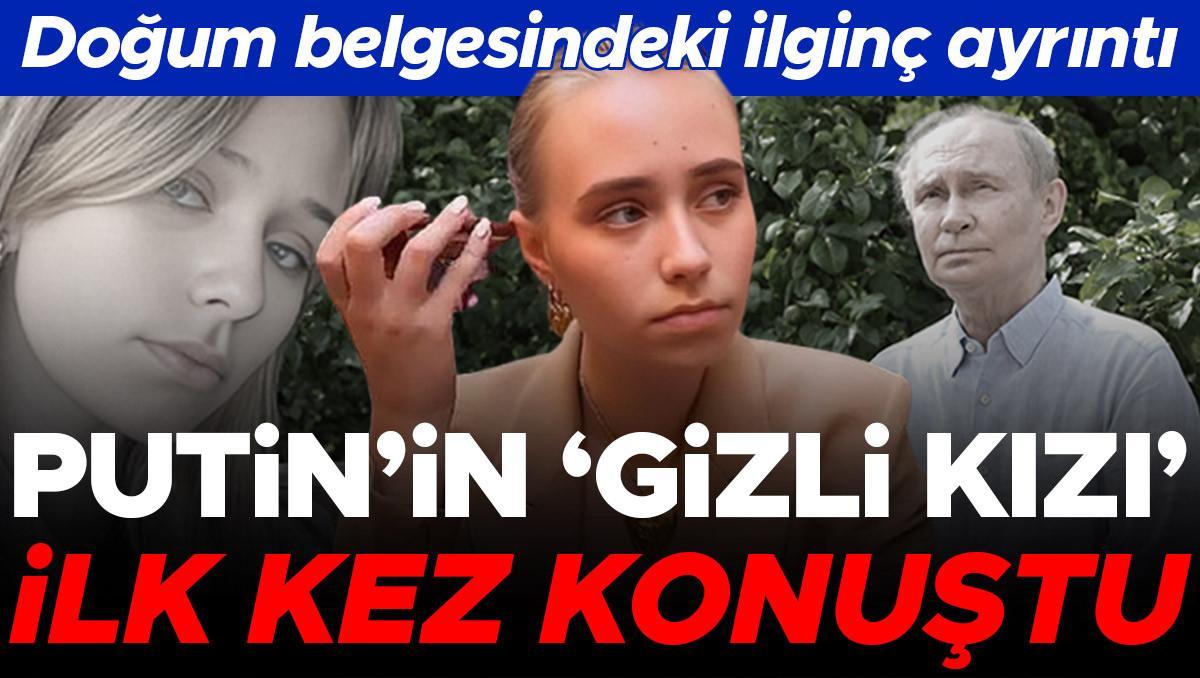
Putin‘s daughter Allegedly Finds Anti-War Voice in Paris, Sparks Controversy
As Russia’s conflict in Ukraine nears its four-year mark, scrutiny continues on the inner circle of President Vladimir Putin. Recent reports focus on Luiza krivonogikh, a young woman widely believed to be Putin’s daughter with Svetlana Krivonogikh, a former cleaning staff member at Putin’s residence. The investigation, spearheaded by German publication Bild, centers on Krivonogikh’s evolving public persona and her recent activities in France.
For years, Krivonogikh lived a lavish lifestyle in Russia, documented on social media with designer clothes, travel via private jet, and appearances at exclusive nightclubs. These accounts vanished shortly after the invasion of Ukraine in 2022. allegations surfaced in 2020, initially reported by the investigative journalism project Proekt, suggesting a considerable payment was made to Krivonogikh’s mother following her birth, perhaps to secure her silence. Notably, her birth certificate lists her patronymic as “vladimirovna,” a possible reference to Putin.Krivonogikh relocated to France and recently graduated from the Icart Culture and Art Management School in June 2024. she has re-emerged on social media, initially sharing a selfie with the caption hinting at a desire to “show my face to the world again,” and more recently, adopting a distinctly anti-war stance.
Her shift in messaging is striking. Prior to leaving Russia, she expressed sadness at being unable to revisit her beloved St. Petersburg. Now, as the war in Ukraine continues, krivonogikh has begun openly criticizing the conflict and denouncing excessive luxury, a marked departure from her previous online presence. She is reportedly working at two Parisian galleries – L Galeri in Belleville and Escape Albatros in Montreuil – both known for hosting exhibitions with anti-war themes, and is involved in organizing these events and creating related video content.However, her involvement has not been without controversy. Reports suggest she may have been operating under the alias Elizaveta Rudnova, potentially referencing the late Oleg Rudnov, a close associate of Putin. This attempt to conceal her identity has drawn criticism from within the russian exile art community.
Artist Nastia Rodionova, who fled Russia in 2022, publicly severed ties with the galleries upon discovering Krivonogikh’s connection. rodionova argued that while acknowledging the principle of innocence and the idea that children are not responsible for thier parents’ actions, supporting an association benefiting from a family linked to the regime is unacceptable while the war continues and victims suffer.
Krivonogikh responded to the criticism, questioning her own responsibility for her family’s actions. The situation highlights the complex ethical dilemmas faced by those attempting to navigate the anti-war movement while grappling with personal connections to the Russian government and its policies.
