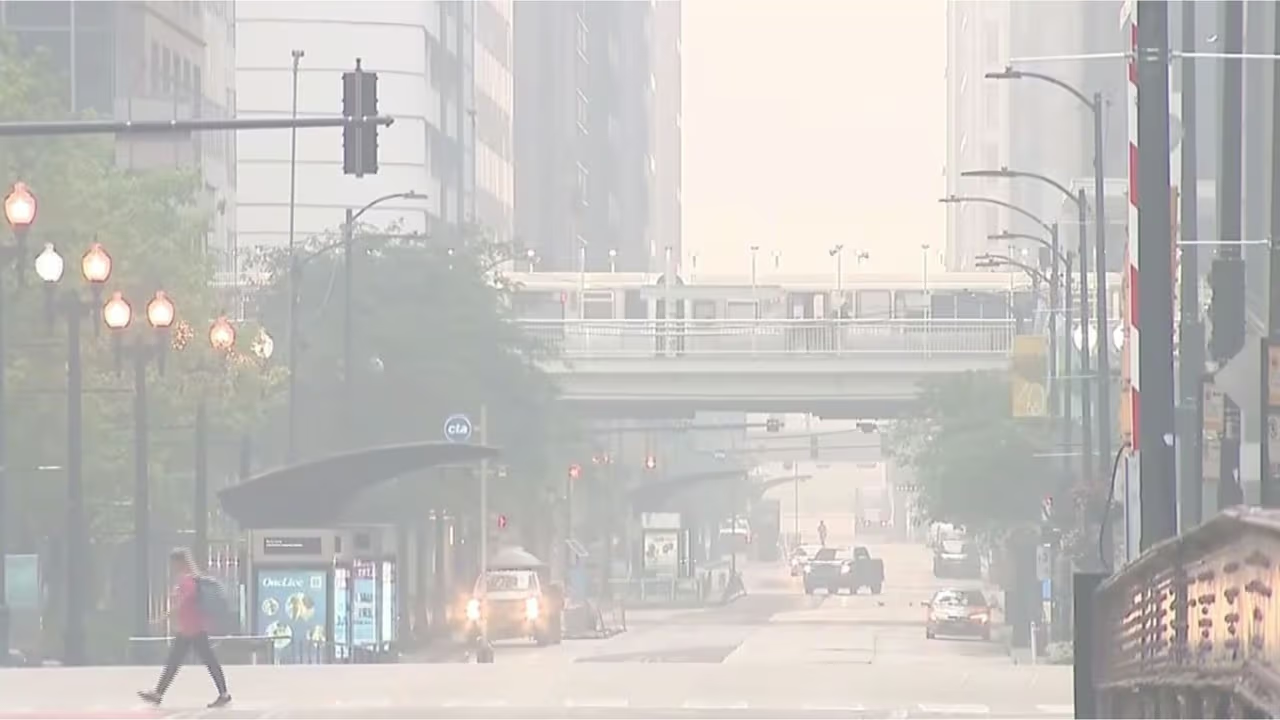
Pulmonologist Isabel Pedraza Analyzes Toxic Smoke From US Wildfires
Toxic smoke plumes originating from Canadian wildfires are currently drifting across the United States, triggering widespread air quality alerts and raising significant concerns regarding acute respiratory and cardiovascular morbidity. As of July 2026, atmospheric data confirms that fine particulate matter, specifically PM2.5, has reached concentrations capable of penetrating deep into alveolar spaces, necessitating an immediate reassessment of protective protocols for vulnerable populations.
Key Clinical Takeaways:
- Fine particulate matter (PM2.5) from wildfire smoke poses a severe risk of triggering acute exacerbations in patients with pre-existing asthma, COPD, and cardiovascular disease.
- Clinical guidance prioritizes the use of N95-rated respirators over standard surgical masks to effectively filter microscopic combustion byproducts.
- Indoor air quality management via HEPA-filtration systems is currently the primary medical recommendation for minimizing systemic inflammatory responses to smoke inhalation.
The Pathophysiology of Wildfire Smoke Inhalation
The health risks associated with wildfire smoke are primarily driven by PM2.5—particulate matter with a diameter of 2.5 micrometers or smaller. According to data from the Environmental Protection Agency, these particles are sufficiently small to bypass the upper respiratory tract’s natural defense mechanisms. Once these particles reach the alveoli, they induce a localized inflammatory response that can rapidly evolve into a systemic issue.
Pulmonologist Dr. Isabel Pedraza emphasizes that the chemical composition of this smoke—which includes hazardous trace elements and volatile organic compounds—functions as a potent irritant. “The inflammatory cascade initiated by these particles does not remain localized to the lungs,” notes Dr. Pedraza. “We observe direct systemic consequences, particularly in individuals with underlying vascular compromise, where the oxidative stress can trigger acute myocardial events.”
Diagnostic and Preventative Clinical Strategies
For patients with chronic conditions, the current surge in air pollution requires a proactive adjustment to standard of care. Medical practitioners are advising patients to avoid outdoor exertion during peak pollution hours, as physical activity increases minute ventilation, thereby accelerating the accumulation of toxic particulate matter in the lungs. For those experiencing persistent respiratory distress, it is critical to seek evaluation through a board-certified pulmonology practice to determine if current maintenance medications require temporary adjustment.
The Centers for Disease Control and Prevention (CDC) underscores that standard cloth or surgical masks offer negligible protection against the fine particles found in wildfire smoke. Evidence-based protection relies exclusively on NIOSH-approved N95 or P100 respirators, provided they are fitted correctly to ensure a proper seal. This is an essential distinction for patients who may erroneously believe that standard PPE is sufficient during high-AQI (Air Quality Index) events.
Addressing Systemic Vulnerabilities and Infrastructure
The clinical impact of these smoke events is not uniform across the population. Epidemiological studies, including those funded by the National Institutes of Health (NIH), consistently demonstrate that individuals residing in urban heat islands or areas with limited access to modern HVAC filtration systems exhibit higher rates of emergency department admissions during wildfire events. This disparity highlights a significant gap in preventative public health infrastructure.
Healthcare facilities are increasingly turning to specialized environmental assessment services to ensure that internal air quality protocols meet the stringent requirements necessary for protecting immunocompromised patients. Engaging with clinical air quality and environmental safety consultants is becoming a standard operational requirement for outpatient centers to mitigate the risk of patient decompensation during prolonged smoke exposure events.
Future Trajectory for Respiratory Health Management
As wildfire events become more frequent due to shifting climatic conditions, the medical community must transition from reactive treatment to a more robust, preventative model of respiratory care. This involves not only the widespread adoption of real-time air quality monitoring but also the development of pharmaceutical interventions designed to mitigate the specific inflammatory pathways induced by wood smoke exposure. Research into antioxidant-based therapeutics is currently in early-stage development, aimed at neutralizing the oxidative damage caused by inhaled combustion products before it leads to chronic tissue remodeling.
For patients and healthcare providers alike, the current crisis serves as a clinical reminder that environmental health is an inseparable component of patient management. Maintaining contact with a primary care physician or relevant specialist is the most effective way to stay updated on individualized respiratory action plans as air quality fluctuations persist throughout the season.
Disclaimer: The information provided in this article is for educational and scientific communication purposes only and does not constitute medical advice. Always consult with a qualified healthcare provider regarding any medical condition, diagnosis, or treatment plan.