
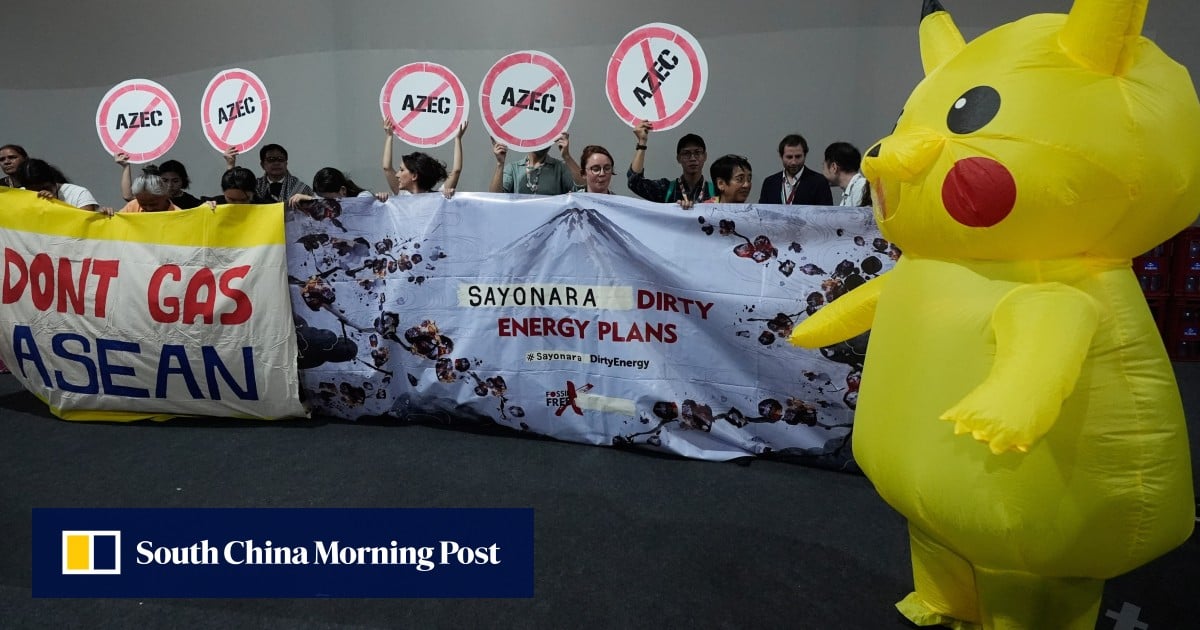
Pikachu Protests Japan‘s Fossil Fuel Investments at COP30
Belém, Brazil – Activists at the COP30 climate summit in Belém, Brazil, deployed a striking visual protest Friday, utilizing a Pikachu costume to draw attention to Japan’s continued financing of fossil fuel projects across Asia. The demonstration aimed to highlight what organizers call a significant contradiction in Japan’s climate leadership, as the nation simultaneously positions itself as a decarbonization leader while heavily investing in liquefied natural gas and coal.
The protest underscores growing frustration with Japan’s financial support for fossil fuels in countries like Thailand, Malaysia, Indonesia, and the philippines. According to a 2025 study by the Philippines-based Center for Energy, Ecology and Growth, the Japan Bank for International Cooperation (JBIC) provided US$6.4 billion in loans for coal projects and US$874 million for gas projects between 2016 and 2024. Activists argue these investments actively impede the fossil fuel phase-out necessary to meet global climate goals and disproportionately impact nations in the Global South.
“Japan is actually delaying the fossil fuel phase-out across Asia” by funding energy projects, mainly liquefied natural gas developments, said Hiroki Osada with Friends of the Earth Japan, one of the protest organizers. “It’s so crucial for our Global South comrades to voice their concerns in Belem, so that they can actually demand the Japanese government to do something about this.”
The demonstration comes as international pressure mounts on developed nations to provide financial support for climate mitigation and adaptation in developing countries, and to cease funding projects that exacerbate the climate crisis. Organizers hope the visually arresting protest will amplify the voices of those moast affected by Japan’s investment decisions and compel the japanese government to shift its energy financing towards renewable sources.
