
Prenatal Vitamin D Deficiency Increases Child’s Risk of Allergies and Immune Issues
The blueprint for a child’s immune system is drafted long before their first breath. Recent clinical evidence suggests that the prenatal environment, specifically the maternal levels of Vitamin D, serves as a critical determinant in whether a child develops a robust immune defense or becomes predisposed to chronic allergic sensitivities.
Key Clinical Takeaways:
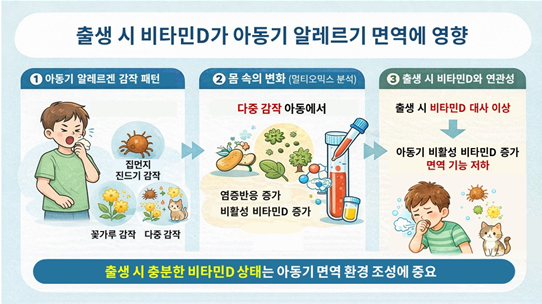
- Low Vitamin D levels in cord blood at birth are strongly correlated with an accumulation of inactive Vitamin D metabolites during childhood.
- Children with “multi-sensitization”—simultaneous allergic reactions to multiple antigens—exhibit higher levels of oxidative stress proteins and immune inflammatory markers.
- Maintaining optimal maternal Vitamin D through sunlight exposure (5–30 minutes, at least twice weekly) and supplementation is essential for establishing a child’s immune balance.
The pathogenesis of childhood allergies is often viewed through the lens of postnatal environmental triggers. However, a longitudinal cohort study supported by the National Institute of Health (NIH) of the Korea Disease Control and Prevention Agency (KDCA) shifts this focus toward the gestational period. The research, published in the peer-reviewed journal Allergy, demonstrates that the nutritional status of the fetus directly influences the subsequent metabolic processing of Vitamin D and the regulation of the immune system throughout early childhood.
The Metabolic Gap: Active vs. Inactive Vitamin D
To understand the clinical implications of this research, one must distinguish between the forms of Vitamin D present in the body. Vitamin D obtained from sunlight or dietary intake remains in an inactive state until it undergoes a two-step conversion process in the liver, and kidneys. Only once it reaches its active form can it effectively regulate bone formation and modulate the immune response.

The study reveals a concerning trend in children who were Vitamin D deficient at birth. These children tend to accumulate higher levels of inactive Vitamin D as they grow. This metabolic bottleneck means that even if the child consumes Vitamin D later in life, the body may struggle to convert it into the active form necessary to suppress overactive immune responses. This imbalance is not merely a nutritional deficiency but a systemic failure in immune regulation that increases susceptibility to inflammatory conditions.
For parents noticing early signs of hypersensitivity or chronic respiratory issues in their children, it is critical to move beyond over-the-counter remedies. Identifying the underlying metabolic cause requires specialized diagnostic oversight. We strongly recommend consulting with board-certified pediatric allergists to conduct comprehensive sensitivity testing and metabolic screenings.
Multi-Sensitization and the Oxidative Stress Pathway
The research team, led by Professor Hong Su-jong of the National Medical Center and Research Professor Oh Hye-young of Ulsan University College of Medicine, tracked 322 children from birth through early childhood. By utilizing multi-omics technology—the simultaneous analysis of proteins and metabolites—on a subset of 57 seven-year-old children, the researchers identified a distinct biological profile in “multi-sensitized” children.
Unlike children who react to a single allergen, such as house dust mites or pollen, multi-sensitized children react to multiple antigens simultaneously. The data shows that these children possess significantly higher concentrations of proteins associated with oxidative stress and immune-related inflammatory substances. Crucially, the levels of inactive Vitamin D in these children correlated positively with their immune inflammatory markers; as inactive Vitamin D increased, so did the severity of the inflammatory response.
“Maintaining an appropriate concentration of Vitamin D in pregnant women is a vital foundation for the formation of immune balance in children,” states Kim Won-ho, Director of the Chronic Disease Convergence Research Department at the National Institute of Health.
This link between prenatal deficiency and oxidative stress suggests that the lack of Vitamin D during gestation impairs the development of the body’s natural antioxidant defenses, leaving the child’s immune system in a state of hyper-reactivity.
Clinical Interventions for Maternal and Fetal Health
The findings underscore a critical window for intervention during pregnancy. Because the cord blood Vitamin D concentration serves as a predictor for childhood immune health, the standard of care for prenatal nutrition must prioritize Vitamin D optimization. The clinical recommendation is twofold: targeted supplementation and controlled sunlight exposure.
Health authorities suggest that pregnant women engage in sunlight exposure for 5 to 30 minutes at least twice a week to stimulate natural Vitamin D synthesis. When combined with medical-grade supplements, this approach helps ensure that the fetus receives adequate nutrients to program its immune system correctly, potentially reducing the lifelong morbidity associated with multi-sensitization and chronic allergies.
Given the complexity of prenatal nutrient absorption and the risk of contraindications with other medications, these interventions should never be self-administered. Expectant mothers should work closely with specialized prenatal care providers to determine the precise dosage and monitoring schedule required for their specific health profile.
The Future of Prenatal Immune Programming
This research marks a shift toward preventative immunology, suggesting that we can mitigate the rise of childhood allergies by optimizing the intrauterine environment. By addressing the Vitamin D gap before birth, clinicians may be able to prevent the cascade of oxidative stress and immune dysfunction that leads to multi-sensitization.
As we move toward a more personalized approach to medicine, the integration of multi-omics data into routine prenatal care will likely become the benchmark for reducing pediatric allergic disease. For those seeking to optimize their family’s health trajectory, accessing vetted, high-authority medical specialists is the first step in transforming this scientific intelligence into a clinical reality. Our directory provides a gateway to the leading experts in maternal-fetal medicine and pediatric immunology to ensure the highest standard of evidence-based care.
Disclaimer: The information provided in this article is for educational and scientific communication purposes only and does not constitute medical advice. Always consult with a qualified healthcare provider regarding any medical condition, diagnosis, or treatment plan.