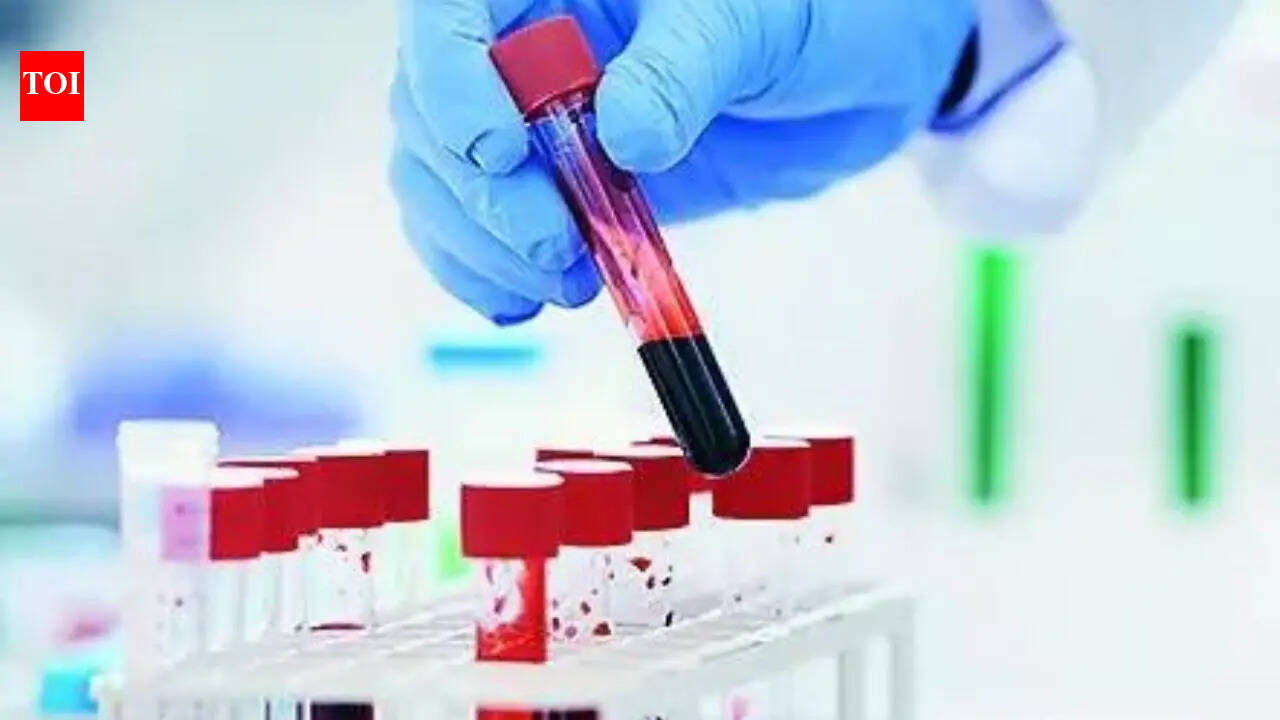
Predicting Lung Cancer: Scientists Discover Blood Test That Can Spot Disease Up to 5 Years Before Diagnosis
Revolutionizing Early Detection: A Blood Test for Lung Cancer 5 Years in Advance
Key Clinical Takeaways:
- A novel blood test identifies 14 proteins predictive of lung cancer up to five years before clinical diagnosis.
- Machine learning algorithms enhance the accuracy of early detection, addressing gaps in current screening modalities.
- Integration of this test into public health frameworks could reduce lung cancer mortality by enabling timely intervention.
The emergence of a blood test capable of predicting lung cancer up to five years before diagnosis marks a pivotal advancement in oncological care. This innovation, detailed in recent reports from The Times of India and Medical Xpress, leverages proteomic profiling to detect molecular signatures associated with carcinogenesis. Such a tool could transform lung cancer management, particularly for high-risk populations, by facilitating earlier intervention and improving survival rates.

Biological Mechanisms and Clinical Validation
The test analyzes circulating protein biomarkers, including 14 specific proteins linked to oncogenic pathways. These biomarkers, identified through large-scale proteomic studies, reflect alterations in cellular metabolism and immune response preceding tumor formation. While the exact mechanisms remain under investigation, preliminary data suggest that these proteins may originate from early-stage neoplastic changes or systemic inflammatory responses to malignancy.
Clinical validation of this test is ongoing, with multiple studies evaluating its sensitivity, and specificity. For instance, a 2023 pilot study published in Consult QD demonstrated that machine learning models could differentiate cancerous from non-cancerous samples with 85% accuracy. However, larger, multi-center trials are required to confirm these findings across diverse demographics.
Funding and Development Context
While the primary sources do not explicitly disclose funding entities, the development of such assays often involves partnerships between academic institutions and biotechnology firms. For example, the DELFI blood test, which uses fragmentomics to detect DNA abnormalities, was developed in collaboration with Cleveland Clinic and DELFI Diagnostics, as noted in Consult QD. Similar collaborative models likely underpin the current protein-based assay.
Transparency in funding is
Related reading
- CurrentBody Skin Series 2 LED Face Mask 15 Percent Off for Prime Day
- Higher BMI Linked to Pregnancy Risks in Type 2 Diabetes, Australian Study Says
- Seven Cancer Types Rise in Adults Under 50 in England, WCRF Analysis Finds (time.news)
- Astronomers discover second-generation planet candidate at white dwarf (newsy-today.com)