
Porsche Strategy Sportwagenschmiede ’35: Higher Prices and Combustion Engines
Porsche AG is recalibrating its global business model under the “Sportwagenschmiede ’35” strategy, pivoting toward higher-margin, low-volume production to address declining sales and profitability. The Stuttgart-based manufacturer is targeting a break-even threshold at under 200,000 vehicles annually, marking a significant retreat from previous expansion goals that aimed for 350,000 units. As part of this restructuring, the company is implementing a substantial reduction in headcount and organizational complexity to stabilize its financial position amid cooling demand for electric vehicles.
Strategic Pivot Toward Profitability
The new strategy, presented by CEO Michael Leiters at the company’s development center in Weissach, shifts the focus from aggressive volume growth to “value over volume.” Porsche aims to secure a return on sales between 10 and 15 percent. This shift follows a challenging first half of 2026, where the company faced headwinds from US tariffs, declining sales in China, and lukewarm reception to its electric vehicle lineup. Data indicates that global sales dropped 16 percent in the first half of 2026 compared to the same period in 2025, with China—formerly a key growth engine—experiencing a 32 percent decline.
Porsche’s current plan involves cutting approximately 9,000 positions and reducing management roles by 40 percent. These measures are designed to increase efficiency, with the company aiming to lower development costs by 20 percent and production costs by up to 30 percent.

Emphasis on Combustion Engines
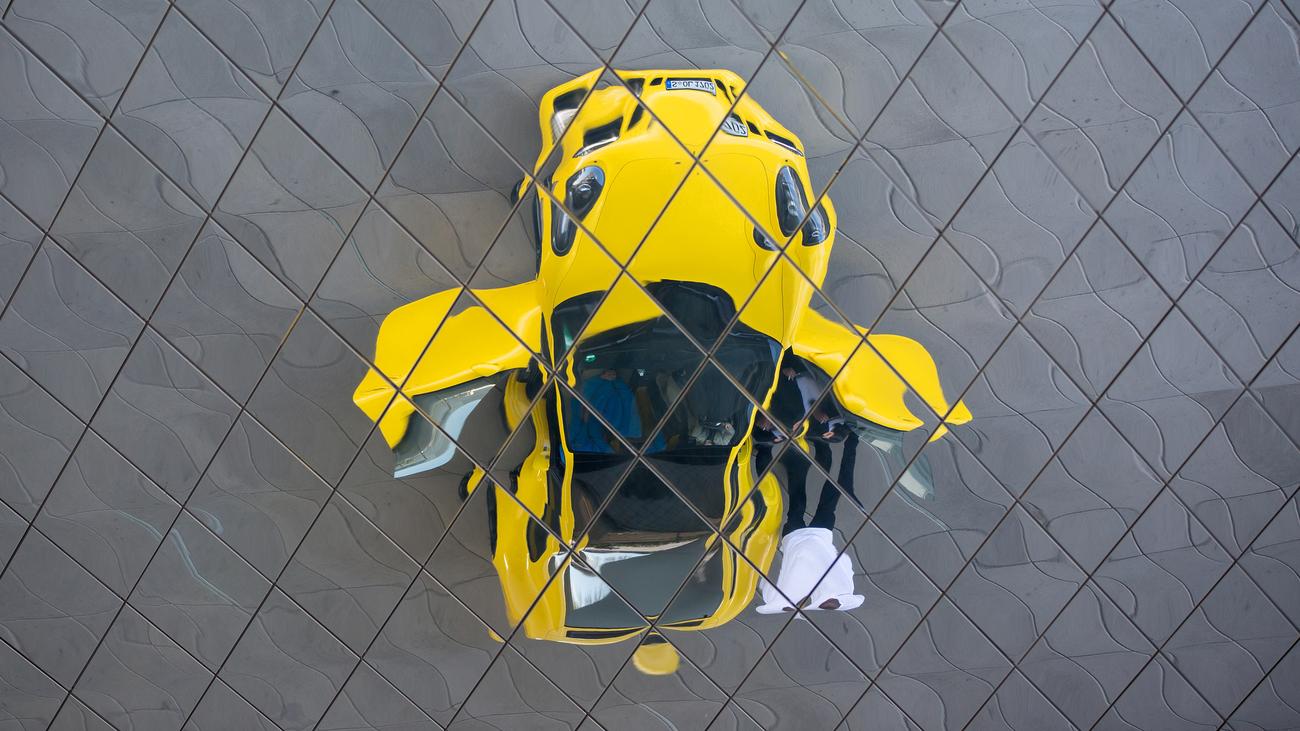
While the automotive industry has largely pivoted toward electrification, Porsche is doubling down on internal combustion engines for its most exclusive segments. The upcoming “Mission S” concept—a mid-engine sports car positioned above the 911—will not be released as a pure electric vehicle. CEO Michael Leiters cited a lack of market demand for an all-electric version of such a vehicle, reinforcing the brand’s commitment to the sound and performance of combustion engines.
The 911 remains the core of this high-price, high-margin strategy. The price gap between the base Carrera and the GT3 90 F.A. Porsche exceeds 200,000 euros, despite both models sharing the same underlying platform. Porsche intends to increase the share of its most expensive models, targeting an rise in the average price of its top 10,000 units from 270,000 euros to 330,000 euros by 2030.
Porsche Shifts Strategy as Taycan Sales Plummet
The Taycan, once a primary focus of Porsche’s electric strategy, saw sales plummet by 60 percent between 2023 and 2025, with only 6,000 units sold in the first half of 2026. This reality has forced a departure from the previous goal of becoming CO2-neutral by 2030, with the company now leaning into e-fuels and hybrid powertrains as a more viable path for its performance-oriented customer base.
Management is also streamlining the sales and distribution network, aiming for a 20 percent reduction in associated costs. By consolidating sales regions and simplifying the organizational structure, Porsche expects to become more resilient to regional market volatility.
Future Trajectory
The market now awaits the official premiere of the Mission S, which serves as the primary test case for whether Porsche can successfully maintain its prestige while operating as a smaller, more specialized manufacturer.