
Polish Minister Calls russian Drone Strikes “Tactically Stupid,” Advocates for Escalating Western Support for Ukraine
LONDON – Polish Minister Radosław Sikorski asserted that recent Russian drone strikes targeting Ukrainian infrastructure are “tactically stupid and counterproductive,” while advocating for increased Western military aid, including long-range weaponry like Tomahawk missiles. Speaking in the UK on Wednesday, Sikorski argued that each previous instance of Western hesitation to provide advanced weaponry has been followed by Russia’s adaptation to the battlefield realities.
“Somebody said: ‘Don’t do it, it’s escalatory. Don’t send them tanks.Don’t send them MiG fighters. Don’t send them F-16s. Don’t give them Himars [rockets] don’t give them Atacms [missiles].’ And every time Russia has had to adjust,” Sikorski stated. He specifically suggested that Tomahawks could be effectively used to target Russian oil refineries, building on the success Ukraine has already seen with drone strikes aimed at diminishing Russia’s oil production capacity.”Russia’s vastness means that you don’t have enough anti-aircraft assets to protect all the targets,” he noted, adding, “When you achieve success you should reinforce it.”
Sikorski dismissed claims, reportedly whispered by Hungarian Prime Minister Viktor Orbán to former U.S.President donald Trump, that ”Russia always wins.” He countered this assertion by citing ancient defeats for Russia, including in Crimea in the 19th century, the 1904-1905 Russo-Japanese War, World War I, against Poland in 1920, and in Afghanistan.
“Only when Russia loses a war are there any reforms,” Sikorski emphasized. “If Russia lost the war it would be good for Ukraine, it would be good for Europe, but it would also be good for Russia.”
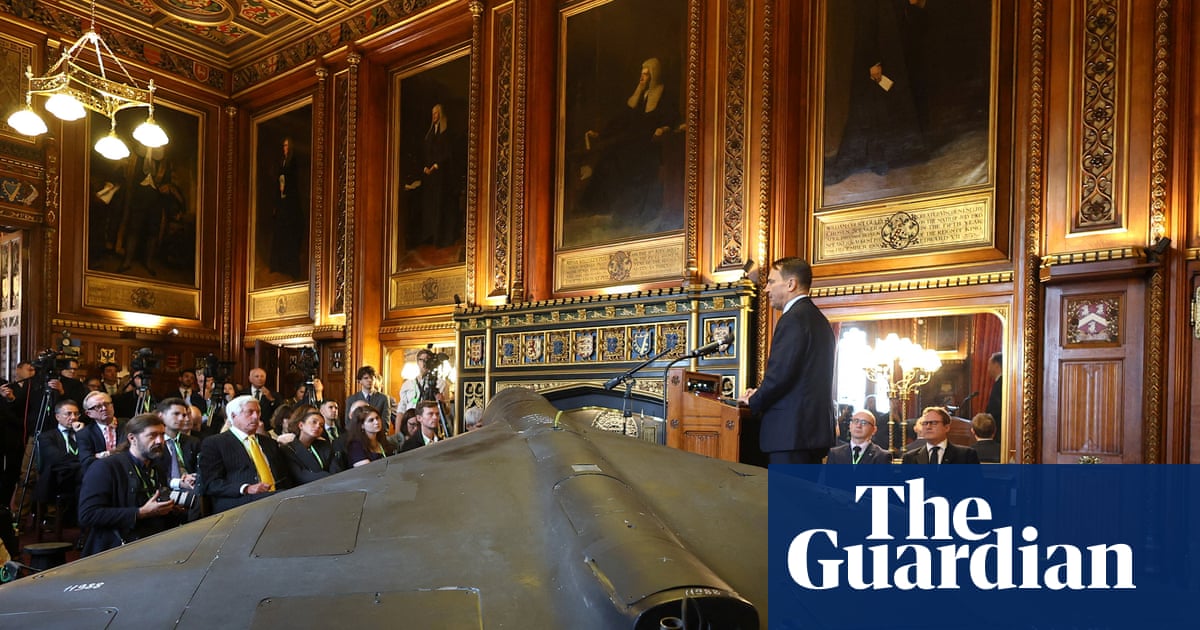
the Polish minister was in the UK for scheduled meetings with British officials, including Foreign Secretary Yvette Cooper and Jonathan Powell, national security advisor to Keir Starmer. He also participated in an event at Parliament where a decommissioned Shahed-136 drone was unveiled, organized by United Against Nuclear Iran.
The UK announced fresh sanctions Wednesday targeting Russian oil giants Lukoil and Rosneft, along with 51 oil tankers comprising what thay termed a “shadow fleet,” as part of an effort to tighten energy sanctions and reduce Kremlin revenue. U.S. Treasury Secretary Scott Bessent indicated last month Washington’s willingness to collaborate with European partners on further escalating sanctions.
Simultaneously occurring, the European Union is considering a “drone wall” initiative - now likely to be rebranded - to bolster air defenses and counter drone incursions. A draft defense roadmap proposes a system for “anti-drone capabilities for detection, tracking, and neutralisation, as well as capabilities to hit ground targets leveraging drone technology for precision strikes.” While originating in the Baltic states, the concept has faced skepticism from countries like France and Germany, the latter due to the historical connotations of the word “wall.” EU officials are now emphasizing the potential for drone defenses to protect borders, infrastructure, and combat organized crime, hoping to broaden support for the initiative, which will be presented to EU leaders at a Brussels summit on October 23rd as part of a broader plan to ensure Europe can defend itself from invasion by 2030.
