
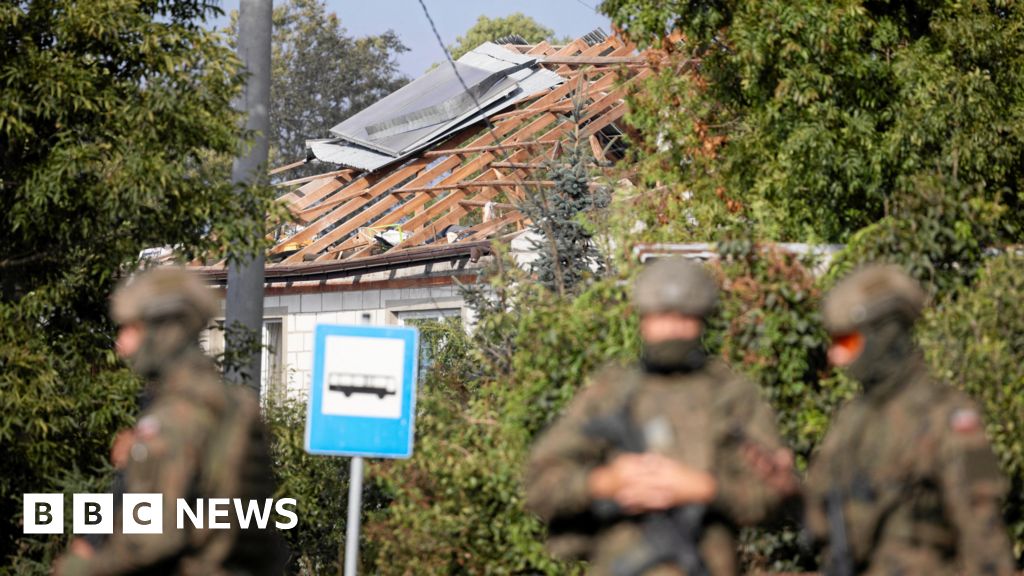
Russian Drones Cross into Poland, Raising NATO Concerns
Warsaw, Poland – A recent incursion of Russian drones into Polish airspace is being viewed as a purposeful test of NATO’s resolve, according to analysts.The incident, wich occurred on Wednesday, involved drones identified as Russian-made Gerberas – reportedly inexpensive, long-range models – and has prompted calls for a thorough review and unified response from the alliance.
the drones reportedly lacked warheads, a detail noted by security expert Mr. Crump, who suggested this may be a tactic to downplay the severity of the action. He characterized the incident as part of Russia‘s increasing “gray zone actions against Nato.”
Poland is now undertaking an investigation and will share its findings with NATO allies. Experts believe the event, irrespective of intent, provides Russia with valuable insight into the West’s likely response to a potential attack on a NATO country – a scenario many European leaders anticipate.
“It is a test for Europe and for Nato regardless of Russia’s intent,” stated Keir Giles, a senior fellow at Chatham House. ”Russia will learn from European resolve and specifically Poland’s capacity to withstand attacks of this kind.”
Giles emphasized that a weak response, even in the form of condemnation alone, would be interpreted as encouragement by Moscow. He suggested establishing a ”sky shield” over Ukraine - involving the deployment of european fighter jets – as a exhibition of serious intent to intercept air threats, though this plan has faced concerns about potential accidental confrontation and has not been implemented despite discussions dating back to 2023.
The reaction from the United States is being closely monitored. While some US lawmakers from both Democratic and Republican parties swiftly condemned the incident, President Donald Trump initially responded with a post on social media, writing, “What’s with Russia violating Poland’s airspace with drones? Here we go!”
This post aligns with Trump’s historically ambiguous relationship with Russia and President Vladimir Putin. Over the past month,he has both extended a welcoming gesture to putin and threatened sanctions against Moscow if a peace agreement with Kyiv isn’t reached – threats that have yet to materialize.
European leaders are seeking a unified display of strength, notably given existing concerns about the US commitment to European security since the start of trump’s second term. Giles warned that “a sign of weakness and failure to impose costs and consequences will confirm for moscow that they can continue to escalate without fear of the outcome.”
Additional reporting by Matt Murphy and Paul Brown
