
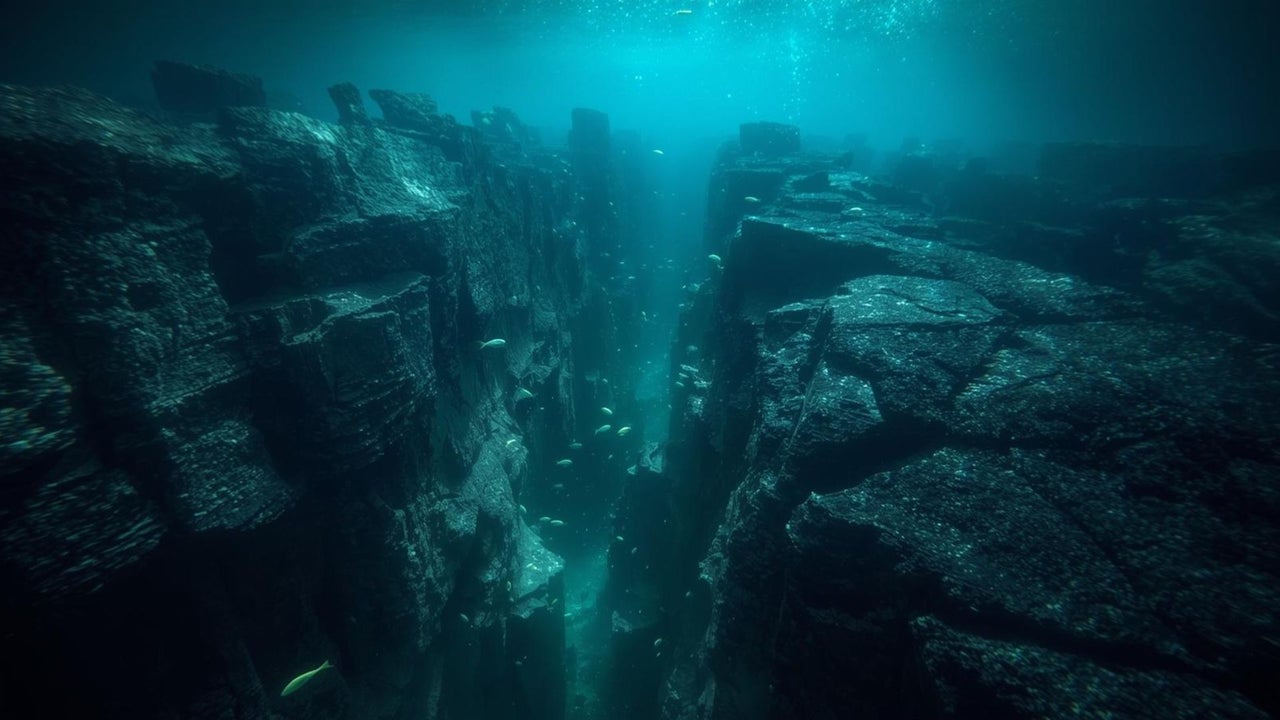
Scientists Witness Plate Disintegration Beneath Vancouver Island
A team of researchers has, for the first time, directly observed the process of an oceanic plate breaking apart as it descends into the Earth’s mantle. The findings, recently published in Science Advances, detail the disintegration of the Juan de Fuca and Explorer plates as they subduct – slide - beneath the north American plate off the coast of Vancouver Island.
While subduction is a common geological process where denser oceanic crust sinks under lighter continental crust, witnessing the initial stages of plate fracture has remained elusive until now. Led by geologist Brandon Shuck of Louisiana State University, the team utilized a novel approach employing sound waves and highly sensitive sensors to create detailed images of the ocean floor and the layers beneath.
Thes images revealed that the descending plates don’t sink as a single, cohesive unit. Instead, they fracture into smaller sections, forming microplates. This fragmentation ultimately hinders the subduction process. Shuck described the process as ”the system slowly shutting down, like a train derailing car by car.”
The research team, including scientists from the Lamont-Doherty Earth Observatory at Columbia university, generated the images by transmitting sound waves from a research vessel and analyzing the echoes reflected from deep within the seabed. This “geological ultrasound” revealed extensive fault lines, some stretching up to 75 kilometers in length, with varying levels of activity. Inactive faults create ”voids” where friction between rock layers ceases.
The observed disintegration resembles a “tectonic cemetery,” according to the researchers, mirroring a similar pattern identified off Baja California, where remnants of the ancient Farallon plate demonstrate a comparable breakdown.Understanding this process provides crucial insights into explaining previously puzzling geological phenomena and the long-term evolution of tectonic plates.
