Plano leaders weigh Dallas Stars arena and Proposition A funding
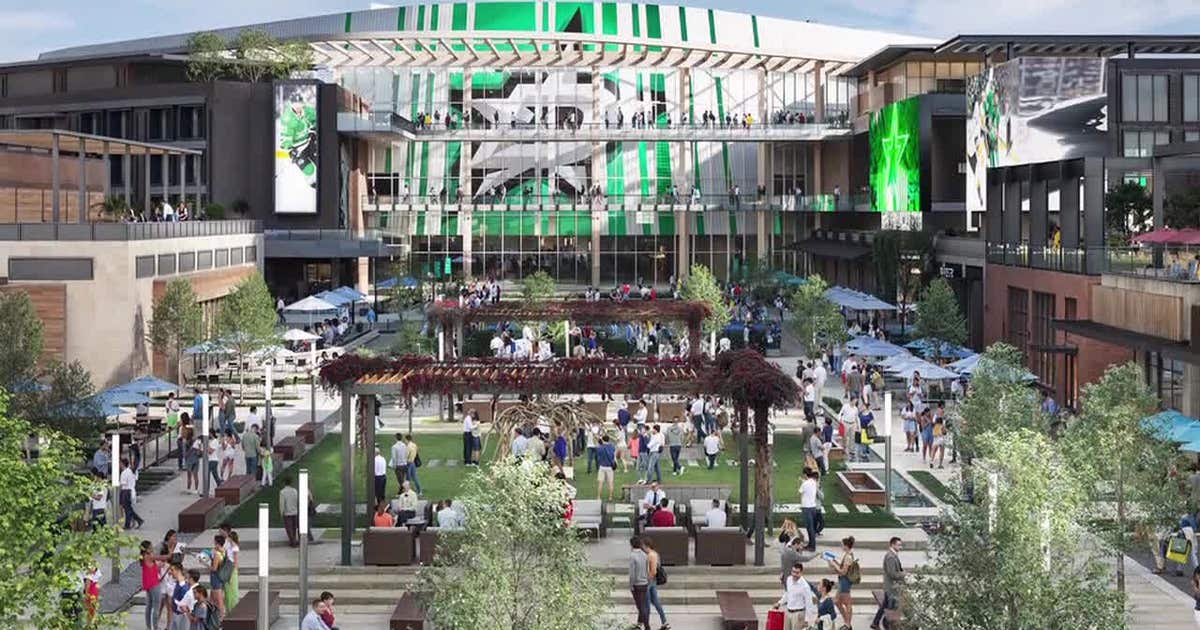
Plano city leaders are weighing a $3 billion redevelopment plan to replace The Shops at Willow Bend Mall with a Dallas Stars arena and entertainment district, a project that could generate up to $900 million in city revenue if voters approve a specific venue tax on November 3.
The scale of the proposal creates a stark divide between city officials and a growing group of residents. While Mayor John Muns views the project as a necessary evolution for a city of 305,000 people, the STOP The Stars Arena PAC argues that the city has failed to provide concrete data on the hidden costs of infrastructure, drainage, and power. This friction centers on Proposition A, a ballot measure that would allow Plano to tax hotel rooms, car rentals, arena parking, and tickets to help fund the city’s $700 million contribution to the arena.
The $3 billion cost of the Willow Bend redevelopment
The financial architecture of the project is split into two primary components. The arena itself is estimated to cost roughly $1 billion, while the surrounding entertainment district is projected at $2 billion. To facilitate this, the Plano City Council has already approved a tax increment reinvestment zone near the Dallas North Tollway, using tax dollars collected in that specific area to back bonds.
The city has three different mechanisms to raise its $700 million share, but the most immediate is Proposition A. This measure could bring in between $700 million and $900 million for the city. Mayor Muns has explicitly stated that Proposition A is not a property tax, a claim echoed by leadership from the Dallas Stars.
Demolition of the existing Shops at Willow Bend Mall was approved in June, with work scheduled to begin in 2027.

Entertainment district will drive steady property value growth
The Willow Bend Redevelopment Advisory Committee, which includes HOA representatives from ten local neighborhoods, recently presented findings on how the project will affect nearby homeowners. The committee noted that property values should not expect a “big jump” immediately. Instead, they forecast steady percentage appreciation.
The committee clarified that any value increase would stem from the entertainment district rather than the arena itself. These gains are expected to materialize several years after completion, rather than in the first or second year of operation. A city-commissioned study shows that property values typically increase slightly in these scenarios.
Residents question traffic data before police shift resources
Traffic remains the primary point of contention for the advisory committee. While the city suggested widening roads, adding turn lanes, and implementing “no parking” signs in residential neighborhoods to mitigate congestion, some residents claim the data is insufficient.
Gary Cary, a local homeowner, said that early voting will be nearly over before some of the promised data arrives on October 31, leaving citizens without enough detail to make an informed decision.

Security logistics are also shifting. Plano Police Chief Ed Drain stated that the department will need significantly more resources on game nights. However, he clarified that the entity hosting the event—not the city—will pay the Plano Police for these services. Drain also mentioned the possibility of placing a dedicated patrol bureau on the site if the area remains busy on non-game days.
Competing views on Plano’s infrastructure readiness
The debate over the arena has evolved into a disagreement over whether Plano’s current infrastructure can support a project of this magnitude.
| Perspective | Position on Infrastructure & Cost | Primary Concern/Argument |
|---|---|---|
| Mayor John Muns | Ready and capable | Plano has made infrastructure a priority; the city is now large enough to support the project. |
| STOP The Stars Arena PAC | Under-studied and opaque | The city is “still negotiating” or “still studying” costs for roads, drainage, and power. |
| Police Dept. | Manageable with funding | Increased resources are required, but costs will be shifted to the event promoter. |
David Romick of the STOP The Stars Arena PAC questioned the city’s transparency during a recent public comment session, asking why costs for road improvements and power infrastructure remain undetermined. In contrast, Mayor Muns said that while the city might not have been ready for such a project 20 years ago, it is ready today.
City will seek alternative funding if Proposition A fails
The immediate future of the project rests with the voters on November 3. If Proposition A fails, the project does not necessarily die. Mayor Muns has stated that the city will seek alternative revenue sources to fund the arena if the venue tax is rejected.
The City Council is scheduled to receive another update on the development on December 8.
The central question remains whether the city can produce the granular infrastructure data demanded by residents before the election, or if the project will proceed based on the broader economic projections provided by the Mayor’s office.