
Phison Unveils Next-Gen SSD Technologies, Boosting AI Training and High-Speed Storage
Phison, a leading designer of NAND flash controllers, has showcased groundbreaking advancements in SSD technology, poised to revolutionize AI training and high-performance computing. The company’s latest innovations, demonstrated at a recent industry event, highlight a meaningful leap in both endurance and speed for solid-state drives.
Phison E26 SSDs Power 100 GBps Throughput with Dual HighPoint Rocket 1608 Cards
In a compelling display of raw performance,Phison demonstrated sequential read and write speeds exceeding 100 GBps on a standard desktop workstation. This remarkable feat was achieved by leveraging two HighPoint Rocket 1608A add-in cards, each equipped with eight M.2 slots, configured in a RAID 0 array with 16 Phison E26-powered M.2 SSDs. This collaboration between HighPoint Technology and Phison signifies a new era for high-speed data access, with further details expected in upcoming reviews.
aiDAPTIV+ Pro Suite Enhances AI Training Efficiency and Affordability
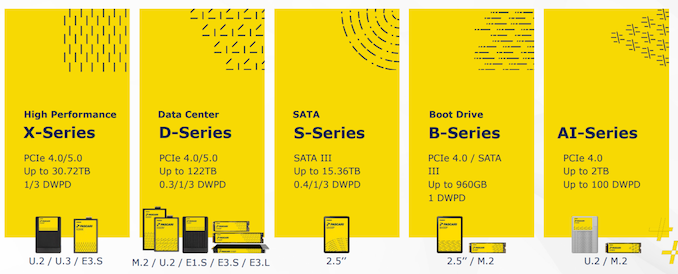
Phison’s aiDAPTIV+ Pro suite represents a significant stride in making AI training more accessible and cost-effective for small and medium-sized businesses. Building upon their previous work in extreme endurance SSDs, Phison has developed a middleware layer that optimizes workloads for sequential data access, pushing endurance ratings to an notable 100 Drive Writes Per Day (DWPD).
This innovative approach allows AI SSDs to function as an extension of GPU Video RAM (VRAM). By offloading some of the VRAM burden, companies can achieve substantial Total Cost of Ownership (TCO) benefits. This enables the use of more affordable, off-the-shelf RTX GPUs for AI training and on-premises model fine-tuning, rather than relying solely on expensive, specialized AI training hardware. The aiDAPTIV+ Pro suite, with its licensing tied to phison’s AI-series SSDs (currently available in U.2 and M.2 form factors with Gen 4 x4 interfaces), empowers businesses to train models with a vast number of parameters using fewer GPUs, freeing them from the primary constraint of HBM capacity.While not explicitly advertised, Phison indicated that newer NVMe features, such as flexible data placement, are expected to be integrated into future firmware updates, further enhancing the capabilities of their SSDs.
