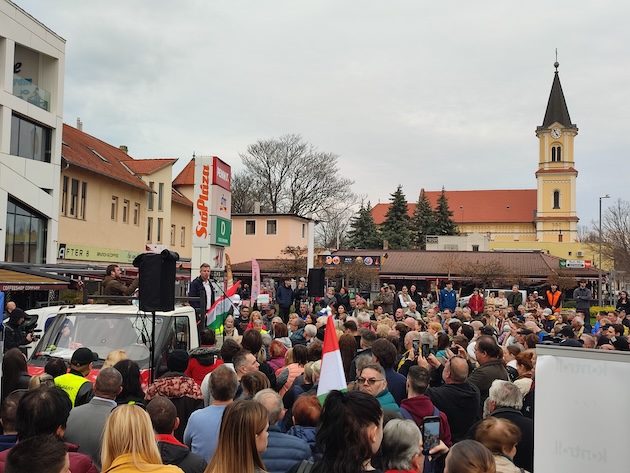
Péter Magyar Sworn In as Hungary’s New Prime Minister
Hungary’s new Prime Minister Péter Magyar, leader of the pro-democracy Tisza Party, was sworn in on May 9, 2026, ending 16 years of Viktor Orbán’s populist rule and marking a seismic shift in Central Europe’s rule of law landscape. Budapest’s parliament erupted in applause as Magyar declared a “new chapter” for Hungary, one that promises to dismantle Orbán’s authoritarian legal framework and restore judicial independence. The stakes are high: Hungary’s transition will test whether democratic backsliding can be reversed—or if the country’s institutions have been permanently weakened. For businesses, legal professionals, and civic organizations operating in Hungary, this moment demands vigilance and strategic adaptation.
The Orbán Legacy: How Hungary’s Rule of Law Was Weaponized
Viktor Orbán’s tenure reshaped Hungary’s constitutional order. Between 2010 and 2024, his Fidesz party orchestrated a systematic overhaul of the judiciary, media landscape, and electoral rules—moves widely condemned by the European Union as “democratic backsliding.” Key tools included:
- Judicial capture: The 2011 Fundamental Law of Hungary granted Orbán’s government control over judicial appointments, allowing political loyalists to dominate the Constitutional Court and Supreme Court.
- Media monopolies: State funding was redirected to pro-government outlets, while independent journalism faced harassment and legal threats. By 2024, Freedom House ranked Hungary as “Partly Free,” its lowest score since 2010.
- Electoral engineering: The 2020 electoral law gerrymandered districts to favor Fidesz, ensuring minority parties could never gain a parliamentary majority.
Magyar’s victory—secured by a 53% parliamentary majority in April 2026—was the first time since 2010 that an opposition party won an outright majority. But the real test lies in dismantling these structures without triggering economic instability or social unrest.
Budapest’s Legal Labyrinth: What Changes Now?
Magyar’s Tisza Party has pledged to:

- Restore judicial independence by revoking the 2011 Fundamental Law’s judicial appointment powers.
- End state control over media by reinstating pluralistic funding mechanisms.
- Reform the electoral system to eliminate gerrymandering, with new district boundaries drawn by an independent commission.
Yet the path forward is fraught. Orbán’s allies still control key institutions, including the Hungarian Academy of Sciences, which has resisted reforms. Legal experts warn that reversing Orbán’s changes will require not just legislative action but a cultural shift in Hungary’s political elite.
“The biggest challenge isn’t passing laws—it’s ensuring the bureaucracy enforces them. Orbán’s government embedded loyalists in every ministry. Magyar’s team must root them out, but without triggering a backlash from civil servants who fear retribution.”
Economic Ripple Effects: Who Wins, Who Loses?
Hungary’s transition will have immediate economic consequences. Foreign investors, wary of political instability, may hesitate to commit capital until legal reforms are visible. Meanwhile, domestic businesses—especially those tied to Orbán’s cronies—face uncertainty.
| Sector | Orbán-Era Policy | Magyar’s Likely Shift | Directory Solution |
|---|---|---|---|
| Real Estate | State-backed land grabs for infrastructure projects, favoring Fidesz-linked developers. | Transparency laws requiring public auctions for state land sales. | Vetted commercial real estate attorneys specializing in post-transition asset protection. |
| Media | State subsidies to pro-government outlets; independent journalism suppressed. | Reinstatement of pluralistic media funding; protection for investigative reporters. | Media law firms assisting journalists in navigating defamation risks under new protections. |
| Energy | State-controlled energy monopolies (e.g., MOL Group’s dominance). | Privatization of state energy assets; open-market competition. | Energy sector consultants advising on compliance with EU renewable energy directives. |
Regional Spillover: How Neighboring Countries Are Watching
Hungary’s transition has sent shockwaves through Central Europe. Slovakia’s prime minister, Robert Fico, has praised Magyar’s victory as a “beacon for democracy,” while Poland’s ruling PiS party has expressed skepticism, fearing Magyar’s pro-EU stance could isolate Warsaw further.
“This isn’t just about Hungary. It’s a test for the entire Visegrád Group. If Magyar succeeds, it could embolden opposition movements in Poland and the Czech Republic. If he fails, it’ll prove that once democracy is eroded, it’s nearly impossible to restore.”
For Hungary’s neighbors, the immediate concern is economic. The country’s €120 billion EU recovery fund—frozen under Orbán for failing to meet rule-of-law conditions—could now flow freely. But Brussels will demand swift reforms, including:
- Decriminalization of defamation laws (currently used to silence critics).
- Ending political interference in universities (e.g., Orbán’s 2020 takeover of the Eötvös Loránd University).
- Transparency in public procurement to prevent corruption.
Failure to comply could trigger Article 7 proceedings, leading to EU sanctions.
The Human Factor: Budapest’s Divided Soul
In Budapest’s working-class districts like Újpest and Csepel, Orbán’s social policies—cash handouts and subsidized housing—still enjoy support. Magyar’s government must balance reform with economic stability, or risk alienating voters who benefited from Orbán’s populism.

Meanwhile, in Pécs, a university town long a hub for anti-Orbán protests, locals see Magyar’s victory as a chance to reclaim their city. But optimism is tempered by memories of 2018, when Orbán’s government shut down the Central European University after its founder, George Soros, criticized his policies.
“We’re cautiously hopeful. But the real test isn’t the laws—it’s whether the police and courts will enforce them impartially. If Magyar’s government starts targeting Orbán’s allies, we could see a backlash.”
The Long Game: What’s Next for Hungary’s Democracy?
Magyar’s first 100 days will be critical. His government must:
- Purge Orbán’s loyalists from key institutions without triggering a constitutional crisis.
- Reform the electoral system before the next EU parliamentary elections in 2029.
- Secure EU funding to stabilize Hungary’s €200 billion public debt, which has ballooned under Orbán’s spending.
Yet the biggest hurdle may be time. Orbán’s legal changes were decades in the making; reversing them will take just as long. For businesses and legal professionals, the message is clear: Hungary’s transition is a marathon, not a sprint.
For those navigating this uncertainty, the World Today News Directory offers verified listings of Hungary-based legal firms specializing in post-transition compliance, media law experts assisting journalists in a hostile environment, and economic consultants helping businesses adapt to new regulatory landscapes. The road ahead is uncharted—but with the right partners, Hungary’s democracy can be rebuilt.
“Democracy isn’t restored by decrees. It’s rebuilt brick by brick, court case by court case, election by election. Magyar’s government now holds the trowel.”