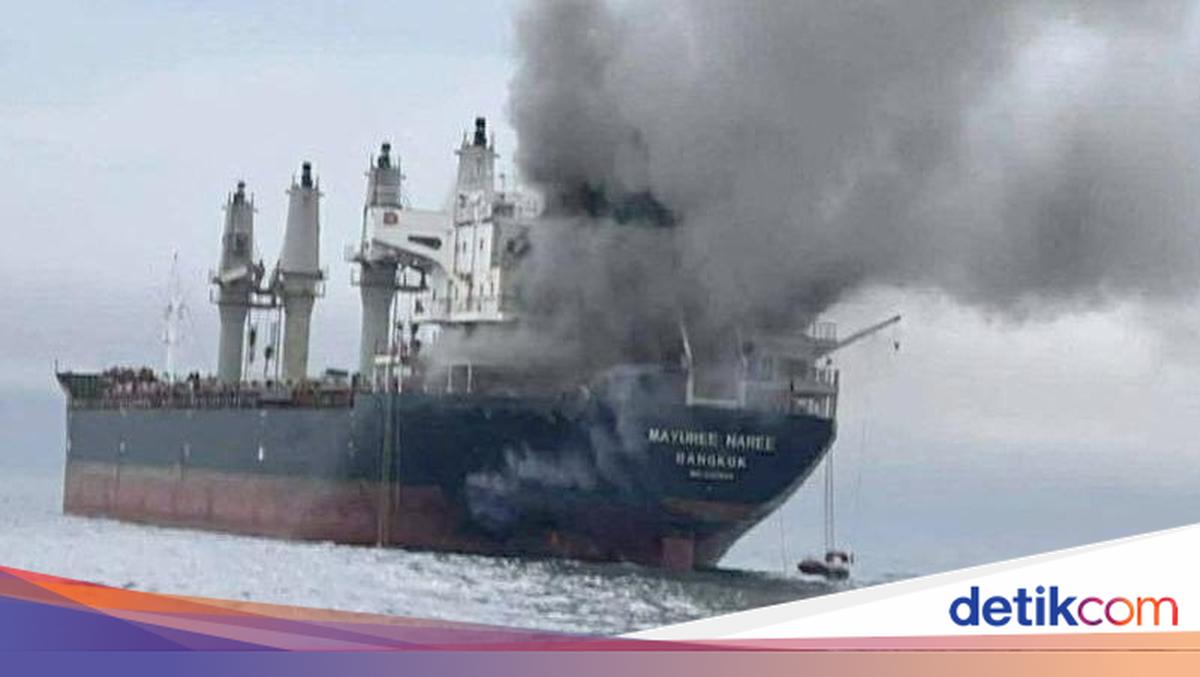
Pertamina Tankers Ready to Sail Through Strait of Hormuz
On April 18, 2026, at 14:49 UTC, two commercial vessels transiting the Strait of Hormuz came under fire from Iranian forces, yet remarkably, all crew members aboard both ships were reported safe following the incident, according to initial reports from Indonesian maritime authorities and regional news outlets. The attack occurred amid heightened tensions in the Gulf, where the Strait—a critical chokepoint for approximately 20% of global oil trade—has seen repeated flashpoints between Iranian naval units and commercial shipping over the past decade. While Iran has not issued an official statement confirming responsibility, regional analysts suggest the action may signal a renewed effort to assert control over maritime passageways amid stalled nuclear negotiations and ongoing sanctions pressure. The vessels involved, identified as Pertamina-operated tankers flying Indonesian flags, were reportedly en route from Gulf ports to Asian markets when intercepted, prompting immediate concern over the safety of Southeast Asian seafarers and the reliability of one of the world’s most vital energy corridors.
The Strait of Hormuz remains a geopolitical flashpoint where commercial interests collide with regional power struggles. Bordered by Iran to the north and the United Arab Emirates and Oman to the south, the 21-mile-wide passage funnels tankers carrying crude from Saudi Arabia, Iraq, Kuwait, and the UAE toward markets in India, China, Japan, and beyond. Any disruption here sends immediate shockwaves through global energy markets, affecting fuel prices at pumps from Jakarta to Johannesburg. For Indonesia—a nation whose economy relies heavily on imported oil and whose maritime sector employs over 400,000 seafarers—incidents like this are not abstract geopolitical events but direct threats to national livelihoods. The fact that both tankers were flying the Indonesian flag and operated by Pertamina, the state-owned energy company, elevated the incident from a regional concern to a matter of national interest, prompting Jakarta to summon Iranian diplomats for clarification while activating maritime safety protocols.
Historically, the Strait has been a site of recurring tension. During the 1980s Tanker War phase of the Iran-Iraq conflict, both sides targeted commercial shipping in an effort to strangle each other’s economies. More recently, in 2019 and 2021, Iranian forces seized or attacked foreign-flagged vessels in similar fashion, often citing alleged violations of maritime law. What makes the April 2026 incident notable is the apparent restraint shown—despite the use of force, no casualties were reported, and the vessels were allowed to continue their transit after inspection. This suggests a calculated demonstration of capability rather than an intent to escalate to open conflict. Nevertheless, maritime insurers have already begun adjusting risk premiums for transits through the Strait, with Lloyd’s of London noting a 15% increase in war risk coverage costs for vessels flying Southeast Asian flags since the beginning of the year.
To understand the broader implications, we spoke with Captain Rizal Ahmad, a veteran Indonesian maritime pilot with over 25 years of experience navigating the Gulf.
“What worries us isn’t just the immediate danger to crews—it’s the erosion of trust in the system. When flag states can’t guarantee safe passage through internationally recognized lanes, shipping companies start looking at alternatives. That means longer routes, higher costs, and more expensive goods for consumers everywhere. We need clear, enforceable rules—not just naval presence.”
Captain Ahmad’s concerns echo those of regional port authorities. In Singapore, the Maritime and Port Authority (MPA) has issued advisories urging vessels to maintain heightened vigilance and report any suspicious activity immediately. Meanwhile, in Jakarta, the Directorate General of Sea Transportation has activated its Vessel Traffic Monitoring System to track Indonesian-flagged ships in real time and coordinate with allied naval forces in the region.
Legally, the incident raises complex questions under the United Nations Convention on the Law of the Sea (UNCLOS), to which both Iran and Indonesia are signatories. While coastal states have the right to regulate traffic in their territorial waters—which extend 12 nautical miles from shore—the Strait of Hormuz includes sections governed by transit passage rights, allowing unimpeded navigation for all ships and aircraft. Any interference with such passage, short of self-defense or UN authorization, may constitute a violation of international law. Legal experts note that proving intent and assigning liability remains difficult without clear evidence or admission from the attacking party.
“Attributing responsibility in gray-zone maritime incidents is notoriously challenging,” said Dr. Lina Kartika, associate professor of international maritime law at the University of Indonesia. “Unless there’s unambiguous signal interception, radar data, or a claim of responsibility, victims often face a wall of silence when seeking redress through diplomatic or legal channels.”
Dr. Kartika emphasized that affected crews and shipping companies may need to rely on flag state diplomacy or international forums like the International Maritime Organization (IMO) to press for accountability, rather than expecting swift judicial remedies.
The human dimension of this event cannot be overlooked. Seafarers—often from Indonesia, the Philippines, India, and Bangladesh—form the invisible workforce that keeps global trade moving. Many operate under contracts lasting months, isolated from family, and face risks that go beyond piracy or weather: sudden geopolitical violence. Following the incident, the Indonesian Seafarers’ Union issued a statement calling for enhanced protective measures, including mandatory distress signaling equipment and real-time crew check-in protocols for vessels transiting high-risk zones.
For businesses and institutions tasked with managing the fallout, the incident underscores the need for robust, verified support systems. Shipping operators reviewing their risk exposure may benefit from consulting specialists in maritime law and international sanctions compliance. Those seeking to strengthen vessel tracking or emergency response protocols should look to providers of advanced maritime domain awareness systems. And for crews and families affected by such events, access to trauma-informed counseling and repatriation assistance becomes critical. These are precisely the services where a trusted global directory can make a difference—connecting users with vetted professionals who understand the unique pressures of maritime operations in volatile regions.
Whether it’s ensuring compliance with evolving international maritime regulations, securing rapid legal counsel following an incident at sea, or accessing crisis support for traumatized crews, the ability to locate qualified, trustworthy experts quickly is not just convenient—it’s essential. In an era where geopolitical risks can erupt with little warning, resilience depends not only on institutional preparedness but on the speed and accuracy with which the right human expertise can be mobilized.
When the waters grow uncertain and the safety of seafarers hangs in the balance, knowing where to turn for clear guidance and capable support becomes more than a procedural step—it becomes a lifeline. For those navigating the complex aftermath of maritime incidents, the World Today News Directory offers a curated pathway to verified professionals in maritime law, emergency response, and crew welfare—ready to assist when it matters most.