
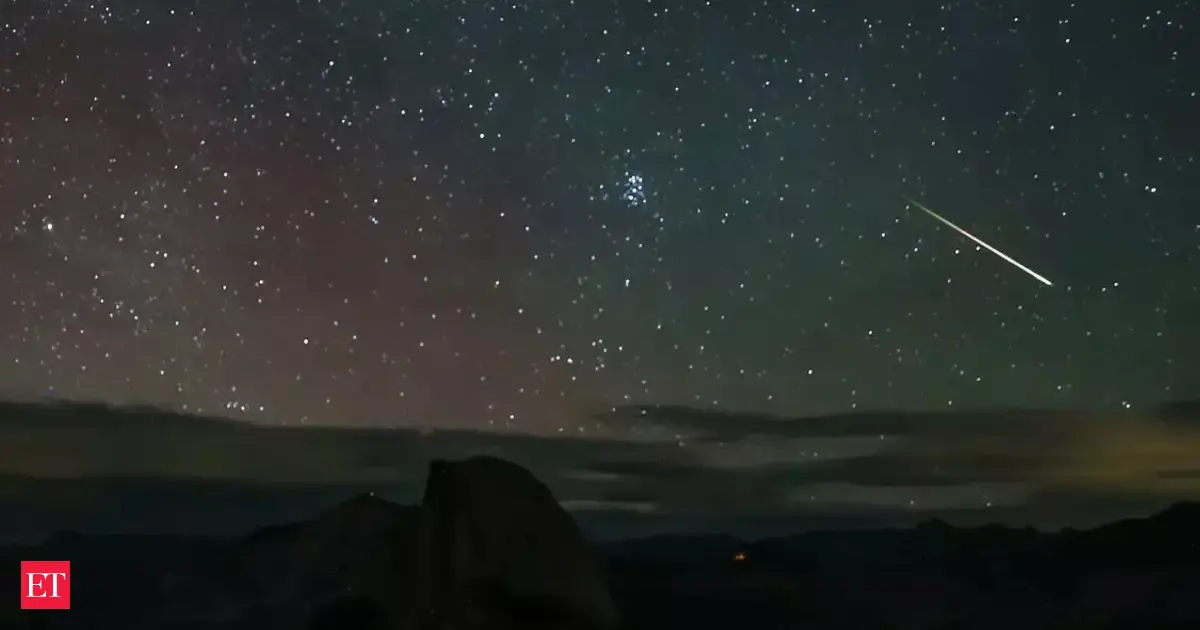
Perseid Meteor Shower to Peak August 12-13: Expect a Brilliant Display
Table of Contents
August 8, 2024 – Skywatchers are in for a treat as the annual Perseid meteor shower approaches its peak on the nights of August 12th and 13th, 2025. Experts predict favorable viewing conditions this year due to a waning crescent moon, offering a darker canvas for observing these “shooting stars.” The shower is renowned for its frequency and the vibrant blue trails often left by its meteors.
Understanding the perseid Meteor Shower
The Perseid meteor shower is one of the most consistent and spectacular meteor displays of the year, visible throughout the Northern Hemisphere. It occurs each August as Earth passes through the debris trail left by the comet 109P/Swift-Tuttle. This comet, discovered independently in 1862 by Lewis Swift and Horace Parnell Tuttle, orbits the sun every 133 years. The dust and ice particles, ranging in size, enter Earth’s atmosphere at speeds of up to 133,200 mph (214,400 km/h), burning up and creating the streaks of light we see as meteors.
unlike some other meteor showers, the Perseids are known for producing a higher percentage of fireballs – exceptionally bright meteors. NASA attributes this to the slightly larger size of the particles originating from Comet Swift-Tuttle. Observers can typically see between 50 and 100 meteors per hour during peak activity under ideal conditions.
When and Where to Watch in 2025
The peak of the 2025 Perseid meteor shower is expected overnight between August 12th and 13th, with the highest rates of meteors visible between 3:00 AM and 4:00 AM Eastern Daylight Time (EDT). however, meteors will be visible for several nights surrounding the peak.
To maximize your viewing experience:
- Find a Dark Location: Escape city lights and light pollution.Rural areas offer the best viewing conditions. Consider locations like Cherry Springs State Park in Pennsylvania, known for its exceptionally dark skies, or the Headlands International Dark Sky Park in Michigan.
- Look North: The radiant – the point in the sky from wich the meteors appear to originate – is located in the constellation Perseus, in the northeastern sky.
- Allow Your Eyes to Adjust: It takes approximately 20-30 minutes for your eyes to fully adapt to the darkness. Avoid looking at bright screens during this time.
- No Special Equipment Needed: The Perseids are best viewed with the naked eye. Binoculars or telescopes are not necessary and can actually limit your field of view.
- Be Patient: Meteor showers are unpredictable. Allow yourself ample time to observe and enjoy the show.
Why the Perseids Stand Out
the Perseids’ consistent performance and bright meteors make it a favorite among both casual observers and seasoned astronomers. The shower’s history is also well-documented, with observations dating back to 36 AD in China. The name “Perseids” comes from the constellation Perseus, as the meteors appear to radiate from that area of the sky.
Frequently Asked Questions
When is the peak of the 2025 Perseid meteor shower?
The peak occurs overnight from August 12 to 13, especially between 3 and 4 a.m.EDT.
Will I need special equipment to see the Perseids?
no. Just go outside, away from the city lights, and look up!
Sources: NASA, The mirror, EarthSky.org
