
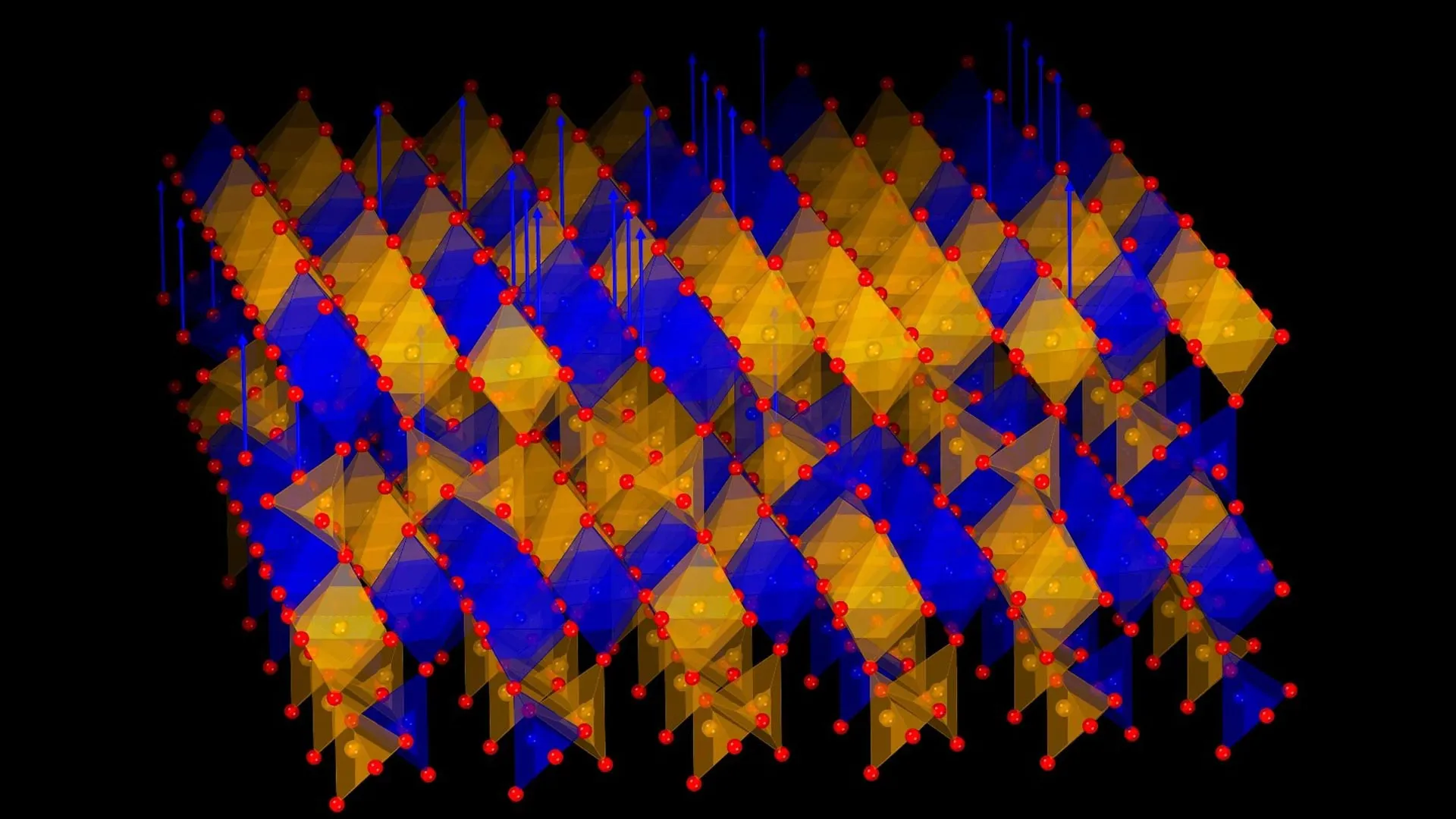
‘Breathing’ Crystal Could Revolutionize Clean Energy Technologies
Table of Contents
Seoul, South korea – August 22, 2025 - A collaborative team of researchers from South Korea and Japan has achieved a scientific breakthrough with the creation of a novel crystal capable of repeatedly absorbing and releasing oxygen at relatively low temperatures. This innovative material promises to reshape the landscape of clean energy development, with potential applications spanning fuel cells, energy-efficient windows, and advanced thermal devices.
A New Metal Oxide with Extraordinary Properties
The newly developed material is a specialized metal oxide composed of strontium,iron,and cobalt. Its defining characteristic lies in its ability to release oxygen when exposed to heat in a gaseous environment and then reabsorb it, all while maintaining structural integrity. This cyclical process, repeatable numerous times, positions it as a viable candidate for real-world technological implementations.
International Collaboration Drives Innovation
The groundbreaking study was spearheaded by Professor Hyoungjeen Jeen of the Department of Physics at Pusan National University in Korea, and co-authored by Professor Hiromichi Ohta from the Research Institute for Electronic Science at Hokkaido University in Japan. Their findings were published on August 15, 2025, in the prestigious journal Nature Communications. “It is indeed like giving the crystal lungs and it can inhale and exhale oxygen on command,” explained Professor Jeen.
Controlling oxygen dynamics within materials is paramount for technologies like solid oxide fuel cells, which efficiently generate electricity from hydrogen with minimal emissions [[1]]. It also holds importance for thermal transistors-devices capable of directing heat flow like electrical switches-and smart windows that dynamically adjust heat transmission based on weather conditions.
Historically, materials capable of similar oxygen control have been hampered by fragility or the need for extreme operating temperatures. This new crystal overcomes these limitations, functioning effectively under milder conditions and exhibiting remarkable stability. ”This finding is striking in two ways: only cobalt ions are reduced, and the process leads to the formation of an entirely new but stable crystal structure,” Professor Jeen clarified.
Researchers demonstrated the material’s ability to revert to its original composition upon oxygen reintroduction,confirming the complete reversibility of the process. Professor Ohta stated, “This is a major step towards the realization of smart materials that can adjust themselves in real time.” He further emphasized the broad potential, “The potential applications range from clean energy to electronics and even eco-pleasant building materials.”
Did you Know? The ability to control oxygen levels within a material is a critical factor in improving the efficiency and longevity of many energy technologies.
Funding and Support
This research was generously supported by the National Research Foundation of Korea (NRF) grant (RS-2025-00558200), funded by the Korea government. Additional funding came through the NRF’s international cooperation program (NRF-2022K2A9A1A01098180). Professor Ohta’s work received support from Grants-in-Aid for Scientific Research A (22H00253) from the Japan Society for the Promotion of Science (JSPS). Further support was provided by the Crossover Alliance and the Network Joint Research Center for Materials and Devices. Korea Basic Science Institute (grant No. RS-2024-00435344) and the Nano & Material Technology Development Program (RS-2024-00460372) also contributed to the project.
| Key Researchers | Affiliation |
|---|---|
| Hyoungjeen jeen | Pusan National University, Korea |
| Hiromichi Ohta | Hokkaido University, Japan |
pro Tip: Understanding the interplay between material structure and oxygen dynamics is crucial for designing next-generation energy storage and conversion devices.
What impact could this ‘breathing’ crystal have on the future of renewable energy sources? How might this technology be adapted for use in everyday consumer products?
Looking Ahead: The Future of ‘Breathing’ Crystals
The development of this oxygen-responsive crystal represents a significant leap forward in materials science. While still in its early stages, the technology holds immense promise for addressing critical challenges in energy efficiency and sustainability. Future research will likely focus on optimizing the material’s performance, reducing production costs, and exploring its potential in a wider range of applications. The field of solid-state chemistry is rapidly evolving, with ongoing efforts to discover and synthesize materials with tailored properties for specific technological needs. This breakthrough underscores the importance of international collaboration in driving scientific innovation.
Frequently Asked Questions
- What is a ‘breathing’ crystal? A ‘breathing’ crystal is a material that can repeatedly absorb and release oxygen without degrading.
- What are the potential applications of this crystal? Potential applications include fuel cells, energy-saving windows, and smart thermal devices.
- what makes this crystal unique? It operates at relatively low temperatures and remains stable during repeated oxygen absorption and release.
- Who led the research on this crystal? Professor Hyoungjeen Jeen from Pusan National University and Professor Hiromichi Ohta from Hokkaido University.
- When were the findings published? The findings were published in Nature Communications on August 15, 2025.
We’re excited to see how this groundbreaking discovery shapes the future of clean energy.Share this article with your network and let us know your thoughts in the comments below! don’t forget to subscribe to our newsletter for the latest updates in science and technology.
