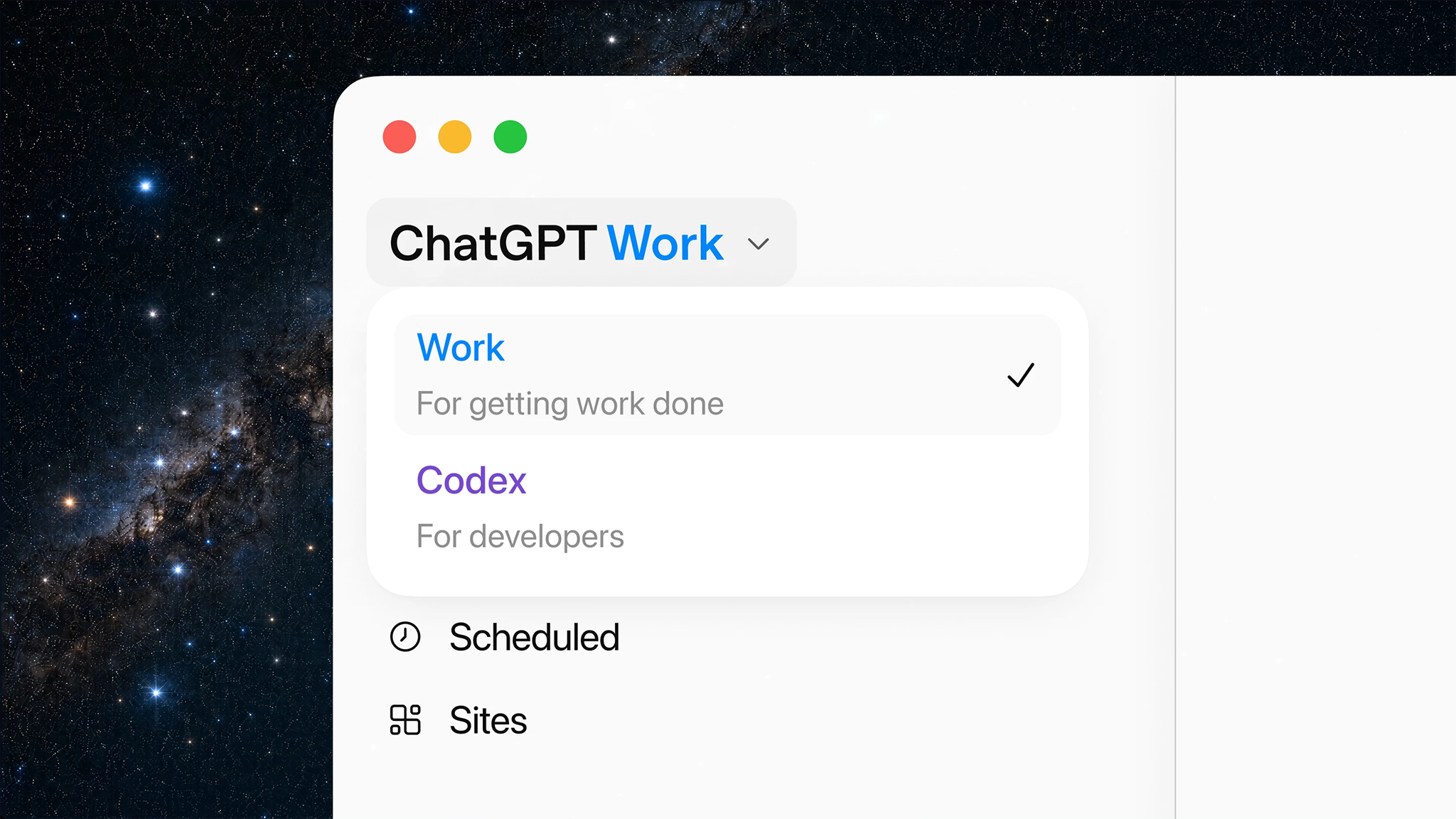
OpenAI Enhances ChatGPT With New App and File Integration Agent
OpenAI’s Autonomous Agent Shift: Architecting the Future of Project Execution
OpenAI has begun deploying a new class of autonomous agents within the ChatGPT ecosystem, designed to move beyond simple chat-based queries into the realm of end-to-end project execution. By integrating directly with local file systems and external application APIs, these agents can now structure project workflows, manage file dependencies, and synthesize final deliverables without continuous human prompting. This shift signals a transition from passive LLM (Large Language Model) interaction to active, agentic task orchestration within enterprise development environments.
The Tech TL;DR:
- Autonomous Orchestration: New agentic capabilities allow ChatGPT to interface with local file systems and third-party APIs to complete multi-step projects autonomously.
- Workflow Integration: The system shifts from a conversational interface to a task-execution engine, capable of managing file versioning and structured project hierarchies.
- Deployment Reality: For enterprise IT, this necessitates a re-evaluation of data governance and SOC 2 compliance, as AI agents gain read/write permissions to internal project repositories.
Architectural Shifts and Agentic Capabilities
The move toward agentic workflows represents a significant evolution in OpenAI’s API architecture. Unlike traditional LLMs that operate in a stateless, request-response loop, these new agents utilize a persistent context window capable of maintaining state across complex, multi-day development cycles. According to recent technical documentation from OpenAI, the agentic framework is designed to handle “long-horizon” tasks by breaking down high-level project goals into granular, executable sub-tasks.

This functionality relies on the integration of tool-use capabilities, where the model can execute code snippets and interact with external environments. For developers, this means the AI can now perform tasks traditionally restricted to CI/CD pipelines or local terminal sessions. As these agents scale, the need for robust environment sandboxing becomes paramount. Organizations currently struggling with unauthorized AI ingress should consult with a [Cybersecurity Auditor] to ensure that agentic access tokens are scoped to the principle of least privilege.
Implementation: Interfacing with the Agentic API
For engineering teams looking to integrate these capabilities into existing stacks, the interaction model shifts toward defining structured task parameters. Below is a conceptual cURL request demonstrating how an agent might be initialized with specific file-system permissions for a project-based task:
curl https://api.openai.com/v1/agents/tasks

  -H "Authorization: Bearer $OPENAI_API_KEY"

  -H "Content-Type: application/json"

  -d '{

    "project_id": "proj_98765",

    "capabilities": ["fs_read", "fs_write", "api_execute"],

    "task": "Refactor legacy module and update documentation"

  }'
This level of integration requires careful management of API limits and token consumption. As noted by lead maintainers in the broader open-source AI community on GitHub, the primary challenge remains “hallucination containment” when agents are granted write-access to production environments. If your firm is scaling these implementations, it is advisable to engage a [Managed Service Provider] to oversee the containerization and monitoring of these AI workloads.
Framework C: The “Tech Stack & Alternatives” Matrix
To understand where OpenAI’s new agentic features sit in the current ecosystem, we must compare them against existing autonomous project management solutions. The current landscape is defined by the tension between proprietary, closed-source models and modular, open-source frameworks.

| Feature | OpenAI Agentic Workflows | AutoGPT (Open Source) | Anthropic Claude Projects |
|---|---|---|---|
| Environment Access | Native API/Local File | Plugin-based/Custom | Context-window focused |
| Orchestration | Integrated | Manual configuration | Collaborative |
| Latency | Optimized/Cloud | Variable (Hardware dependent) | Optimized/Cloud |
The core difference lies in the level of abstraction. While tools like AutoGPT require extensive configuration via Stack Overflow-sourced scripts and manual environment setup, OpenAI’s implementation prioritizes a “walled garden” approach, trading configuration flexibility for ease of deployment. This is a critical distinction for CTOs deciding between building internal agentic frameworks or utilizing managed vendor solutions.
The Future of Enterprise AI Governance
The transition toward agentic AI is not merely a feature release; it is a fundamental shift in the developer experience. As these models gain the ability to manipulate codebases, the distinction between a “copilot” and a “developer” blurs. This requires a proactive approach to security auditing. For firms integrating these agents into production, securing the data pipeline is no longer optional. If your organization is undergoing a digital transformation involving AI agents, [Software Development Agency] partners can provide the necessary oversight to ensure that code generated by autonomous agents meets industry standards for security and maintainability.
Disclaimer: The technical analyses and security protocols detailed in this article are for informational purposes only. Always consult with certified IT and cybersecurity professionals before altering enterprise networks or handling sensitive data.