
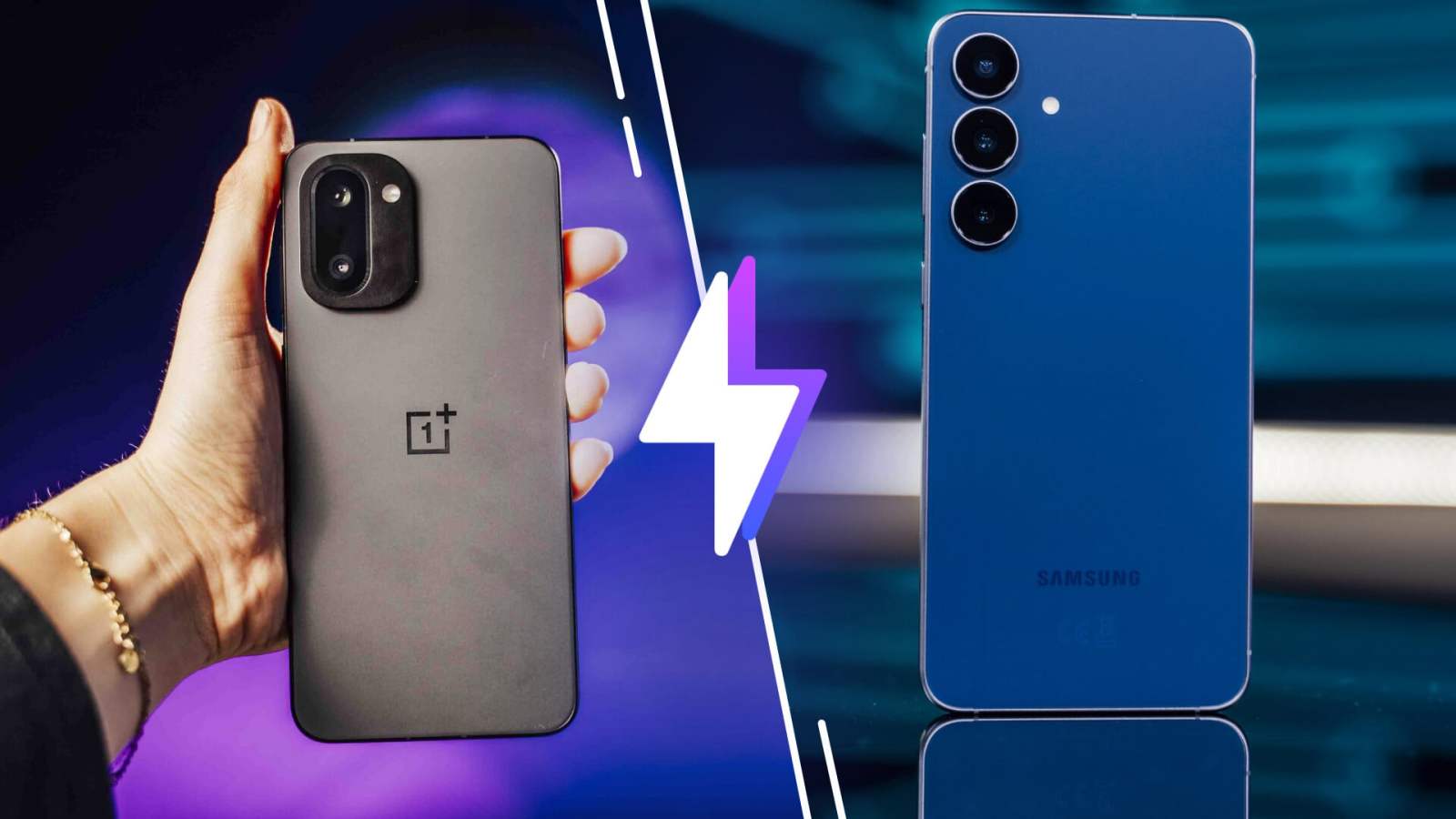
The smartphone landscape is fiercely competitive, even outside the flagship tier. Samsung, a dominant force in the premium market, faces increasing pressure from rivals like OnePlus in the advanced mid-range segment. A direct comparison between the OnePlus 15R and the Samsung Galaxy S25 FE reveals a compelling battle for consumer attention.
The OnePlus 15R has garnered positive reception, earning an 8/10 rating from one reviewer who particularly praised its exceptional battery life at a price point of €729. The Samsung Galaxy S25 FE, launched last summer, debuted at €750 and received the same score from the same publication. This sets the stage for a closely contested matchup.
Both smartphones feature AMOLED displays, under-screen fingerprint sensors, and USB Type-C connectivity. Both also support 5G and NFC technology. Although, key differences emerge in specifications, and features.
The Samsung Galaxy S25 FE is slightly more compact, measuring 76.6 mm x 161.3 mm x 7.4 mm, compared to the OnePlus 15R. This is attributed to the Samsung’s smaller 6.7-inch screen and significantly smaller battery. The S25 FE weighs 190 grams, while the OnePlus 15R ranges from 213 to 219 grams depending on the finish. Both devices utilize an aluminum frame and glass backs, with the Samsung employing Gorilla Glass Victus+ for enhanced screen protection compared to the OnePlus’s Gorilla Glass 7i. Both phones are IP68 and IP69K (OnePlus 15R) certified for water and dust resistance.
OnePlus incorporates a “Plus Key” button, similar to the action button on iPhones, offering customizable shortcuts. The S25 FE uniquely supports eSIM functionality.
While the Samsung’s screen is slightly brighter at 1,780 nits compared to the OnePlus’s 1,307 nits, enhancing outdoor visibility and HDR content, the OnePlus 15R boasts a higher resolution of 2800 x 1272 pixels against the Samsung’s 2340 x 1080 pixels. The OnePlus also offers a faster 165Hz refresh rate, compared to the Samsung’s 120Hz, though the benefit is primarily noticeable to gamers playing compatible titles.
Samsung has integrated its Galaxy AI suite, offering advanced photo editing, text correction, web page summarization, and real-time translation capabilities. OnePlus offers similar AI tools, but they are considered less refined. OnePlus’s “Mental Space” feature provides a secure storage space for memories, categorized by AI, with associated reminders and to-do lists. Samsung provides a commitment to seven major Android updates for the S25 FE, while OnePlus promises four.
Performance-wise, the OnePlus 15R significantly outperforms the Samsung Galaxy S25 FE. The OnePlus utilizes the Qualcomm Snapdragon 8 Gen 5 processor, while the Samsung features the Samsung Exynos 2400. The Snapdragon 8 Gen 5 delivers stellar performance, rivaling that of last year’s high-end smartphones.
The OnePlus 15R’s camera system is a potential weakness. It features a 50MP main sensor, an 8MP ultra-wide lens, and a 32MP front camera. The Samsung Galaxy S25 FE offers a more versatile setup with a 50MP main sensor, a 12MP ultra-wide lens, an 8MP telephoto lens with 3x optical zoom, and a 12MP front camera. While the OnePlus aims for strong contrast in its images, Samsung tends towards more saturated colors.
Battery life is a clear win for the OnePlus 15R, equipped with a 7,400 mAh battery compared to the Samsung’s 4,900 mAh. Testing revealed the OnePlus 15R lasting three days on a single charge, while the Samsung struggled to exceed one day. The OnePlus 15R also supports 80W fast charging, fully recharging the device in approximately one hour, while the Samsung takes 10-15 minutes longer. The Samsung S25 FE supports wireless charging (Qi 2).
the choice between the OnePlus 15R and the Samsung Galaxy S25 FE depends on individual priorities. If battery life and performance are paramount, the OnePlus 15R emerges as the stronger contender, particularly given its inclusion of 256GB of base storage compared to the S25 FE’s 128GB. The Samsung Galaxy S25 FE offers a refined software experience, a more versatile camera system, and a slightly brighter display, but at a cost of battery endurance and processing power.
