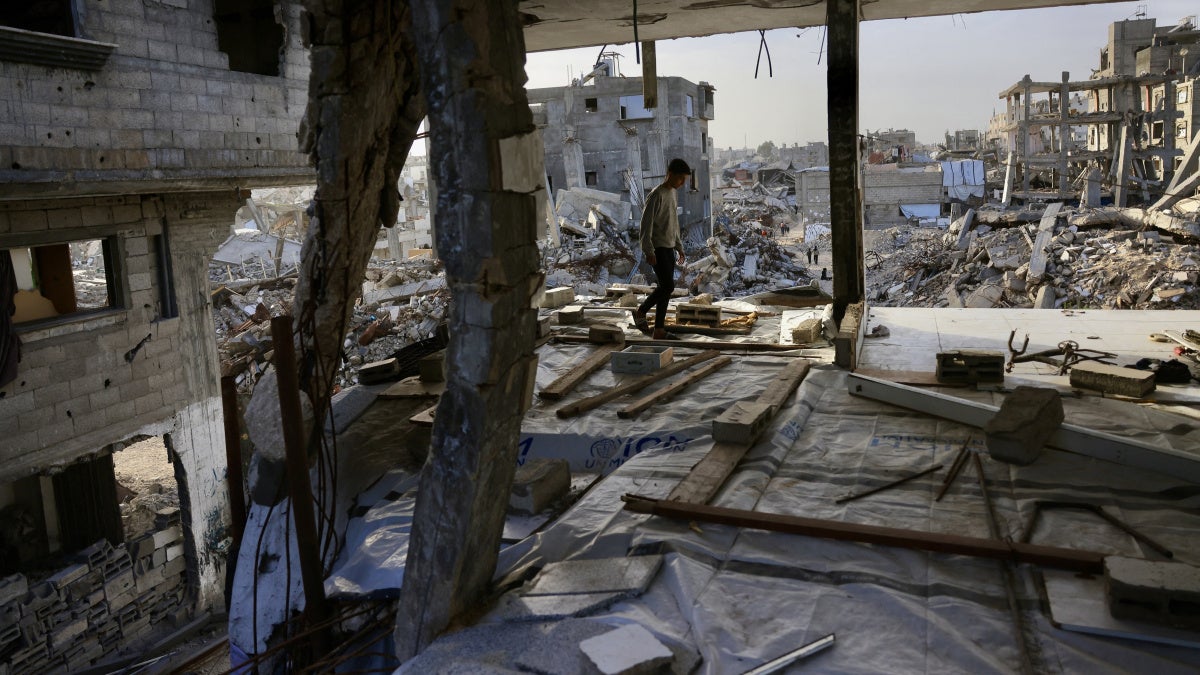
One Year After Ceasefire, Gaza Faces Ongoing Destruction, HRW Reports
One year after a ceasefire agreement took effect on October 10, 2025, Israeli forces continue to kill and wound civilians and deny sufficient food, aid, and water to Palestinians in Gaza, Human Rights Watch reported. The ongoing military actions—including forced displacement, residential demolitions, and extermination—have persisted throughout the duration of the ceasefire, according to the human rights organization.
Humanitarian aid volumes remain far below required levels, critical access routes face repeated obstructions, and reconstruction has not yet begun. Gaza’s Health Ministry reports that continuing Israeli attacks have killed at least 1,400 Palestinians and wounded 4,881 others since the ceasefire started, raising the overall death toll since October 2023 to more than 74,000, which includes over 21,000 children.
Ceasefire Anniversary Brings Nighttime Bombardment and Shelter Crisis
The anniversary of the fragile agreement arrived on October 10, 2026, following a night of intense attacks on Gaza City and Khan Yunis. The Israeli military ordered residential blocks evacuated at night before executing airstrikes that destroyed homes and apartment buildings, killing a woman and a child who were seeking refuge. In the Katiba area north of Khan Yunis and in the Sabra and Old City neighborhoods of Gaza City, strikes destroyed multiple buildings and displaced hundreds of residents who had to spend the night in hospital courtyards, makeshift shelters, or with relatives.
The Israeli military stated that the nighttime strikes targeted weapons storage facilities belonging to Hamas and Islamic Jihad. Palestinian factions denied those claims, accusing Israel of deliberately destroying remaining standing structures in Gaza. Figures compiled by Gaza’s government media office and Health Ministry indicate that Israel has committed 5,223 violations on the ground since the ceasefire began, including bombing, gunfire, home demolitions, and incursions, while detaining more than 200 Palestinians.
In September 2026, a damaged building housing approximately 100 people collapsed, killing 21 individuals, including 12 children.
Political Stalemate and Territorial Expansion Along the Yellow Line
The U.S.-brokered ceasefire agreement halted major military operations, freed remaining hostages, and increased humanitarian access, but failed to establish a new Palestinian administration aided by international forces, disarm Hamas, or end Israel’s control over more than half of the territory. Israeli Prime Minister Benjamin Netanyahu conditioned progress on Hamas’s complete disarmament, a demand rejected by Hamas and the Trump administration, who advocated for simultaneous implementation.
While Hamas officially dissolved its government in July, it maintains its civil service and remains the dominant power in the approximately 40 percent of Gaza not controlled by Israeli forces. Meanwhile, Israel has barred the newly formed Palestinian administration from entering Gaza via Egypt. Indonesia, which pledged the largest contingent of 8,000 soldiers to an International Stabilization Force announced in February, put those plans on hold as global focus shifted to the Iran war.

On the ground, Israeli forces continue to push the “Yellow Line”—the boundary of ground force presence under the ceasefire—westward toward the Mediterranean Sea. The area within the Yellow Line now encompasses about 64 percent of the Gaza Strip.
Health Collapse, Looming Famine, and Search for the Missing
Gaza’s education and health infrastructure remain devastated. The World Health Organization recorded 56 attacks on health care between January and August 2026, leaving just 35 of 57 hospitals and field hospitals partially functional and none fully operational. Overcrowded camps, poor waste management, sewage overflow, and rodent infestations have driven an increase in disease.
Acute food insecurity and the risk of famine persist. The Integrated Phase Classification reported in July that 67 percent of the population—exceeding 1.4 million people—faces crisis or worse levels of acute food security through December 2026, exacerbated by the destruction of agricultural land and restrictions on fishing. Recovery and reconstruction needs are estimated at $71.4 billion over the next decade by the European Union and the United Nations. Although the Board of Peace presented a six-month recovery program on September 23, no recovery efforts have commenced.
Palestinian civil defense authorities have recovered over 630 bodies from under the rubble since November 2025 and estimate that more than 8,000 remain buried.
The outside world may be under a dangerous illusion that life is returning to normal, but reality tells a very different story. There is nothing normal about living in a tent under bombardment, without enough food or drinking water for your family.