
Octopuses Fooled by Fake Arms, Revealing Deep Self-Awareness
Intelligent Cephalopods Exhibit “Body Ownership” in Groundbreaking Study
Scientists have successfully tricked octopuses into believing a synthetic limb is their own, a remarkable feat suggesting these intelligent invertebrates possess a sense of self-ownership akin to humans. The study’s findings shed new light on the complex cognitive abilities of cephalopods.
The Illusion Unveiled
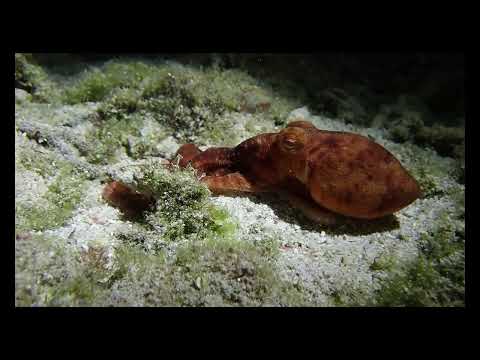
Researchers at the University of the Ryukyus conducted experiments using plain-body night octopuses. By simultaneously stimulating a hidden real arm and a visible artificial one, scientists were able to create a “body transfer illusion.” When the fake arm was then touched, the octopuses reacted as if their own limb had been harmed.
The responses included rapid color changes, evasive swimming, and retracting their appendages. These reactions indicate that the octopuses perceived the artificial limb as an extension of their own body, despite not experiencing any physical sensation from the simulated pinch.
Insights into Cephalopod Cognition
This breakthrough challenges previous assumptions about octopus intelligence and highlights their sophisticated multisensory integration. The study authors propose that, like humans, octopuses maintain a complex internal representation of their bodies.
Sumire Kawashima and Yuzuru Ikeda, the lead researchers, stated in their findings, “Our findings suggest, like humans, octopuses have a multisensory representation of their body.”
This suggests that the fundamental perceptual rules governing body ownership may be shared across vastly different evolutionary paths.
A Unique Nervous System
Octopus arms are controlled by a distributed nervous system, with a significant portion of neurons located within each arm, allowing for independent action. Each of the eight limbs can make decisions without direct input from the central brain and can even “taste” objects through their suckers.
Despite this decentralized control, the octopus brain appears to prioritize visual information, which enables the acceptance of a foreign limb as its own. This reliance on visual cues is a key factor in the success of the body ownership illusion.
Evolutionary Significance
The study notes that the cognitive mechanisms behind body ownership in octopuses share similarities with mammals. This makes the octopus a valuable model for understanding the evolution of self-awareness and body perception in the animal kingdom.
Kawashima and Ikeda argue, “These findings in the octopus, which has a complex nervous system that has developed independently of vertebrates, may be an important model for studying the evolution of the sense of body ownership.”
The research, published in *Current Biology*, offers a fascinating glimpse into the sophisticated minds of these often-misunderstood marine creatures. The findings are particularly relevant as research into artificial intelligence and prosthetics continues to advance, seeking to replicate human-like sensory integration.
https://youtube.com/watch?v=mshRG7IndzE%22+title%3D%22YouTube+video+player%22+frameborder%3D%220%22+allow%3D%22accelerometer%3B+autoplay%3B+clipboard-write%3B+encrypted-media%3B+gyroscope%3B+picture-in-picture%3B+web-share%22+referrerpolicy%3D%22strict-origin-when-cross-origin%22+allowfullscreen+loading%3D%22lazy
