
Air Quality Alert issued for New York: What You Need to Know
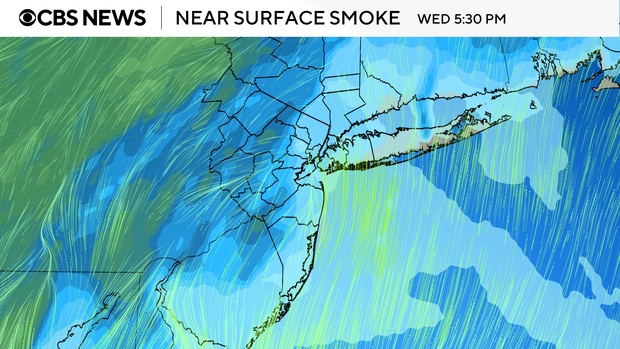
New York City and surrounding areas are under an air quality alert, prompting concerns for residents’ health. The alert, effective from 11 a.m.to 11 p.m., encompasses a wide region, and understanding the causes and implications is crucial.
Affected Areas
- New York City: All five boroughs are included in the alert.
- Hudson Valley: Dutchess, Orange, Putnam, Rockland, Sullivan, Ulster, and Westchester counties.
- Western New York: Cattaraugus, Chautauqua, Erie, Genesee, Niagara, Orleans, and Wyoming counties were added to the advisory.
- Not Included: Long Island and the Jersey Shore are expected to remain unaffected.
The Culprit: Ozone and Wildfire Smoke
While ozone is a common summer air quality concern in New York City, the current alert is exacerbated by smoke drifting from Canadian wildfires. Hundreds of wildfires are burning across Canada, sending plumes of smoke into the U.S.
Did You Know?
In june 2023, New York City experienced its worst air quality on record due to Canadian wildfire smoke, reaching an Air Quality Index (AQI) of 484.
The combination of these factors is leading to hazy sunshine and potentially unhealthy air quality levels.
Understanding Ozone’s Role
New York City’s air quality often suffers in the summer
due to higher temperatures and humidity. Stagnant air traps pollutants from cars and factories, creating high levels of fine particulates that react to sunlight, leading to or worsening respiratory issues.
Officials suggest mitigating ozone levels by curtailing car use in favor of mass transit. Ozone levels generally reduce at night.
Air Quality Index (AQI) Explained
The Air Quality Index (AQI) is a tool used to measure air pollution and its associated health risks. It ranges from 0 to over 300, wiht higher numbers indicating worse air quality.
- Good (Green): 0 to 50
- Moderate (Yellow): 51 to 100
- Unhealthy for Sensitive Groups (Orange): 101 to 150
- Unhealthy (Red): 151 to 200
- Very unhealthy (Purple): 201 to 300
- Hazardous (Maroon): 301 and higher
An air quality alert is typically issued when the AQI exceeds 100. Today, it’s expected to be around 105.
Pro Tip:
Check your local AQI regularly using resources like AirNow.gov to stay informed about air quality conditions in your area.
Sensitive groups,including people with heart or lung disease,older adults,children,and pregnant women,are notably vulnerable during air quality alerts.
The Red Sun and moon Phenomenon
Smoke from wildfires can cause the sun and moon to appear with a reddish glow.
The color of the sky is steadfast by how sunlight interacts with particles in the air. When smoke introduces more particulate matter,it can impact the color.
Matt Sitkowski, the science editor in chief at The Weather Channel, explained:
When smoke is in the atmosphere, it not only makes the sun dimmer, it increases the amount and size of particulate matter in the atmosphere that absorbs more of the shorter wavelengths, leaving longer wavelengths to reach our eyes.
Matt sitkowski, The Weather Channel
Weather Forecast for the Week
Temperatures are expected to rise, reaching the mid-to-upper 80s. Humid conditions will also increase. Thursday is forecast to be the hottest day of the year so far, with highs in the upper 80s to low 90s for most areas, except coastal regions. There’s also a slight chance of afternoon/evening thunderstorms for the northwestern suburbs.
The smoke and haze are expected to persist. Friday will be partly cloudy, warm, and humid with a chance of thunderstorms.Saturday is expected to be less warm but still humid, with another chance of storms.
Frequently Asked Questions (FAQ)
-
What is an air quality alert?
It’s a warning issued when air pollution levels are unhealthy for sensitive groups.
-
Who is considered a sensitive group?
People with heart or lung disease, older adults, children, and pregnant women.
-
What should I do during an air quality alert?
Limit outdoor activities, especially strenuous ones. Keep windows closed and use air conditioning if possible.
-
Why is the sky red?
Smoke particles in the air scatter sunlight, causing the sun and moon to appear reddish.
