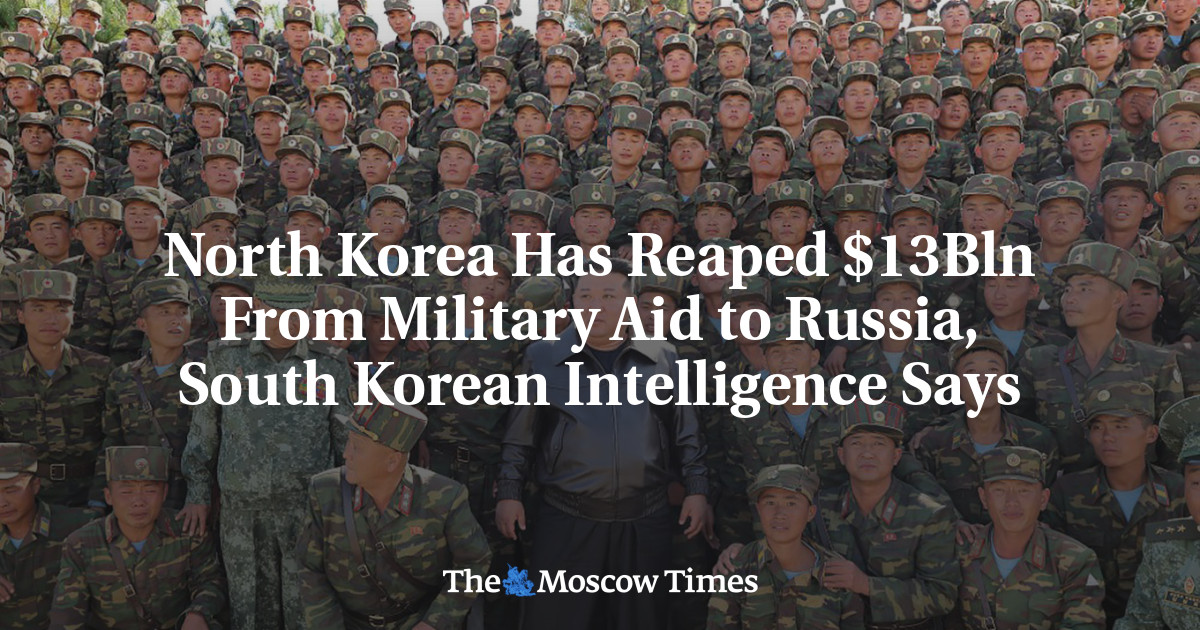
North Korea Bypasses Sanctions Through Military Trade
South Korean intelligence reveals North Korea has acquired $13 billion through military aid to Russia. By trading weapons and manpower for hard currency, energy, and military technology, Pyongyang is effectively bypassing international sanctions, shifting the geopolitical balance in Eurasia and creating new security vulnerabilities for global trade and regional stability.
The architecture of international sanctions is built on a simple premise: isolate a rogue state economically until the cost of aggression becomes unsustainable. For decades, the global community has attempted to starve Pyongyang of the resources needed to fuel its nuclear ambitions. However, the recent discovery of a $13 billion windfall suggests that the walls have not just cracked—they have been dismantled.
What we have is not a mere transaction of goods. It is a strategic lifeline.
The scale of this financial influx is staggering. For a regime that operates under extreme economic constraints, $13 billion represents more than just profit; it is the ability to stabilize a volatile domestic economy and accelerate military modernization. The exchange is straightforward yet devastating: North Korea provides the raw materials of war—weapons and manpower—and in return, Russia provides the essential ingredients of state survival.
The Currency of Survival: Breaking Down the Exchange
The primary source of this windfall is a calculated trade-off. Pyongyang is leveraging its industrial capacity for munitions to secure three critical assets that it cannot legally acquire on the open market.

- Hard Currency: Direct payments in stable foreign currencies allow the regime to purchase luxury goods for the elite and essential materials for the military, bypassing the restrictive banking systems that usually freeze North Korean assets.
- Energy Supplies: Fuel is the lifeblood of any military and industrial complex. By securing energy supplies from Russia, North Korea eliminates its dependence on illicit ship-to-ship transfers, which are risky and expensive.
- Military Technologies: This is the most dangerous component. The transfer of “critical military technologies” could include satellite capabilities, missile guidance systems, or nuclear submarine tech, potentially leaping North Korea forward by years in its weapons development.
When a state can trade artillery shells for satellite data, the traditional leverage of economic sanctions vanishes. This creates a systemic failure in global governance, where the United Nations Security Council resolutions become suggestions rather than mandates.
The problem extends beyond the borders of the Korean Peninsula. This partnership creates a “sanctions-proof” bloc that encourages other isolated nations to seek similar bilateral loopholes.
Regional Fallout and the Security Vacuum
For Seoul and Tokyo, this development is a nightmare scenario. The influx of $13 billion allows Pyongyang to sustain its military posture without needing to appease the international community. It removes the incentive for diplomacy.
The geopolitical anchoring of this crisis is centered in the East Asian corridor. As Russia and North Korea tighten their bond, the security architecture of the Pacific is being rewritten. We are seeing a shift where regional infrastructure—from ports to communication hubs—must now be viewed through the lens of heightened risk.
“We are witnessing the birth of a shadow economy where weapons of war are the primary currency. When a regime can monetize its military output to this extent, the traditional tools of diplomacy are rendered obsolete.”
This shift creates an immediate need for heightened corporate and governmental vigilance. Companies operating in the region are now facing a minefield of compliance risks. Navigating the intersection of international law and these new “shadow” trade routes requires specialized expertise. Many firms are now turning to international trade lawyers to ensure their supply chains are not inadvertently touching assets funded by this illicit windfall.
The Macro-Economic Ripple Effect
The $13 billion gain is not just a number on a ledger; it is a distortion of the global arms market. By flooding the Russian war effort with munitions, North Korea is essentially subsidizing a conflict while enriching its own treasury.
| Resource Provided | Strategic Gain for North Korea | Global Security Impact |
|---|---|---|
| Conventional Weapons | Hard Currency Influx | Prolonged conflict in Eurasia |
| Military Manpower | Energy & Fuel Security | Normalization of state-sponsored mercenaries |
| Industrial Capacity | Advanced Military Tech | Accelerated nuclear/missile proliferation |
This transaction model proves that sanctions are only as strong as the weakest link in the global chain. If a permanent member of the Security Council is the one facilitating the breach, the entire system collapses.
The financial complexity of these transfers—likely involving a mix of cryptocurrency, front companies, and barter systems—makes them incredibly difficult to track. For governments attempting to freeze these assets, the task is nearly impossible without the help of forensic accountants who specialize in tracing obfuscated capital flows across borders.
A New Era of Geopolitical Risk
We are moving into a period where “economic warfare” is no longer a one-way street. The ability of a sanctioned state to find a powerful patron means that isolation is no longer a guaranteed penalty for aggression.

The long-term impact is a world where military technology is traded like a commodity. If North Korea can successfully trade munitions for satellite tech today, what stops other nations from creating similar “arms-for-tech” hubs tomorrow? The precedent is now set.
As the situation evolves, the risk profile for international investment in East Asia has shifted. Municipalities and regional governments are now forced to reconsider their security dependencies. Organizations are increasingly relying on geopolitical risk analysts to predict how these shifting alliances will affect everything from shipping lanes to energy prices.
The $13 billion windfall is a warning. It tells us that the era of the “global police” is giving way to an era of strategic partnerships between the marginalized and the defiant. The question is no longer whether sanctions work, but who is willing to pay the price to break them.
In a world where the rules are being rewritten in real-time, the only certainty is the need for verified, expert guidance to navigate the chaos. Whether it is legal compliance, financial tracing, or security strategy, the tools for survival are found in the expertise of those who understand the hidden machinery of global power. You can find these vetted professionals through the World Today News Directory, ensuring you are prepared for a landscape where the old rules no longer apply.