Non-Invasive Alternatives to Liver Biopsy for MASLD: The LITMUS Study
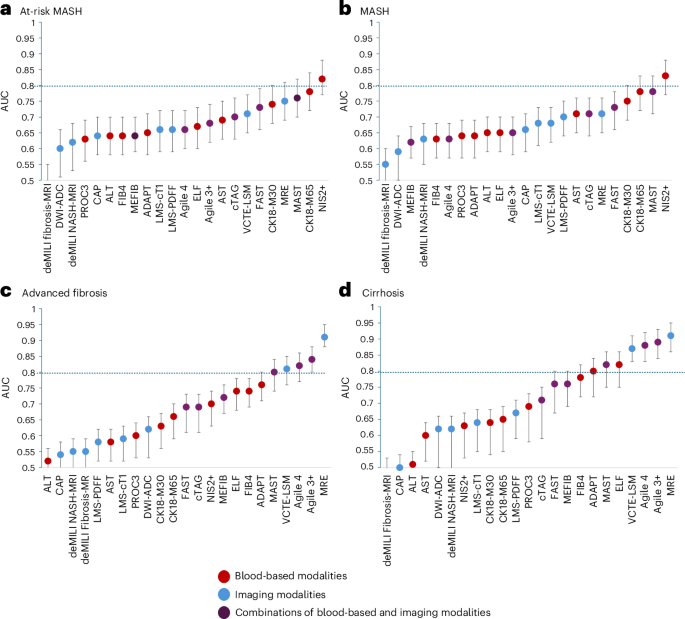
Non-invasive imaging tests and elastography-based composite scores show sufficient diagnostic accuracy to replace liver biopsy histopathology when evaluating advanced fibrosis and cirrhosis in metabolic dysfunction-associated steatotic liver disease (MASLD), according to findings from the LITMUS imaging study published in Nature Medicine on August 3, 2026. While these tools offer a reliable alternative for staging scar tissue severity, the study data indicate that current non-invasive markers still lack the necessary accuracy to diagnose metabolic dysfunction-associated steatohepatitis (MASH) independently.
- Elastography methods and composite scores demonstrate adequate diagnostic reliability to stage advanced fibrosis and cirrhosis in MASLD without requiring surgical tissue sampling.
- Current non-invasive biomarkers fail to meet diagnostic accuracy thresholds for identifying active MASH.
- Findings stem from the LITMUS imaging study published in Nature Medicine, addressing critical diagnostic gaps in chronic liver disease management.
Evaluating Diagnostic Accuracy in MASLD Fibrosis
The LITMUS initiative sought to validate non-invasive testing (NIT) alternatives against standard histopathology to reduce patient morbidity and streamline clinical monitoring.
Per the study data, elastography techniques—which measure liver stiffness as a proxy for extracellular matrix remodeling and collagen deposition—coupled with specific composite scoring algorithms, successfully identified advanced fibrosis stages (F3) and compensated cirrhosis (F4).
The Persistent Challenge of MASH Identification
Despite strong performance metrics for structural fibrosis scoring, the LITMUS investigators observed a significant limitation regarding inflammatory activity. None of the evaluated markers or panel combinations achieved sufficient sensitivity and specificity to diagnose MASH reliably.
This diagnostic gap leaves clinicians dependent on multi-parametric assessment models or targeted tissue evaluation when tracking active hepatic inflammation. While elastography accurately captures the end-stage mechanical consequence of these cascades—fibrosis—it struggles to isolate active inflammatory drivers without histological confirmation.
Clinical Translation and Future Diagnostic Pathways
However, the inability of current non-invasive markers to replace histology for MASH underscores the necessity for multi-modal biomarker discovery, combining imaging parameters with circulating serum proteins or genomic signatures.