
Brussels Grapples with China‘s Economic Leverage as nexperia Dispute Highlights Growing Concerns
A dispute over teh Dutch takeover of Nexperia, a crucial semiconductor manufacturer, has laid bare China’s increasing willingness to wield economic pressure against the European Union, raising fears of a widening strategic imbalance. The case, alongside broader concerns about supply chain vulnerabilities – notably regarding rare earth minerals – underscores a growing perception within the EU that China is actively “weaponizing” the economic relationship to its advantage.
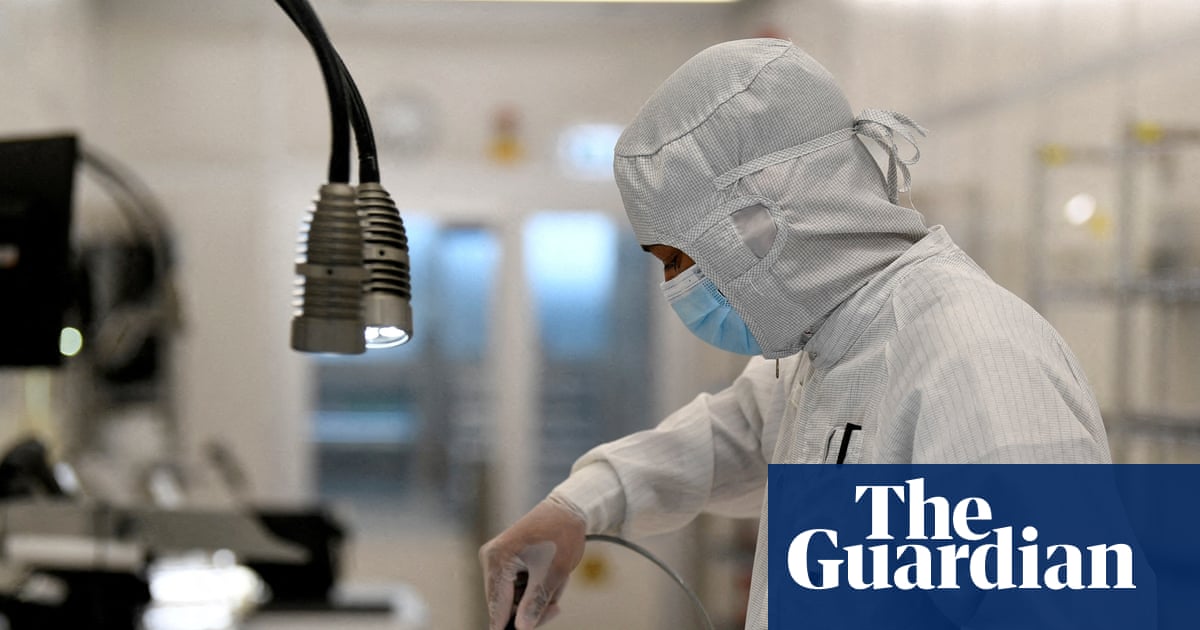
The Nexperia situation, involving a Chinese-owned British company and a sensitive technology sector, triggered intervention from the Dutch government, which ultimately blocked the full takeover despite previous approvals. This reversal, prompted by national security concerns, sent a clear signal to Beijing and ignited frustration within EU circles about the bloc’s limited ability to counter China’s economic tactics.
Beyond semiconductors, the EU is increasingly wary of China’s dominance in critical materials.Experts warn China could prioritize access to rare earths for US firms while restricting supply to Europe. “China could give US firms preferential access to rare earths while keeping the Europeans on a tightly controlled drip-feed,” one expert noted.
EU officials acknowledge the need for stronger trade defenses, exemplified by last week’s anti-subsidy examination into Chinese tyres, but express concern that member states aren’t adequately supporting diversification of supply chains. European Commission President Ursula von der Leyen has stated the EU is “ready to use all of the instruments in our toolbox to respond if needed,” referencing the anti-coercion instrument (ACI) – a trade defense law passed in 2023 that allows for potential restrictions on Chinese imports and market access.
French President Emmanuel macron has advocated for utilizing the ACI against China, calling recent actions “economic coercion” and demanding a response. Though, he faces resistance, particularly from Germany, which fears retaliation.Joachim Taiber, an expert at Imperial College, highlighted the economic risks of decoupling, pointing to the 800,000 vehicles BMW sells annually in China. “It is indeed not so easy to decouple from China, as there would be retaliation,” he said.
The EU currently lacks operational rare-earth mines, while the US aims to establish domestic supplies within two years, with companies like general Motors investing in mining ventures. nigel Stewart, director at Imperial College London, estimates it would take Europe a decade to replicate China’s control over the entire rare-earth supply chain, from mining to assembly. China currently controls 96% of the world’s magnet supply.
