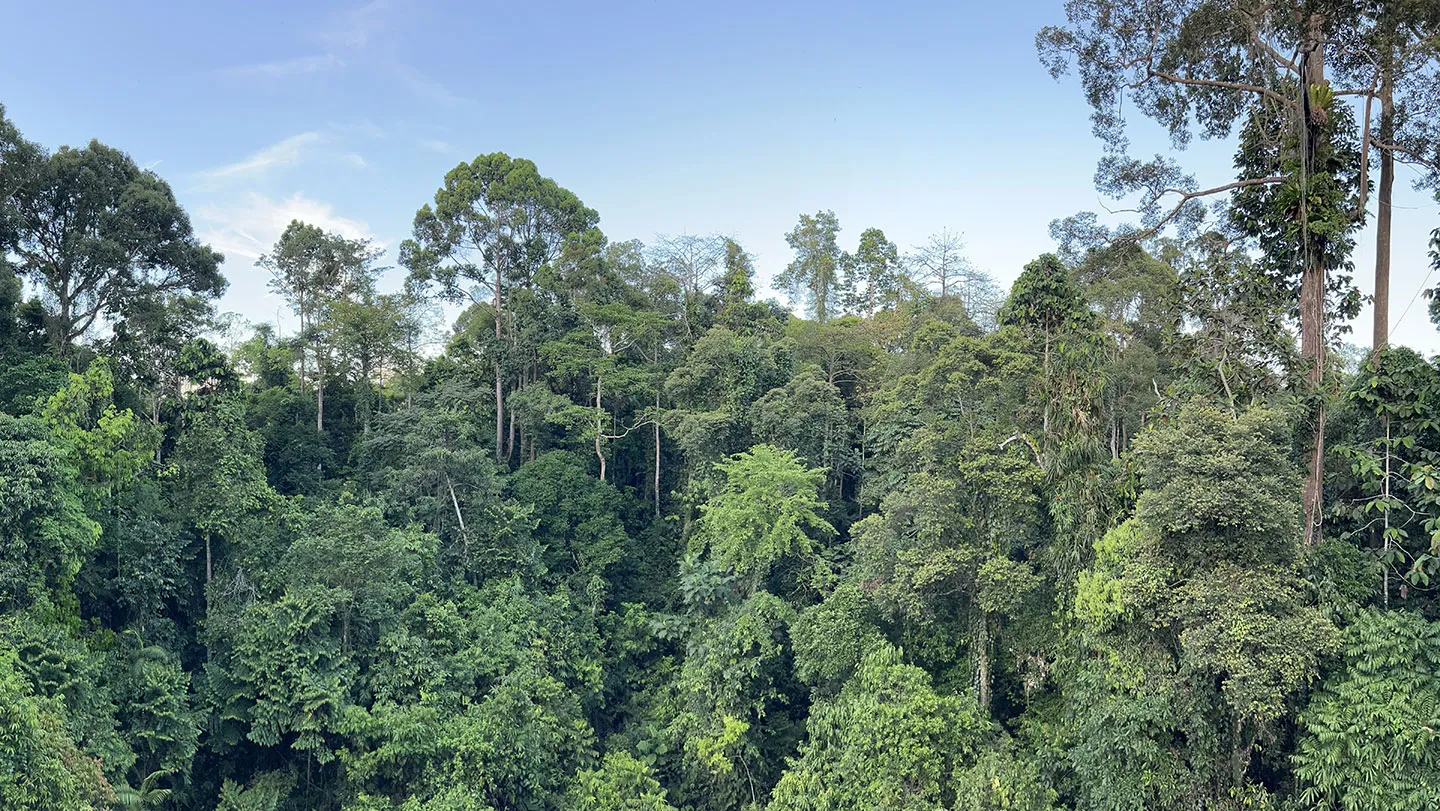
New Evidence Challenges Theories of Tree Drought Adaptation
Giant trees maintain hydraulic function during severe drought by utilizing specialized xylem structures and atmospheric moisture absorption, according to recent research published in Nature. By sampling tissues at extreme canopy heights, scientists found that these trees bypass traditional soil-to-leaf water transport limits, challenging previous assumptions about the maximum height a tree can reach before drought-induced cavitation occurs.
- Giant trees employ “hydraulic segmentation,” allowing upper branches to sacrifice water flow to protect the main trunk.
- Evidence suggests canopy-level moisture absorption from fog and humidity mitigates soil water deficits.
- The findings redefine the biological “ceiling” for plant height in water-stressed environments.
The physiological struggle of giant trees—specifically sequoias and redwoods—centers on the tension between gravity and transpiration. In standard botanical models, as a tree grows taller, the tension required to pull water from the roots to the canopy increases, raising the risk of xylem embolism. This occurs when air bubbles block the water-conducting vessels, effectively “starving” the crown of hydration. For decades, researchers operated under the theory that a strict hydraulic limit governed tree height, meaning drought would inevitably kill the tallest specimens first.
This research, funded by the National Science Foundation (NSF) and supported by grants from the European Research Council, utilizes high-resolution sampling from the upper canopies of Sequoia sempervirens. The team focused on the pathogenesis of xylem failure, analyzing how these giants avoid systemic morbidity during prolonged dry spells. The data indicates that these trees do not rely solely on groundwater; they utilize a sophisticated mechanism of atmospheric water uptake through their foliage.
How Giant Trees Prevent Systemic Hydraulic Failure
The primary mechanism identified is a strategic partitioning of the vascular system. Rather than maintaining a uniform water pressure throughout the organism, giant trees utilize a process akin to clinical triage. When soil moisture drops below a critical threshold, the tree allows the outermost, smallest twigs to undergo cavitation. By sacrificing these peripheral extremities, the tree prevents the embolism from migrating backward into the primary trunk, which would result in total organism failure.
This biological strategy mirrors the way certain medical interventions prioritize vital organ perfusion over peripheral circulation during hemorrhagic shock. For those studying the intersection of environmental stress and biological resilience, this “sacrificial” model provides a blueprint for understanding how complex systems survive extreme volatility. Organizations specializing in agricultural biotechnology and [Relevant Plant Physiology Research Centers] are currently analyzing these mechanisms to develop drought-resistant crop strains.
“The ability of these trees to maintain a positive water potential in the canopy, even when the soil is functionally dry, suggests a fundamental misunderstanding of the water-column theory,” says Dr. Elena Rossi, a plant physiologist and lead contributor to the study. “We are seeing a hybrid system of transport and absorption that allows them to defy the traditional limits of xylem tension.”
The Role of Atmospheric Moisture Absorption
The study provides empirical evidence that canopy-level absorption of fog and humidity acts as a critical supplement to root-based uptake. By analyzing the isotopic signature of the water within the canopy xylem, researchers found that a significant percentage of the water used for photosynthesis during drought periods originated from the air, not the soil. This contradicts the “soil-only” model of plant hydration and explains why giant trees can survive in regions where soil moisture is insufficient to support their massive biomass.
This discovery has implications for forest management and the preservation of old-growth ecosystems. As climate shifts alter fog patterns and precipitation, the reliance on atmospheric moisture becomes a vulnerability. Environmental consultants and [Ecological Restoration Specialists] are now integrating atmospheric hydration data into their longevity projections for coastal redwood forests.
Comparing Traditional Hydraulic Models vs. New Findings
The shift in understanding can be broken down by the specific biological assumptions challenged by the Nature study:
| Feature | Traditional Hydraulic Theory | New Evidence-Based Model |
|---|---|---|
| Water Source | Primarily subterranean (Roots $rightarrow$ Xylem) | Hybrid (Roots + Canopy Fog Absorption) |
| Drought Response | Uniform systemic stress across height | Strategic hydraulic segmentation (Triage) | Height Limit | Fixed by gravity and xylem tension | Dynamic, extended by atmospheric supplements |
The research utilized a sample size of over 50 individual trees across varying altitudes, ensuring that the observed patterns were not isolated to a single grove. The use of pressure-bomb techniques to measure xylem tension confirmed that the water potential in the upper canopy remained significantly higher than predicted by soil-tension models alone.
Future Trajectories in Botanical Resilience
The ability of giant trees to “work around” drought through segmentation and atmospheric absorption opens new avenues for synthetic biology. If these traits can be mapped and replicated, it may lead to the development of urban forestry projects that require significantly less irrigation. This transition from observation to application requires rigorous cross-disciplinary collaboration between botanists and geneticists.

As we continue to map the limits of biological endurance, the role of specialized diagnostic tools becomes paramount. For institutions seeking to implement these findings in large-scale reforestation or agricultural pivots, it is essential to partner with [Certified Environmental Engineers] and [Agricultural Biotechnology Consultants] to ensure the scalable application of hydraulic resilience strategies.
The trajectory of this research suggests that the “ceiling” for plant life is not a fixed number, but a flexible boundary determined by the organism’s ability to innovate its way around physical constraints. The next phase of study will likely focus on the genetic markers that trigger the “triage” response in the xylem, potentially unlocking new ways to protect global food security against increasing desertification.
Disclaimer: The information provided in this article is for educational and scientific communication purposes only and does not constitute medical advice. Always consult with a qualified healthcare provider regarding any medical condition, diagnosis, or treatment plan.