
New Alloy Recovers Shape at -200°C
Breakthrough Materials Promise Cold-Environment Technologies
A significant leap in materials science has been achieved by a consortium of Japanese institutions, unveiling a copper-aluminum-manganese alloy capable of a “shape memory effect” at an astonishingly low -200°C (-328°F). This breakthrough could revolutionize technology designed for the extreme cold of deep space or cryogenic applications.
Revolutionary Cold-Performance Material
The innovative alloy, developed through a collaboration involving Tohoku University, Iwate University, the Japan Aerospace Exploration Agency (JAXA), the National Astronomical Observatory of Japan, Tokyo City University, and Kyoto University, addresses a critical challenge in materials engineering. For years, researchers have sought shape memory alloys (SMAs) that retain their unique “memory” properties in frigid conditions. Existing nickel-titanium (Ni-Ti) based SMAs typically lose this ability below -20°C, with other cryogenic options proving impractical.
Toshihiro Omori from Tohoku University expressed his team’s excitement, stating, We were very happy when we saw that it worked at -170°C. Other shape memory alloys simply can’t do this.
This newly developed Cu-Al-Mn alloy is the first functional actuator material to demonstrate a “large work output” at such extreme sub-zero temperatures. Researchers noted, This study met the challenge of finding the first functional actuator material capable of large work output at temperatures below -100°C.
Actuators, crucial components that convert input into mechanical movement, are vital for everything from planetary rovers to everyday devices.
Testing Confirms Extreme Potential
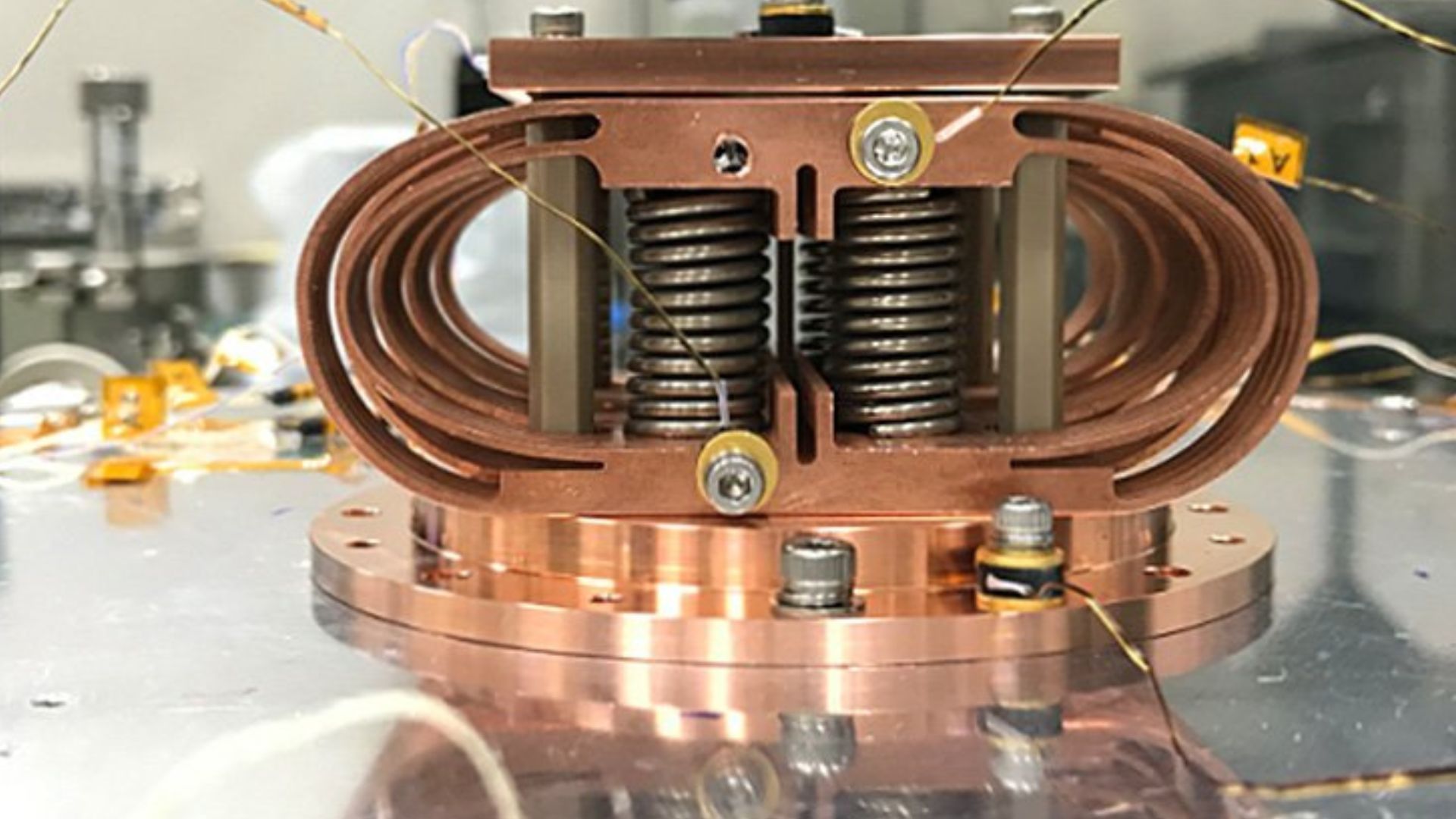
To demonstrate its viability, the research team engineered a prototype mechanical heat switch using the new Cu-Al-Mn alloy as an actuator. The switch performed flawlessly at -170°C, efficiently regulating heat by making and breaking contact as the temperature fluctuated. This achievement marks a pivotal step toward creating high-performance actuators that can function in cryogenic environments, a capability previously considered unattainable.
The implications are vast, potentially enabling the development of sophisticated mechanical heat switches for cooling systems in space telescopes. The researchers highlighted, The simplicity and compactness of such mechanical heat switches make them a crucial technology for future space missions.
Beyond space exploration, the innovation shows promise for advancing carbon-neutral technologies, particularly in the complex fields of hydrogen transportation and storage.
New shape memory alloy developed by Japanese researchers can operate at -200°C! This breakthrough could pave the way for new technologies in extreme cold environments, from deep space exploration to cryogenic fuel systems.
Read more: #MaterialsScience #Cryogenics #SpaceTech #Innovation pic.twitter.com/H9sYjY7k9L
— Interesting Engineering (@InterestingEng) May 8, 2024
In parallel, NASA is advancing its own SMA applications, actively developing spring tires for its planetary exploration robots. These robots navigate challenging extraterrestrial terrains, where tire resilience is paramount. Unlike conventional metal tires that can permanently deform, SMA tires, typically made from nickel-titanium, can withstand extreme stress and revert to their original shape, a crucial feature for Martian rovers where tire integrity is vital for mission success. Global efforts continue to push the boundaries of SMA applications, with researchers at Saarland University in Germany also developing advanced robotic gripping systems using ultrafine nickel-titanium SMA wires.
