
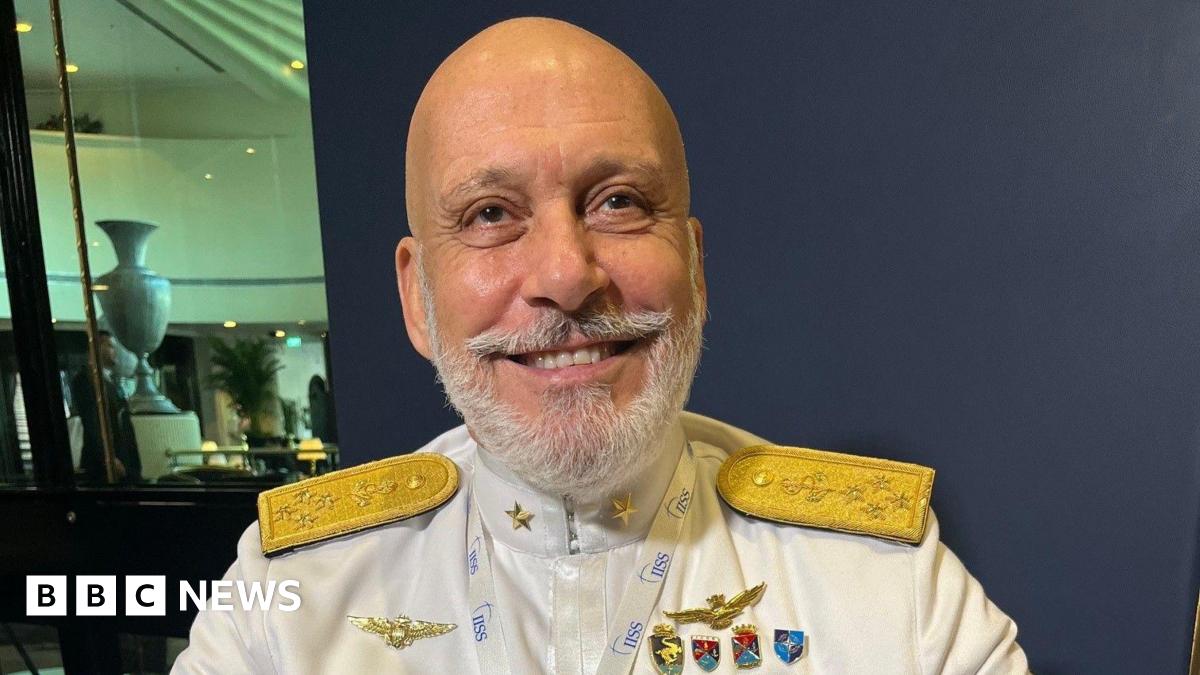
NATO pledges Continued Support for Ukraine,Sees War Reaching Potential Turning Point
Brussels – NATO will remain steadfast in its support of Ukraine “up to the day in which we will have them sitting around the table for a long-lasting peace,” according to Admiral Giuseppe Cavo Dragone,chair of NATO’s military committee. The Admiral’s remarks to the BBC signal a growing assessment within the alliance that the current conflict is reaching a stalemate, and that diplomatic resolution, while not imminent, is becoming increasingly necessary.
Dragone, who assumed his role in January, described the Russia-Ukraine war as operationally “bogged down,” stating it was “almost time to sit and talk as it’s a waste of lives.” Despite recent incremental Russian advances, he characterized the invasion as a strategic failure for Russian President Vladimir Putin, noting the unexpected outcome of Finland and Sweden joining NATO as a direct outcome of the conflict. “They will not get a pleasant or puppet goverment like in Belarus. Putin will not succeed,” Dragone asserted.
The Admiral confirmed European nations are prepared to continue supporting Ukraine’s defense, adding that the war has served as a ”wake-up call,” prompting increased investment in national security.This commitment was underscored in June when NATO members agreed to raise defense spending to 5% of GDP by 2035, a move initially urged by former US President Donald Trump.
Addressing concerns surrounding Russia’s recent proclamation of new long-range, nuclear-powered weapons systems - including the Burevestnik and Poseidon – dragone downplayed the threat. He emphasized NATO’s role as a defensive nuclear alliance, stating, “We are not threatened by them, we are just ready to defend our 32 nations and our one billion people. We are a nuclear alliance.”
Looking ahead, Dragone identified the Baltic states – Estonia, Latvia, and Lithuania – as potentially vulnerable to future Russian aggression. Though, he reaffirmed NATO’s commitment to collective defense under Article 5, which stipulates that an attack on one member is considered an attack on all, including the united States, who he confirmed “have committed to this and they have underlined that they are still in the business.”
