NASA’s Voyager 1 Resumes Transmitting After Signal Loss
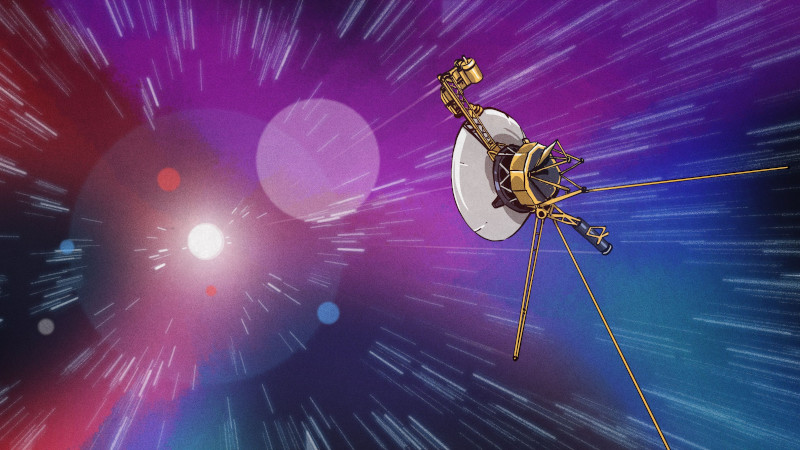
NASA lost contact with Voyager 1 for 48 hours in mid-October when the nearly 50-year-old spacecraft stopped transmitting a detectable radio signal during two scheduled communications attempts, Hackaday reported. The probe, currently traveling at approximately 38,000 miles per hour through interstellar space, resumed transmitting on October 20 without intervention from mission controllers on Earth.
The Tech TL;DR:
- Voyager 1 went silent for over 24 hours on October 18 and 19 before its signal reappeared on October 20.
- Engineers determined that an automated fault protection system caused a group of thrusters to go offline while their backups kicked in.
- The communications blackout occurred just weeks before the spacecraft reaches a distance of one light-day from Earth.
Voyager 1 Signal Reappears After Automated Fault Protection
The Deep Space Network, a global system of large radio antennas managed by NASA, failed to detect any radio signal from Voyager 1 during two scheduled communication windows on October 18 and October 19. According to NASA, the spacecraft is located approximately 16 billion miles from Earth. The signal reappeared spontaneously on October 20, allowing engineers to maintain normal communication without sending troubleshooting commands.
Analysis of diagnostic data retrieved after contact was reestablished indicated that an onboard fault protection system triggered an automated response. Engineers determined that a primary group of thrusters went offline, prompting backup units to take over. Mission managers at NASA’s Jet Propulsion Laboratory stated that the automated system places the spacecraft into a stable configuration whenever onboard computers detect anomalies, pausing regular operations to allow ground teams time to investigate.

Power Saving Procedure Reduces Energy Consumption on Voyager 1
The communication anomaly followed a major power-saving intervention completed in September, referred to by the mission team as the “Big Bang.” Hackaday reported that engineers simultaneously switched off three nonessential devices and activated lower-power alternatives on Voyager 1, about six weeks after performing an identical procedure on Voyager 2. The spacecraft derive their power from radioisotope thermoelectric generators that convert heat from decaying plutonium into electricity, losing approximately 4 watts of power each year.
The Big Bang procedure reduced energy consumption while preserving the thermal balance required to keep the 1970s-era electronics operational in the freezing environment of space. NASA noted that the maneuver extends the operational lifespan of the remaining science instruments, postponing the need to deactivate additional hardware until at least summer 2027. While engineers are investigating whether the power-switching procedure contributed to the October communication blackout, the exact cause remains undetermined.
Approaching the One Light-Day Milestone
The silent period occurred as Voyager 1 approaches a historic distance milestone. NASA expects the spacecraft to reach 16.094 billion miles from Earth on November 18, 2026, marking a distance of one light-day. At this range, radio signals traveling at the speed of light require 24 hours to reach the probe, and a return transmission takes another 24 hours.
Kareem Badaruddin, Voyager mission manager at NASA’s Jet Propulsion Laboratory, noted that while the spacecraft has not previously exhibited this specific behavior, controllers must expect unexpected anomalies as the mission enters its fifth decade. Suzanne Dodd, Voyager project manager, emphasized that the mission operates on a very narrow margin as both probes approach their half-century mark, noting that ground teams rely on continuous monitoring through the Deep Space Network to distinguish between terrestrial communication errors and deep-space hardware failures.