
NASA’s Early Space Shuttle Programme Paved the Way for Women Astronauts, But Not Without Initial missteps
CAPE CANAVERAL, FL – The Space Shuttle program, beginning in 1981, wasn’t just a leap in space technology; it was a critical catalyst in breaking down gender barriers at NASA.While the agency successfully launched humans into orbit, early preparations for female astronauts revealed a surprising lack of consideration for basic physiological needs, highlighting the challenges women faced entering a historically male-dominated field.The program’s evolution demonstrates a broader shift within NASA, acknowledging and adapting to the realities of a diverse astronaut corps.
The inclusion of women in the space program was a landmark achievement, yet initial logistical planning revealed a significant gap in understanding.Astronaut Sally Ride‘s impending flight prompted NASA to provide a ample quantity of tampons – approximately 100 – for her consideration. As Ride recounted to fellow astronaut Kathy Sullivan, the sheer volume was overwhelming. “They put some tampons in the PPK for Sally to look at and she pulled one out and it was like unreeling a string of sausages. Tampon, tampon, tampon, tampon, tampon. There were like 100. And they said, is that enough? Sally was hysterical and said, ‘No, no’. She thought that was really too much, thank you very much.” This incident underscored a broader pattern of overlooking the specific needs of female astronauts.
Sullivan explained in an earlier interview that NASA’s initial approach was simply to acknowledge the possibility of menstruation during spaceflight. Beyond hygiene products, adjustments were needed in areas like clothing, parachutes, and helmets. “The most obvious and amusing missteps were in crew equipment – clothing, parachutes, helmets, hygiene needs,” Sullivan said. “I think these were all innocent gaffes, and that the teams responsible for those did the best they could with what they knew.”
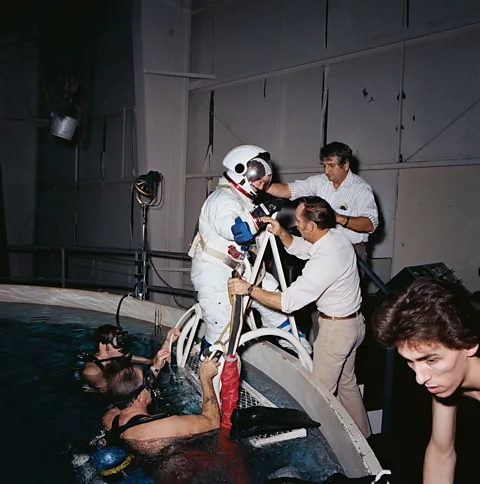
The early Space Shuttle missions, though, weren’t defined solely by these initial oversights. NASA actively responded to feedback, modifying equipment and protocols to better accommodate female astronauts like Anna Fisher, one of the first six women selected for the program in 1978. While the initial adjustments were reactive, they signaled a willingness to adapt and improve.
The program’s legacy extends beyond individual accommodations. The Space Shuttle opened doors for a more diverse astronaut pool, fundamentally changing the face of space exploration and inspiring future generations of women to pursue careers in STEM fields. NASA’s journey, though marked by early missteps, ultimately demonstrates a commitment to inclusivity and a recognition that accomplished space exploration requires the contributions of all.
