NASA Shifts Focus to Moon & LEO: Artemis Program & New Space Policy
NASA Shifts Lunar Focus, Allocates $20 Billion for Permanent Base
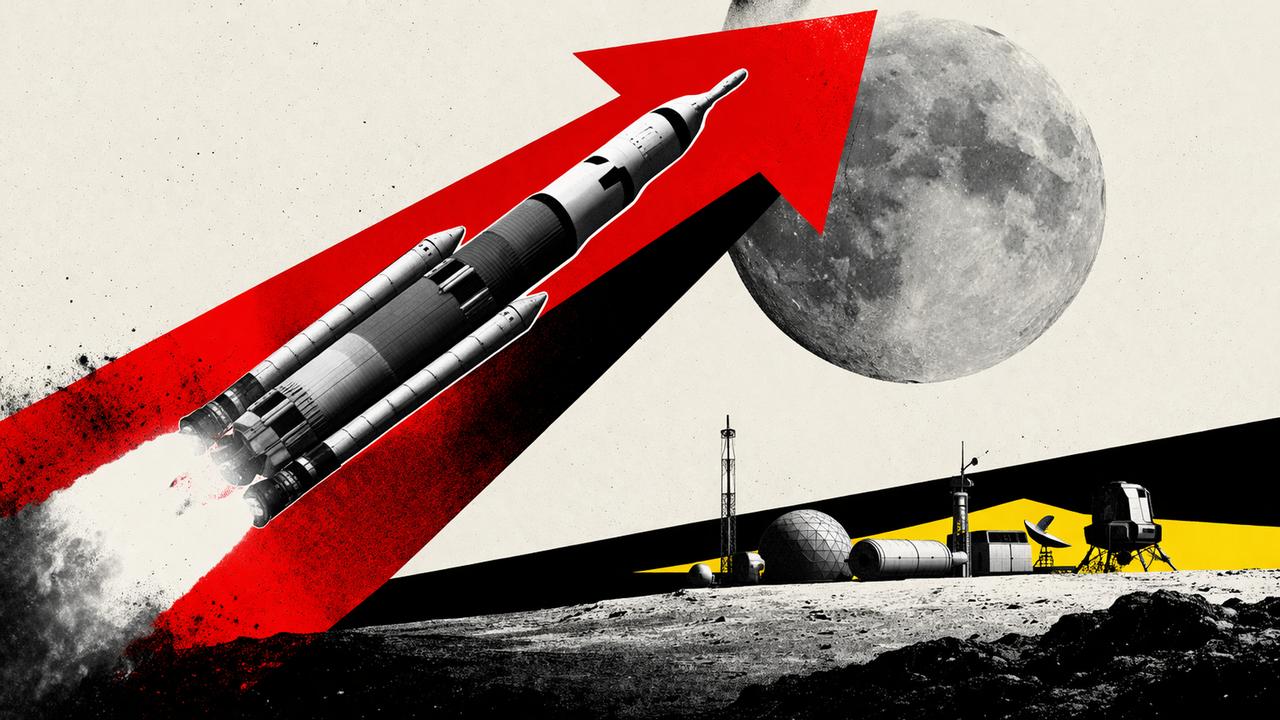
NASA unveiled a revised strategy for lunar exploration on March 24, 2026, during an event dubbed “Ignition.” The shift prioritizes establishing a sustained presence on the Moon, aligning with President Donald J. Trump’s National Space Policy, and represents a re-evaluation of previous plans, according to agency officials.
The agency announced plans to dedicate $20 billion over the next seven years to building a permanent base near the lunar south pole. This commitment signals a move away from prioritizing Mars exploration in the short term, with NASA Administrator Jared Isaacman stating the agency must “concentrate NASA’s extraordinary resources on the objectives of the National Space Policy.”
Isaacman emphasized the urgency of the endeavor, stating, “The clock is running in this great-power competition, and success or failure will be measured in months, not years.” He outlined a vision of frequent crewed missions, aiming for landings every six months, and leveraging multiple launch providers to accelerate the establishment of a semi-permanent astronaut presence on the lunar surface.
The latest approach involves a “focused, phased architecture” that incrementally builds capabilities with each landing, in coordination with industrial and international partners, according to NASA Associate Administrator Amit Kshatriya. This strategy echoes NASA’s approach during the Apollo program, but with a different ultimate goal: not simply to visit the Moon, but to stay.
A key element of the plan involves utilizing nuclear power systems to provide a consistent energy source for the lunar base. This is seen as crucial for sustained operations, mitigating the limitations of relying solely on solar energy. Italy is already developing nuclear energy technology for lunar applications with its Selene project.
NASA as well intends to increase its use of nuclear propulsion for robotic missions, potentially revolutionizing space exploration by enabling more efficient travel to distant destinations, including Mars. The agency announced plans for the first nuclear-powered spacecraft to launch in 2028.
The agency is also recalibrating its plans for the Gateway, a planned lunar-orbiting station. While the European-built modules for the Gateway are not currently abandoned, NASA is exploring adapting them for surface operations on the Moon. The future of the Gateway remains uncertain as NASA prioritizes direct lunar landings and surface infrastructure.
Alongside the lunar focus, NASA is emphasizing the importance of maintaining a strong American presence in low Earth orbit (LEO). This includes facilitating a transition from the International Space Station to commercially developed space stations, a move considered strategically important for economic development and national security. The agency views LEO as a critical area for potential conflict and the development of defensive capabilities, including anti-missile systems.
Following the launch of Artemis 2, scheduled for March 32, 2026, NASA plans to land astronauts on the Moon with Artemis IV in 2028. The agency anticipates conducting at least one crewed lunar landing per year, with the potential for more frequent missions as capabilities expand.