
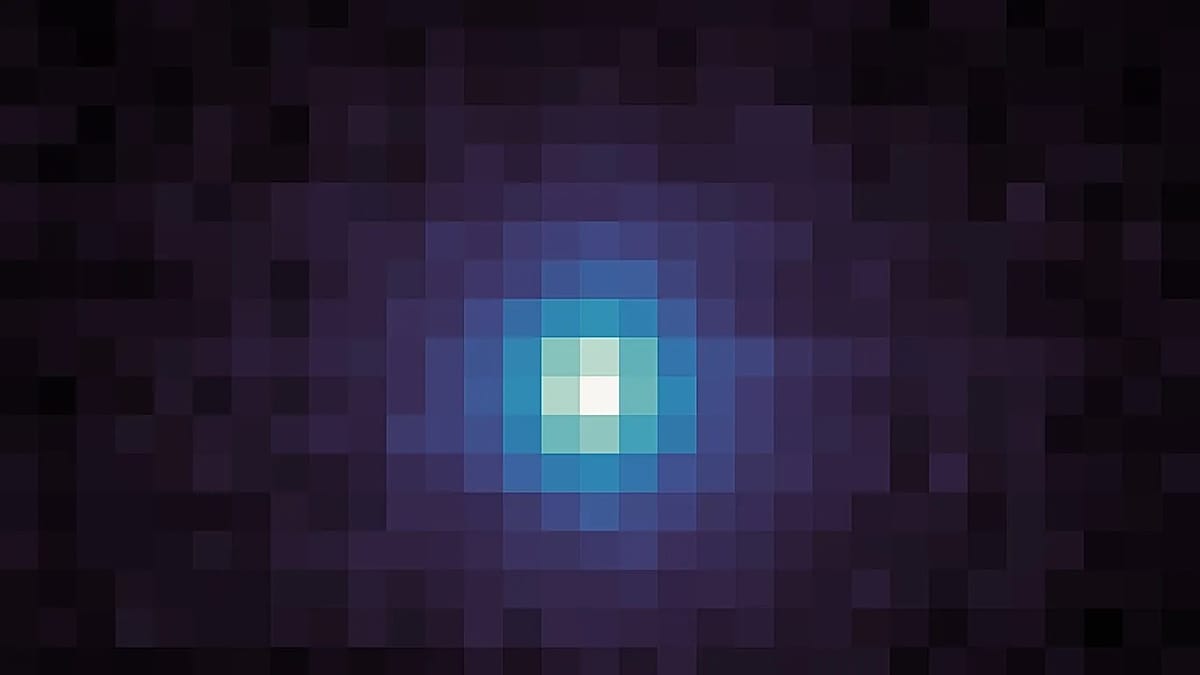
NASA Confirms 3I/ATLAS is Comet, Dismissing Extraterrestrial Theories
WASHINGTON – NASA has definitively concluded that the mysterious object 3I/ATLAS, initially sparking speculation about potential alien origins, is a comet. The confirmation comes following analysis of images captured by three Mars missions – hirise, MAVEN, and Perseverance – released this week.
discovered in July, 3I/ATLAS quickly drew attention due to its unusual trajectory, leading some to hypothesize it originated from outside our solar system. While most scientists leaned towards a cometary clarification, theories posited the object could be an interstellar probe or even an alien vehicle, fueled by comments from figures including US Congressman and Harvard researcher Avi Loeb, and even a public inquiry from Kim Kardashian.
Images taken from 29 million kilometers away reveal 3I/ATLAS as a “fuzzy white ball,” explained NASA official Amit Kshatriya at a press conference. “We are trying very hard to find traces of life in the universe, but 3I/ATLAS is a comet.” The “white ball” appearance is attributed to the comet’s coma – a cloud of dust and ice scattering light as it travels. HiRISE images show a resolution of approximately 30 kilometers per pixel.
Further analysis by NASA’s MAVEN instrument detected traces of hydrogen emitted from the comet, aiding in determining its chemical composition. The Perseverance rover also captured images using its Mastcam-Z camera with a long exposure.
Despite NASA’s conclusive findings, Harvard Professor Avi Loeb remains skeptical. According to the Daily Mail, Loeb stated, “Of course it could be natural. But we cannot rule out the possibility that it is technological. If so, the consequences for humanity would be great.”
NASA maintains the claims of an alien spacecraft are not supported by scientific evidence. The agency is now focused on utilizing the collected data to calculate the size of the comet’s nucleus.The publication date of the initial NASA images was November 20, 2025, with the latest confirmation released on November 22, 2025.
