Multi-Omics Analysis of Pig-to-Human Liver Cross-Circulation Reveals Immune Response and Metabolic Support
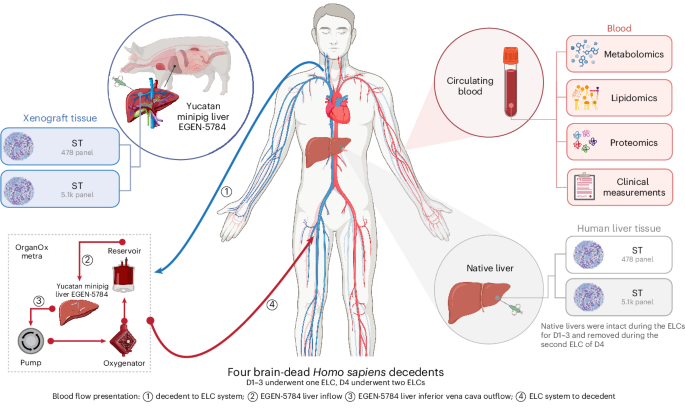
Researchers have successfully mapped the complex biological interactions between human blood and porcine liver tissue during extracorporeal liver cross-circulation, according to a study published July 15, 2026, in Nature Medicine. The findings delineate the specific innate immune responses and xenograft–platelet interactions that occur when a human patient’s circulatory system is connected to a pig liver, offering a roadmap for managing the physiological hurdles of clinical xenotransplantation.
- Multi-omics analysis identifies specific immune pathways, including species-specific complement dynamics, that drive xenograft rejection.
- The pig liver maintains metabolic function and continues to support human physiology even after the removal of the native liver in experimental models.
- Von Willebrand factor and platelet interactions are identified as primary drivers of thrombocytopenia, providing a target for future pharmacological intervention.
Mapping the Biological Interface of Xenotransplantation
The study, utilized high-resolution spatial and circulating multi-omics to observe the interface between human blood and pig hepatocytes.
The research indicates that the pig liver remains metabolically active, successfully processing human metabolites and maintaining homeostasis. However, the interaction triggers an immediate, multi-layered immune response.
Mechanisms of Xenograft-Associated Thrombocytopenia
A significant barrier identified in the study is the rapid depletion of platelets, which complicates the viability of the xenograft. The researchers found that Von Willebrand factor (vWF)—a protein critical for blood clotting—interacts with the porcine endothelium in a way that promotes platelet adhesion and subsequent removal from circulation.
Clinical Implications for Future Liver Support
The preservation of metabolic support, even after the native liver is removed, confirms that porcine organs can theoretically replace human liver function in the short term.
Trajectory of Research and Patient Safety
The findings published in Nature Medicine represent a critical milestone in moving porcine liver support from the laboratory to the bedside.