
World’s Most Powerful Solar Telescope Reveals Unprecedented detail of Sun’s corona
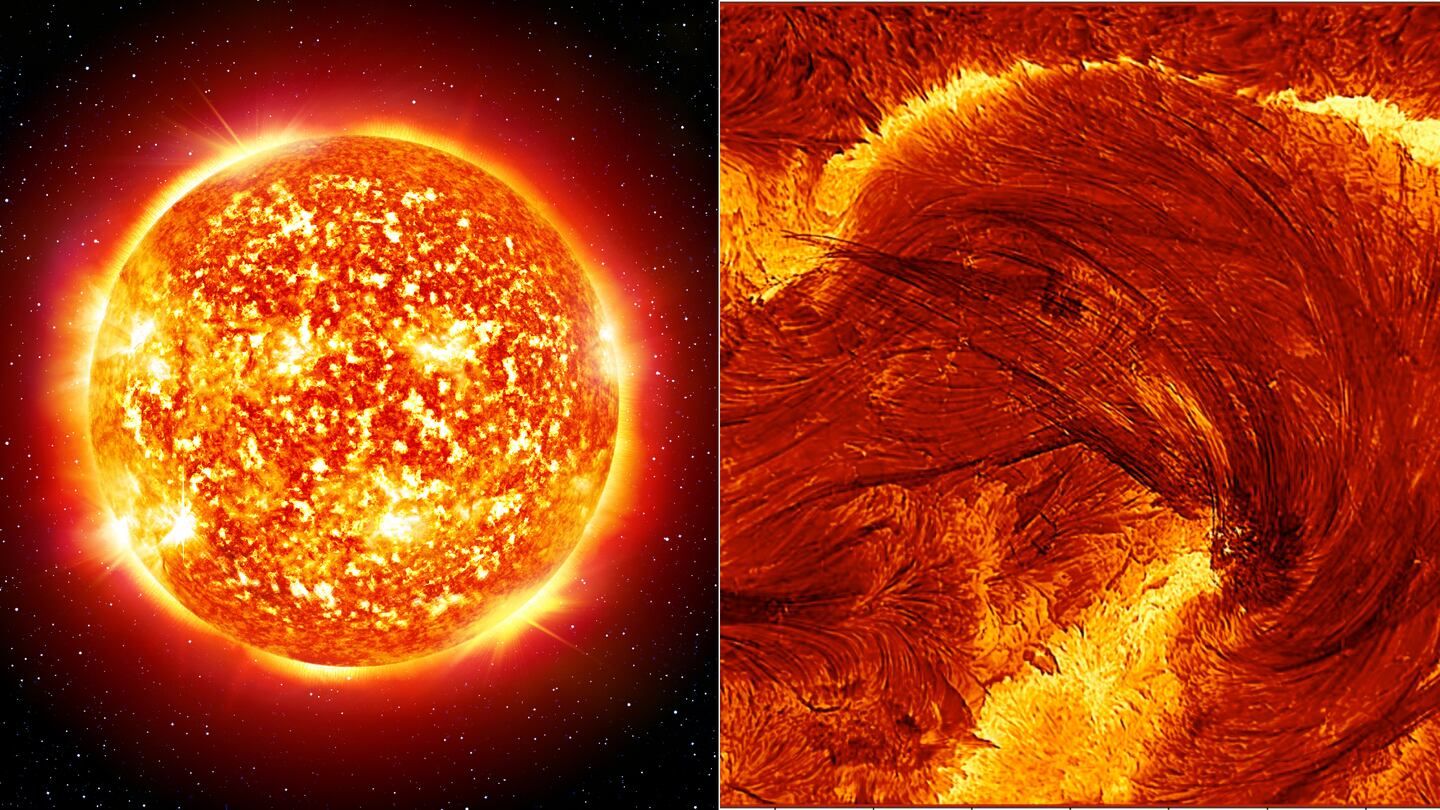
BOULDER, CO – The Daniel K. Inouye Solar Telescope (DKIST), the world’s most powerful solar telescope, has captured the most detailed images to date of the Sun’s corona, offering an unprecedented view of the dynamic processes driving solar eruptions. Scientists at the University of Colorado Boulder hailed the observations as a “paradigm shift,” allowing for the first time a visualization of the internal scale of these powerful events.
The images reveal intricate structures – dark arches superimposed on luminous plasma stripes – within the corona, the outermost layer of the Sun’s atmosphere. A video of a recent solar explosion, accelerated 100 times, showcases this dynamic activity with remarkable clarity.This breakthrough significantly improves the scientific community’s ability to forecast space weather events that can disrupt human infrastructure on Earth. The observations also bolster models explaining magnetic reconnection, the process that fuels the most intense solar flares and coronal mass ejections.”Directly observing these structures represents a paradigm shift,” stated a researcher at the University of Colorado Boulder. “The images allow us to visualize, for the first time, the internal scale of solar eruptions.”
Though, the future of DKIST is uncertain.The U.S. government has proposed reducing its funding from $30 million to $13 million in the 2026 budget, a cut that could jeopardize the telescope’s operation.
Christoph keller, director of the National Solar Observatory (NSO), which operates DKIST, warned that closure would mean losing unique data and essential scientific expertise. The telescope is a key component of the EMISSARY PROGRAM, dedicated to training the next generation of solar analysts.
Despite the potential setback,scientists agree that DKIST’s latest images represent a “great” achievement,potentially serving as a stunning final contribution if funding cuts proceed.
