
Mosquito Bite Death: Insurance Payout Denied in Landmark Case
A man’s death from malaria, contracted after a mosquito bite in Africa, has been ruled a death by “disease” rather than an “accident,” leading to the denial of a 3.55 million yuan insurance claim. The Tainan High School court’s decision clarifies the distinction between accidental injury and illness-related fatalities, especially concerning vector-borne diseases.
The case involved a Mr. Chen, who had secured accidental injury and death insurance policies totaling approximately 3.55 million yuan. Following a trip to Nigeria in October 2023, Chen returned to Taiwan exhibiting a high fever. He was subsequently diagnosed with severe malaria complicated by multiple organ failure,succumbing to the illness on December 2,2023.
Chen’s family argued that his death, attributed by medical professionals to a mosquito bite in Africa and classified as an “external emergency,” should qualify for accident insurance benefits. They contended that the infection route was an unforeseen event, distinct from a pre-existing condition, and thus an “accident not caused by disease.”
Though, the court’s ruling emphasized that malaria, a category two infectious disease under Taiwan’s “Infectious disease Prevention and Control Law,” has known and preventable transmission pathways. The judge stated that such infections are not considered accidental or unpredictable emergencies.
The family attempted to draw parallels with past rulings on rabies claims, suggesting that a direct link between a bite and infection should constitute an accident, irrespective of the vector. They argued that the process of malaria transmission was similarly “exotic” and “successive.”
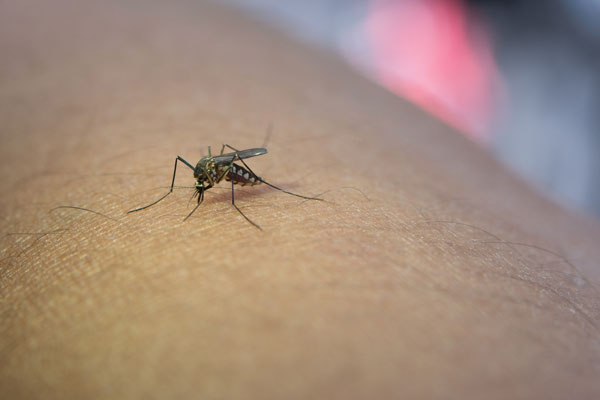
The judge countered this by differentiating between the direct harm caused by animal attacks, such as in rabies cases, and the role of mosquitoes as mere “vectors.” The court reasoned that while animal attacks involve direct physical aggression, mosquitoes act as intermediaries, transmitting the malaria parasite. The ultimate cause of death was identified as the malaria itself, not the mosquito’s action.
Moreover, the judge highlighted the potential for broader implications, stating that classifying mosquito bites as accidental could led to confusion between accident insurance and health insurance, perhaps extending to other vector-borne illnesses like influenza, dengue fever, and yellow fever.
The court explicitly distinguished rabies from malaria, noting that rabies results from direct invasive action by mammals, whereas malaria is contracted through an infectious channel facilitated by a vector. This fundamental difference in the nature of the transmission and harm was deemed incomparable.
Ultimately, the court concluded that Mr. Chen’s death was a result of “disease,” not an accidental injury,upholding the insurance companies’ refusal to pay compensation.
