Mitiperstat Fails to Improve Symptoms in HFpEF and HFmrEF Patients
Treatment with the selective myeloperoxidase inhibitor mitiperstat failed to improve symptoms or exercise capacity in patients suffering from heart failure with preserved or mildly reduced ejection fraction, according to findings from a phase 2b clinical trial published in Nature Medicine on September 9, 2026.
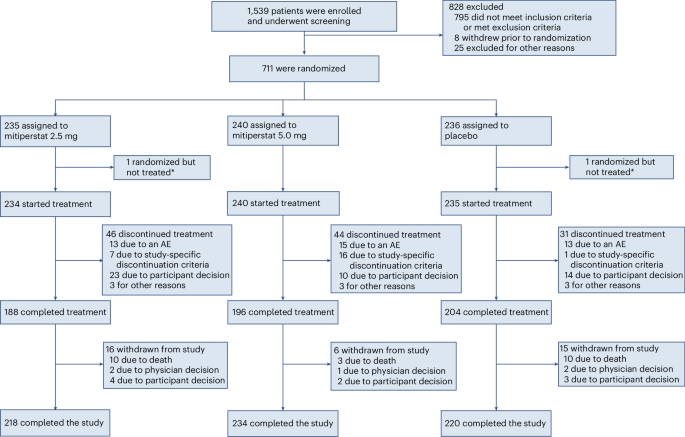
- The international ENDEAVOR trial evaluated 711 patients aged 40 to 85 years with symptomatic heart failure and an ejection fraction greater than 40%.
- Patients randomized to receive either 2.5 mg or 5 mg of mitiperstat showed no statistically significant improvement in the Kansas City Cardiomyopathy Questionnaire Total Summary Score or 6-minute walk distance at 16 weeks compared to placebo.
- Exploratory analyses recorded numerically fewer major adverse cardiovascular events and heart failure hospitalizations in the active treatment arms, though researchers noted the short treatment duration limits the certainty of these findings.
The trial addresses a critical gap in cardiology regarding the neutrophil-myeloperoxidase inflammatory pathway, which researchers previously hypothesized drives myocardial fibrosis and microvascular dysfunction. Because standard therapies have historically yielded limited symptom relief for this patient demographic, investigators designed the double-blind study to test whether targeted anti-inflammatory intervention could alter disease progression.
Led by Dr. Sanjiv J. Shah and presented at the American Heart Association Scientific Sessions, the study randomized 711 participants in a 1:1:1 fashion across international sites. Enrolled individuals possessed a mean age of 72 years, and 45 percent were female. Inclusion criteria required a left ventricular ejection fraction above 40 percent and documented functional limitations under New York Heart Association classes II through IV.
Despite preclinical models suggesting cardioprotective benefits and successful reduction of plasma myeloperoxidase levels in earlier phase 2 safety assessments like the SATELLITE study, the primary endpoints in this larger cohort remained unmet. The co-primary outcome measuring changes in the Kansas City Cardiomyopathy Questionnaire Total Summary Score at 16 weeks yielded a treatment difference of -1.4 between mitiperstat and placebo, which was statistically insignificant with a p-value of 0.29. Similarly, the change in 6-minute walk distance showed a treatment difference of +3.8 meters, returning a p-value of 0.28.
Secondary outcomes tracked over a 48-week period revealed a composite incidence of major adverse cardiovascular events in 7.4 percent of the mitiperstat groups versus 10.2 percent in the placebo arm, alongside heart failure hospitalizations occurring in 5.1 percent versus 8.1 percent, respectively. While these safety and exploratory efficacy signals indicate a numerical trend, trial investigators caution that definitive conclusions cannot be drawn without extended observation.
Clinical analysts reviewing the trial data point to baseline medication profiles as a vital variable for future investigation. Use of sodium-glucose cotransporter 2 inhibitors stood at 21 percent among participants, while mineralocorticoid receptor antagonist use was 42 percent. Experts emphasize that incorporating a robust background of optimal medical therapy for heart failure with preserved or mildly reduced ejection fraction will be essential for subsequent trials to accurately isolate any potential therapeutic efficacy of novel compounds.

For patients managing chronic cardiovascular conditions, establishing an ongoing dialogue with vetted specialists is essential as treatment guidelines evolve. Individuals seeking personalized evaluations should consult with experienced healthcare providers to review contemporary management strategies. Furthermore, optimizing outpatient care coordination through specialized healthcare providers ensures that therapeutic regimens reflect the latest clinical trial evidence.
As cardiovascular researchers analyze the broader implications of the trial, future iterations of anti-inflammatory trials will likely require stricter stratification of background guideline-directed medical therapy to determine whether targeted pathway inhibition holds value in specific patient sub-populations. Patients and referring physicians can explore specialized diagnostic protocols by connecting with dedicated healthcare providers to navigate advanced therapeutic options safely.
Always consult with a qualified healthcare provider regarding any medical condition, diagnosis, or treatment plan.