
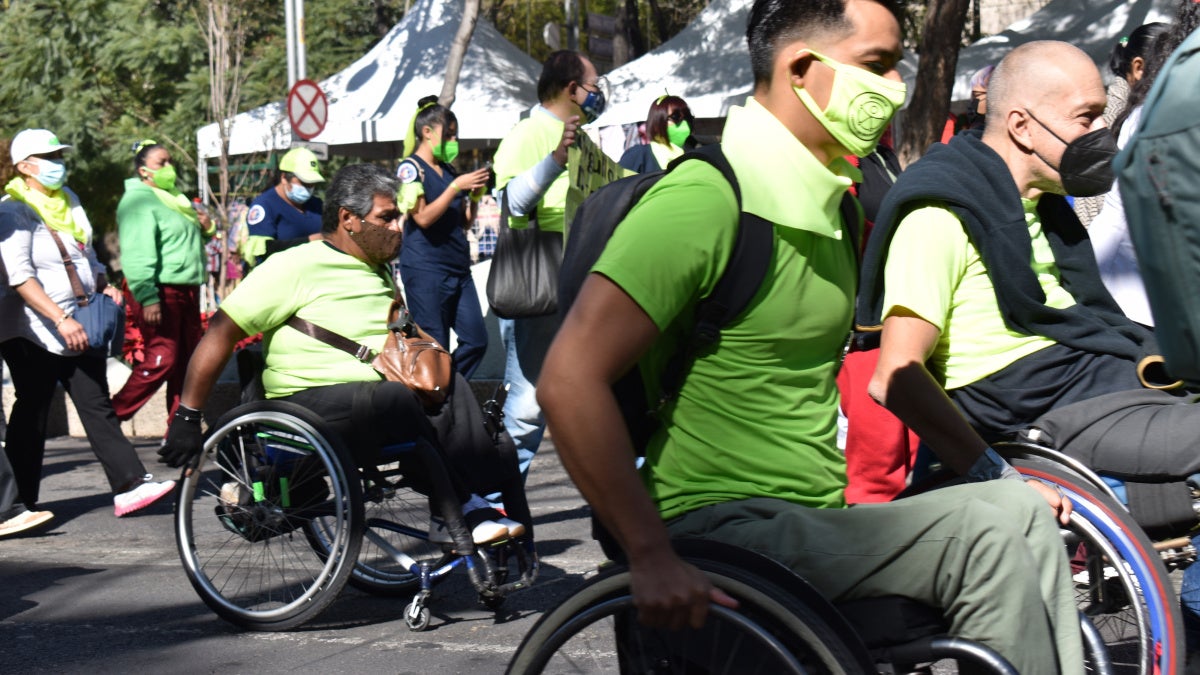
Mexico City lawmakers are considering a proposal championed by disability rights advocates that would fundamentally reshape the city’s approach to care and support services, Human Rights Watch said Wednesday.
The proposal, submitted by the coalition Cuidados Sí; Apoyos También (Care Yes; Supports Too), calls for a rights-based framework grounded in autonomy, participation, and independent living. It urges legislators to include a dedicated chapter on support for independent living in care and support bills currently under review.
“Care and support policies developed without the meaningful participation of the people who will rely on them risk reinforcing the very dependence and exclusion they are meant to address,” said Carlos Ríos Espinosa, associate disability rights director at Human Rights Watch. “People with disabilities are not passive recipients of care and support. They are rights holders, with expertise grounded in lived experience, and their proposals deserve serious consideration.”
Cuidados Sí; Apoyos También is largely comprised of organizations representing people with disabilities, including Mexicanas con Discapacidad, Women Enabled International, and Movimiento de Personas con Discapacidad, alongside human rights groups such as Yo También, Human Rights Watch, and Documenta.
The coalition’s proposal seeks to move Mexico City away from care models based on charity and assistance, toward a system aligned with international human rights law. It outlines a broad range of supports, including access to information, legal capacity, violence prevention, personal mobility, education, employment, and full participation in community life.
Personal assistance and community-based services, such as centers for independent living, are central to the proposal, aiming to prevent institutionalization and reduce reliance on family caregivers. Diana Velarde, executive director of Mexicanas con Discapacidad, emphasized the practical impact of such support. “For many of us, support is not an abstract legal concept—It’s what makes it possible to depart our homes, participate in our communities, and live with dignity,” she said.
The proposal also highlights the often-unseen burden placed on families who provide unpaid care. Sara Villanueva, a member of the coalition who requires intensive support, noted the unsustainable demands on aging parents. “My parents—both in their 80s—continue to provide essential support so that I can live my life. This is not a solution that can last forever,” she said.
The initiative comes as concerns grow over the inclusivity of existing care legislation in Mexico City. A November 2025 report by CIMAC Noticias revealed that the proposed Ley del Sistema Público de Cuidados (Public Care System Law) did not adequately address the needs of women with disabilities, potentially perpetuating existing inequalities. The current draft, according to Human Rights Watch, fails to guarantee autonomy, equality, or protection from abuse for women with disabilities.
According to data from Mexico’s national statistics agency, INEGI, 19.5 million women in Mexico perform the majority of unpaid care work, dedicating an average of 38.9 hours per week to these tasks, compared to 30.6 hours for men. This disparity limits women’s access to paid employment and contributes to physical and emotional strain.
Ríos Espinosa stated that aligning care and support policies with international human rights standards is “both possible and effective” to ensure rights for both care recipients and providers. The Mexico City Congress is currently moving from pre-consultations toward drafting formal legislation, with no firm timeline announced for a final vote.
