
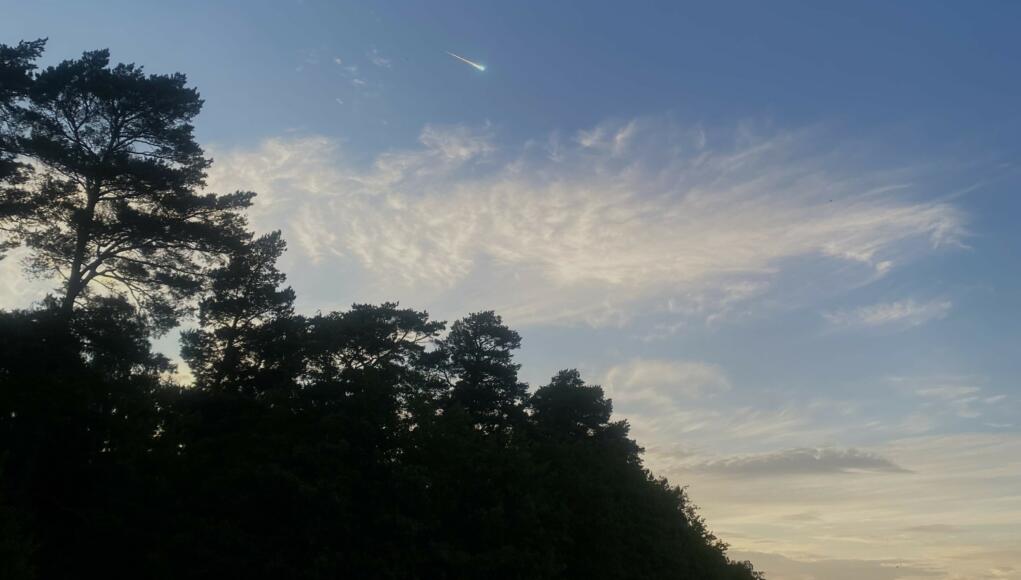
Meteorite Suspected in Åland Light Phenomenon and Sonic Boom
Table of Contents
- Meteorite Suspected in Åland Light Phenomenon and Sonic Boom
A brilliant flash of light accompanied by a powerful sonic boom startled residents of Åland,Finland,late on July 1,2025. Preliminary analysis by the Meteorological Institute suggests the event was likely caused by a meteorite burning up in the Earth’s atmosphere.
Janika Takala of the Meteorological Institute, after reviewing images of the phenomenon aimed at Åland at 22:45 local time, stated that the event appears consistent with a typical meteorite. “A light ball and subsequent bang, it is very typical. It looks like it has come from outside the atmosphere and burning up at entry. It does not appear to have come from the earth’s surface,” Takala explained.
Did You Know? Meteor showers occur when the Earth passes through streams of debris left by comets. The Perseids,one of the most well-known meteor showers,peaks in mid-August each year.
Witness Reports and Meteorological Data
while the Meteorological Institute had not issued any prior warnings about meteorites and had not initially received data about the event over Åland by 23:20, video evidence quickly surfaced. Takala commented on a video from Åland, stating, “The picture and video you sent were fantastic, they clearly show the meteor that burns up in the atmosphere and the smoke track behind it.”
Reports also emerged from Uppland, Sweden, indicating that residents ther may have witnessed the same light and heard the same sonic boom, suggesting a wide viewing area for the atmospheric event.
What Happens When a Meteor Enters Earth’s Atmosphere?
Meteors, ofen referred to as “shooting stars,” are space rocks that enter the Earth’s atmosphere at high speeds. The intense friction caused by their passage through the air heats them up, causing them to glow brightly and often burn up completely. This process creates the visible streak of light we observe. Larger meteors can sometimes survive the journey and impact the Earth’s surface as meteorites.
Pro Tip: If you find a rock you suspect might be a meteorite, contact a local university or geological survey for expert identification.Meteorites often have a fusion crust, a dark, glassy coating formed during atmospheric entry.
Meteorite Impact Risk and Detection Efforts
While most meteors are small and pose no threat, larger asteroids and comets can potentially cause meaningful damage upon impact. NASA’s Planetary Defense Coordination Office (PDCO) tracks Near-Earth Objects (NEOs) to identify and assess potential impact risks. As of June 2024, over 32,000 NEOs have been discovered, with ongoing efforts to detect and catalog even more [1].
The Chelyabinsk meteor event in 2013, were a meteor exploded over Russia, injuring over 1,000 people, serves as a stark reminder of the potential impact of even relatively small space rocks [2].
Meteorite Events: A Timeline
| Date | Event | Location |
|---|---|---|
| February 15, 2013 | Chelyabinsk Meteor | Chelyabinsk, Russia |
| October 9, 1992 | Peekskill Meteorite | Peekskill, New York, USA |
| November 30, 1854 | wetumpka Meteorite | Wetumpka, Alabama, USA |
What should you do if you witness a meteor?
Evergreen Insights: Meteorites and Earth’s History
Meteorites provide valuable insights into the early solar system and the building blocks of planets.Analysis of their composition helps scientists understand the conditions under which our solar system formed billions of years ago. Some meteorites even contain organic molecules, raising intriguing questions about the origins of life.
Throughout Earth’s history,large asteroid impacts have had a profound influence on the planet’s evolution. The Chicxulub impact, linked to the extinction of the dinosaurs 66 million years ago, is a prime example of the dramatic consequences of such events.
Frequently asked Questions About Meteorites
Have you ever witnessed a meteor or meteorite event? Share your experience in the comments below! Don’t forget to share this article with your friends and family to spread awareness about these fascinating celestial visitors.
