
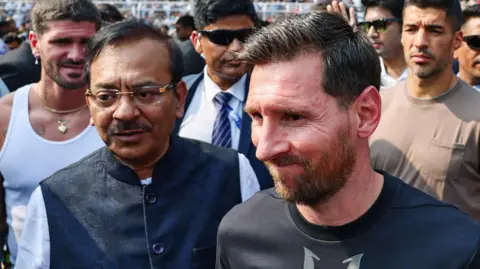
Lionel Messi’s India tour is now at teh center of a structural shift involving the commercialization of sport‑driven soft power in a rapidly urbanising youth market. The immediate implication is heightened political risk for state authorities that rely on high‑profile events to signal advancement, while commercial partners reassess crowd‑management and brand‑value calculations.
The Strategic Context
india’s demographic dividend – a population where over 65 % is under 35 – has intensified competition among state governments to capture youth attention through global cultural icons. Sport, especially football in football‑enthusiastic pockets such as West Bengal, has become a conduit for soft‑power projection and a catalyst for tourism‑linked revenue. Concurrently, the rise of discretionary spending among the middle class has created a market for premium experiences, prompting governments to partner with international celebrities to showcase “world‑class” infrastructure and attract foreign investment. The Kolkata episode reflects the convergence of these long‑term forces: a state‑led branding push, a global sports star seeking market expansion, and a consumer base whose expectations now exceed traditional event formats.
Core Analysis: Incentives & Constraints
Source Signals: The event was organized as part of Messi’s “GOAT tour” with stops in major Indian cities. Tickets sold for up to 12,000 rupees. Fans reported being blocked by officials and celebrities, leading to unrest, seat‑ripping, and projectile throwing. West Bengal Chief Minister Mamata Banerjee expressed shock and announced an enquiry, while Messi’s appearance lasted roughly 20 minutes before security removed him.
WTN Interpretation:
- State incentives: The West bengal government leveraged Messi’s brand to signal international relevance, boost tourism, and reinforce the ruling party’s image ahead of upcoming electoral cycles. The rapid erection of a 70‑ft statue underscores a “swift‑win” approach to visual propaganda.
- Commercial incentives: Messi’s management seeks to tap India’s expanding consumer market, secure sponsorships, and position Inter Miami as a global brand. High ticket prices reflect a strategy to monetize fan enthusiasm while testing price elasticity.
- Constraints on the state: Limited experience in managing mega‑celebrity crowds, reliance on security forces that also serve as political symbols, and the risk of public backlash when expectations are unmet. The presence of politicians and celebrities in the viewing area diluted the fan experience, exposing a coordination gap.
- constraints on the brand: Messi’s personal brand is sensitive to perceived disrespect; any incident that suggests mismanagement can affect future endorsement deals in the region.
WTN Strategic Insight
“When a global sports icon becomes a state‑level branding tool, the line between soft power and public order blurs - the fallout from a single mis‑step can reshape how emerging markets contract celebrity‑driven tourism.”
Future Outlook: Scenario Paths & Key Indicators
Baseline Path: State authorities incorporate professional event‑management firms, tighten ticket‑allocation protocols, and separate political entourages from fan zones. Subsequent tour stops in Hyderabad, Mumbai and New Delhi proceed without major incident, reinforcing confidence among sponsors and encouraging further sports‑related investment in Indian metros.
Risk Path: Repeated crowd‑control failures trigger widespread criticism, prompting opposition parties to weaponise the incidents in upcoming state elections.Sponsors reassess ROI, potentially withdrawing from future high‑profile events. A cascade of negative media could dampen consumer enthusiasm for premium sports experiences, slowing the growth of the niche market.
- Indicator 1: Ticket sales and pricing strategy for the next two tour stops (Hyderabad, Mumbai) – rapid sell‑outs at high price points would signal market resilience; sluggish sales would indicate consumer fatigue.
- Indicator 2: Official statements and policy adjustments from the West Bengal government regarding event security and public‑private coordination – the introduction of a dedicated sports‑event task force would suggest a corrective baseline, whereas continued ambiguity would heighten risk.
