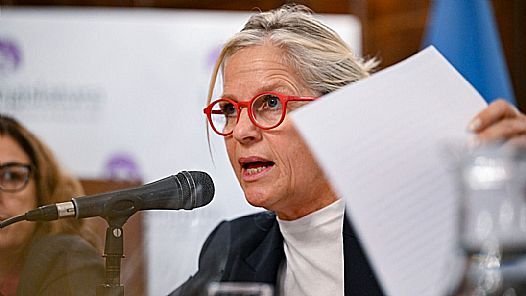
Mercedes Miguel presents 2027 education budget in Buenos Aires
Public education funding in Buenos Aires faces a severe contraction under a newly proposed 2027 fiscal plan that freezes nominal allocations while channeling a greater share of resources toward private institutions and lowering teacher salary adjustments well below actual inflation figures.
Education Minister Presents 2027 Budget with Frozen Funding
On October 15, Buenos Aires City Mercedes Miguel presented the 2027 budget to the City Legislature. Miguel defended the spending plan by asserting it focuses on student learning, innovation, and educational well-being. She highlighted what she termed a record investment in educational innovation and pedagogical improvement.
Despite these statements, financial details from the presentation reveal a budget that remains largely frozen compared to 2026 levels. Within the overall allocation, funding for the teacher training system decreases, while the proportion directed toward private education increases. Meanwhile, projected salary increases are pegged at an 18 percent inflation baseline, a figure critics argue fails to reflect real economic conditions.
Opposition Lawmakers Denounce Police Repression of Students
The legislative hearing drew sharp pushback from opposition lawmakers and education unions. During the proceedings, Deputy Amanda Martín of the Workers’ Party within the Left Front denounced the police repression suffered by tertiary students and educators from the Instituto Joaquín B. González and Normal 9 during a demonstration at Corrientes and Callao avenues. That police action resulted in the detention of a teacher and physical aggression directed at the lawmaker.
Martín criticized the administration’s reliance on declining birth rates as justification for closing classrooms, merging groups, and shutting down course registrations across the city. The lawmaker argued that these measures amount to disguised layoffs and an intentional downsizing of public educational offerings. Pedagogical reforms under the banner of “Secundaria Aprende” were similarly challenged as an academic hollowing-out designed to align teaching with a precarious labor market rather than providing comprehensive instruction.
Working Conditions and Student Support Deficits
Labor precarity emerged as another central friction point during the legislative debate. Teachers in socioeducational programs, including educators working within confinement contexts, face prolonged lack of job tenure. Restructuring under recent reforms has simultaneously triggered job losses and widespread wage-related debt among instructors.
Beyond classroom staffing, lawmakers addressed systemic health and infrastructure failures. The debate highlighted a mounting mental health crisis among students, marked by rising rates of self-harm and suicide alongside a shortage of professional guidance personnel in school orientation teams. Critics also pointed to ongoing delays in implementing the student transit fare subsidy for higher-level students, which has suffered setbacks lasting over a year.
When confronted with these criticisms during the legislative session, the education minister dismissed the objections by questioning the credentials of Martín, who serves as a recognized city teacher and union secretary for the Ademys labor organization. The exchange shows deep friction between municipal authorities and educational workers as the city moves to implement its 2027 fiscal strategy.
