
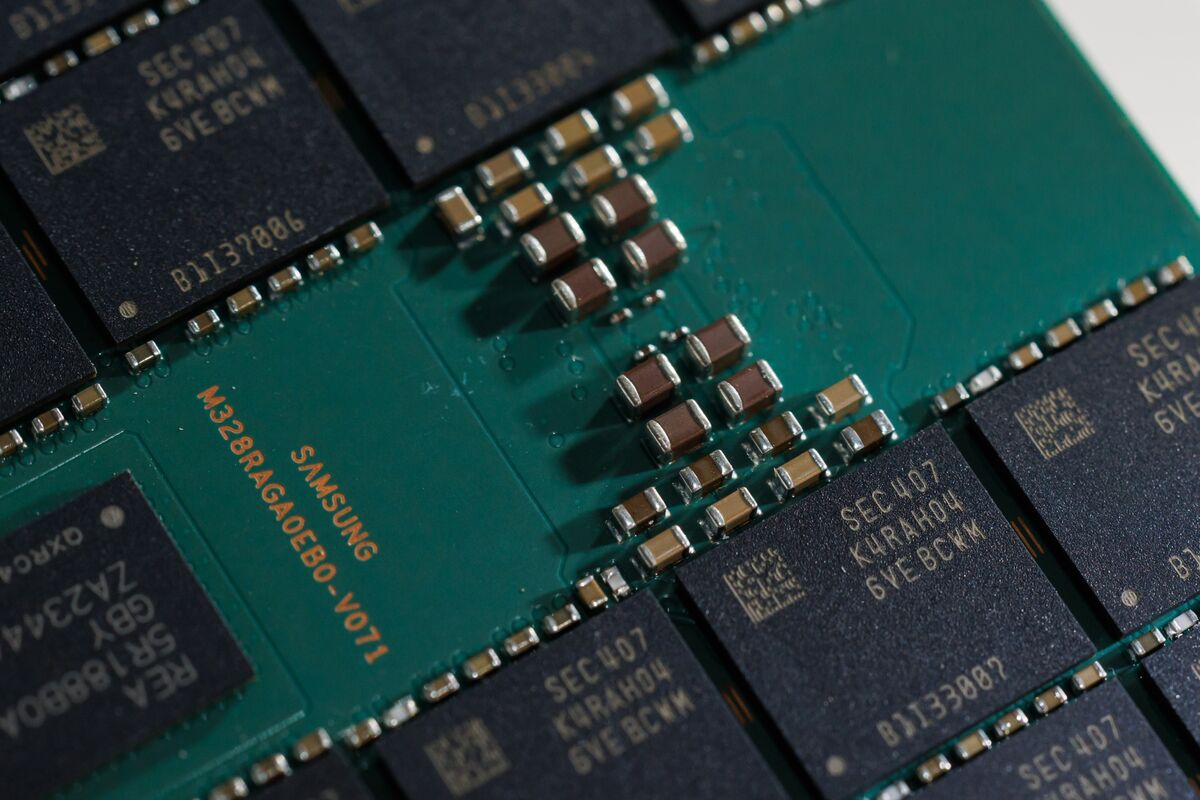
Memory Chip Stocks Slide After Google Reveals AI Storage Algorithm
Memory chip equities suffered a sharp correction Thursday as Google unveiled an algorithmic breakthrough drastically reducing AI storage requirements. Samsung, SK Hynix, and Micron led the decline, shedding over 5% as investors priced in a structural shift from hardware volume to software efficiency. The selloff signals a looming margin compression for memory manufacturers dependent on raw capacity expansion.
The market reaction wasn’t just a knee-jerk panic; it was a repricing of long-term capital expenditure models. When a hyperscaler like Alphabet demonstrates it can do more with less silicon, the entire supply chain trembles. This isn’t merely a trading session anomaly; it is a fundamental threat to the volume-based growth thesis that has propped up semiconductor valuations for the last three years. As hardware demand softens, mid-tier manufacturers are already quietly engaging corporate restructuring advisors to hedge against a potential inventory glut in the coming fiscal quarters.
The Efficiency Paradox: Why Google’s Code Crushed Hardware Valuations
Google’s research, detailed in a whitepaper released early Thursday, outlines a new compression architecture that optimizes data retrieval for Large Language Models (LLMs). The implication is stark: data centers may require significantly fewer high-bandwidth memory (HBM) modules to achieve the same computational throughput. For investors, this translates to a direct hit on total addressable market (TAM) projections.
According to the latest Alphabet Investor Relations disclosures, the company’s R&D spend on AI infrastructure has been ballooning. This breakthrough suggests a pivot from buying more chips to buying smarter code. The market hates uncertainty, but it hates margin erosion even more. If Google can replicate this efficiency across its cloud division, competitors like Microsoft and Amazon will be forced to follow suit, triggering an industry-wide reduction in hardware procurement.
“We are witnessing a decoupling of compute power from memory density. The firms that survive this cycle won’t be the ones with the biggest fabs, but the ones with the most agile supply chains capable of pivoting to specialized logic rather than commodity storage.” — Senior Portfolio Manager, Global Tech Fund
The numbers tell the story of a sector bracing for impact. Samsung Electronics and SK Hynix, which derive a massive portion of their operating income from the memory division, saw their valuations compress instantly. In the US, Micron Technology and Western Digital slid in sympathy, despite their heavy exposure to enterprise storage. The fear is that if AI training becomes less memory-intensive, the enterprise storage boom may have peaked earlier than anticipated.
Three Structural Shifts Reshaping the Semiconductor Landscape
This event is not an isolated volatility spike; it is a symptom of a maturing AI market. We are moving from the “build at all costs” phase to the “optimize for margin” phase. This transition forces a reevaluation of risk across the entire technology stack.
- Capex Contraction: Hyperscalers will likely delay or cancel orders for next-generation HBM3e and HBM4 modules. This creates an immediate inventory overhang for manufacturers who ramped production based on linear growth forecasts. Companies facing this exposure are increasingly turning to advanced inventory management firms to liquidate excess stock before depreciation hits the balance sheet.
- The Software Premium: Valuation multiples will shift from hardware manufacturers to software optimization layers. Investors will begin rewarding firms that can demonstrate lower cost-per-token in AI inference. This favors algorithmic efficiency over raw transistor count.
- Supply Chain Realignment: As demand for generic memory cools, the focus shifts to specialized packaging and interconnects. Manufacturers must retool lines quickly. This requires significant legal and logistical overhead, driving demand for international trade compliance specialists who can navigate the complex tariffs associated with shifting production lines between jurisdictions.
Margin Compression and the Q3 Outlook
The immediate fiscal problem here is clear: fixed costs remain high while revenue projections shrink. Semiconductor fabrication is capital intensive. Once a fab is built, the depreciation schedule runs regardless of utilization rates. If Google’s algorithm reduces the need for new memory by even 15%, that creates a massive hole in the projected EBITDA for memory pure-plays.
Looking at the Samsung Electronics Q4 Earnings Call transcript from earlier this year, management emphasized aggressive capacity expansion to meet AI demand. That strategy is now under siege. The market is punishing the lack of diversification. Firms that relied solely on the narrative of “AI needs infinite memory” are now exposed. Conversely, companies with strong logic divisions or proprietary IP in chip architecture may find a floor sooner.
Institutional money is rotating out of hardware and into the enablers of efficiency. We are seeing early signals of this in the pre-market movement of semiconductor equipment makers, who are also taking a hit on the expectation of lower tool orders. The ripple effect is widening.
The Path Forward: Adaptation or Obsolescence
For the remainder of 2026, volatility will be the baseline. The “easy money” made on simple capacity expansion is gone. The next leg of growth belongs to the innovators who can integrate memory and logic more tightly, or the software firms that can squeeze more performance out of existing silicon. Investors need to scrutinize balance sheets for exposure to commodity DRAM and NAND flash.
Corporate boards must act decisively. This represents the moment to audit R&D pipelines and ensure capital is allocated to projects with defensible moats, not just volume growth. For businesses navigating this turbulence, the difference between survival and obsolescence often lies in strategic counsel. Executives should be consulting with top-tier corporate strategy consultants to stress-test their supply chains against a lower-volume, higher-efficiency future.
The chip selloff is a warning shot. It tells us that in the AI era, efficiency is the new currency. Hardware is becoming a commodity; intelligence is becoming the product. As we head into the next earnings season, expect guidance to be slashed and narratives to shift. Stay liquid, stay diversified, and rely on vetted partners to navigate the turbulence. For those seeking authoritative analysis on market-moving events and vetted B2B solutions to mitigate these risks, the World Today News Directory remains your essential resource for connecting with the firms that solve tomorrow’s problems today.