
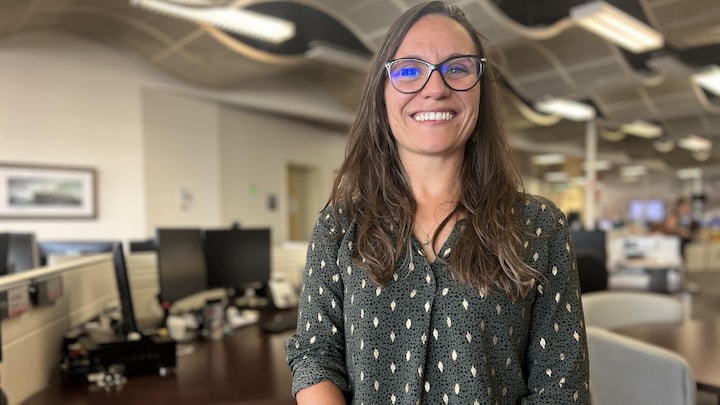
UQAR Researcher Joins International Team Studying 2011 Japan Megathrust Earthquake
TOHOKU, JAPAN – A postdoctoral researcher from the university of Quebec Institute of Sea Sciences (UQAR) in Rimouski, Morgane Brunet, recently returned from a four-month oceanic mission to Japan, contributing to ongoing research into the devastating 2011 Tōhoku earthquake and tsunami. Brunet, a specialist in megasseisms, joined an international team aboard the research vessel Chikyū to investigate the seismic event that registered a magnitude of 9.0 to 9.1.The 2011 earthquake triggered a massive tsunami, resulting in thousands of fatalities and the Fukushima Daiichi nuclear disaster. Understanding the forces behind such a powerful event is crucial for assessing and mitigating future seismic risks. “The mission was aimed at better establishing the seismic risk and why the event had such a magnitude,” Brunet explained.
Researchers deployed an observatory within the Tōhoku flaw – a geological fracture zone – to continuously monitor seismic activity in the region. Brunet is currently analyzing the data collected during the expedition, a process she describes as central to her work. Her findings, along with those of her colleagues, will be published in the scientific journal The conversation.
Brunet’s participation highlights UQAR’s role in international efforts to understand and prepare for large-scale seismic events. The research builds upon years of study into megathrust earthquakes – those generated at subduction zones where one tectonic plate slides beneath another – and aims to refine models predicting their behavior.
