
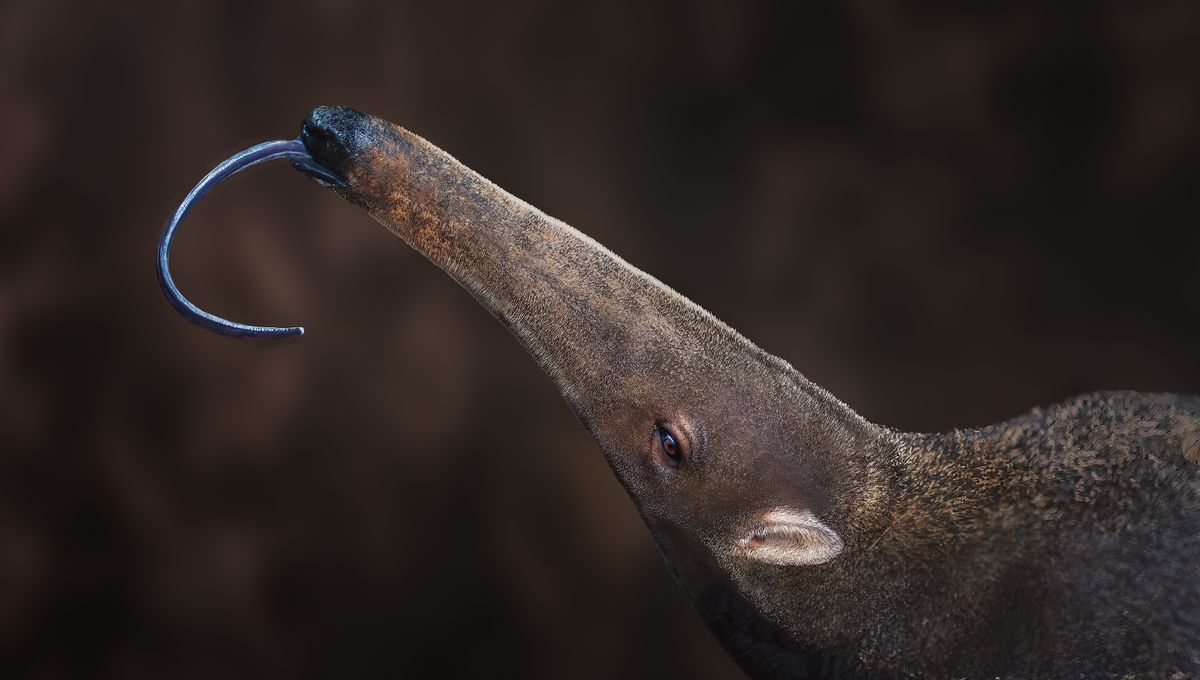
Mammals Evolved Ant-Eating 12 Times After Dinosaur Extinction
Convergent Evolution Fueled by Insect Abundance
New research reveals a remarkable evolutionary trend: mammals independently developed specialized diets for ants and termites a staggering 12 times since the demise of the dinosaurs. This widespread adaptation, known as myrmecophagy, highlights how pivotal environmental shifts can reshape the course of life.
A Feast After the Fall
Following the K-Pg extinction event approximately 66 million years ago, which wiped out non-avian dinosaurs, the ecological landscape transformed dramatically. This allowed ant and termite colonies to flourish globally, presenting a rich food source that spurred this convergent evolutionary path among diverse mammal lineages.
Philip Barden, an associate professor of biology at the New Jersey Institute of Technology, emphasized the significance of this discovery.
“There’s not been an investigation into how this dramatic diet evolved across all known mammal species until now. This work gives us the first real roadmap, and what really stands out is just how powerful a selective force ants and termites have been over the last 50 million years – shaping environments and literally changing the face of entire species.”
—Philip Barden, Associate Professor of Biology
Tracing the Evolutionary Paths
To map this evolutionary journey, Barden and his team meticulously compiled dietary information for nearly 4,100 mammal species. They drew from a century of natural history records, conservation reports, and scientific descriptions, categorizing species based on their reliance on ants and termites.
The study found that while over 200 mammal species consume these social insects, only about 20 have become obligate myrmecophages, meaning ants and termites are their sole food source. These specialists often possess unique anatomical features to access and consume their tiny prey.
Insects’ Rise, Mammals’ Adaptation
The research also examined the historical abundance of ants and termites, tracing back to the Cretaceous period. Initially, these social insects constituted less than one percent of all insects. By the Miocene epoch, around 23 million years ago, they represented a significant 35 percent of insect specimens, a surge linked to the rise of flowering plants and warmer global temperatures.
“It’s not clear exactly why ants and termites both took off around the same time,” Barden noted. “Some work has implicated the rise of flowering plants, along with some of the planet’s warmest temperatures during the Paleocene-Eocene Thermal Maximum about 55 million years ago. What is clear is that their sheer biomass set off a cascade of evolutionary responses across plants and animals.”
This dietary specialization appeared at least once in every major mammal group: placentals, monotremes, and marsupials. The transition most commonly originated from insectivorous or carnivorous ancestors. Intriguingly, even families like those of dogs and bears, typically associated with larger prey, showed predispositions to adopting an ant-and-termite-heavy diet.
A Risky Specialization?
The study revealed that once mammals commit to myrmecophagy, they rarely revert to more conventional diets. This specialization, while offering an advantage as long as social insects remain dominant, could also represent an evolutionary cul-de-sac. However, the researchers suggest that species adept at consuming these insects might even benefit from climate change, as it appears to favor the expansion of insect colonies.
In fact, the proliferation of invasive species like fire ants is a growing concern. For instance, in the United States, fire ants have been estimated to inflict over $5 billion annually in damages and control costs, affecting agriculture and public health (U.S. Forest Service, 2023).
