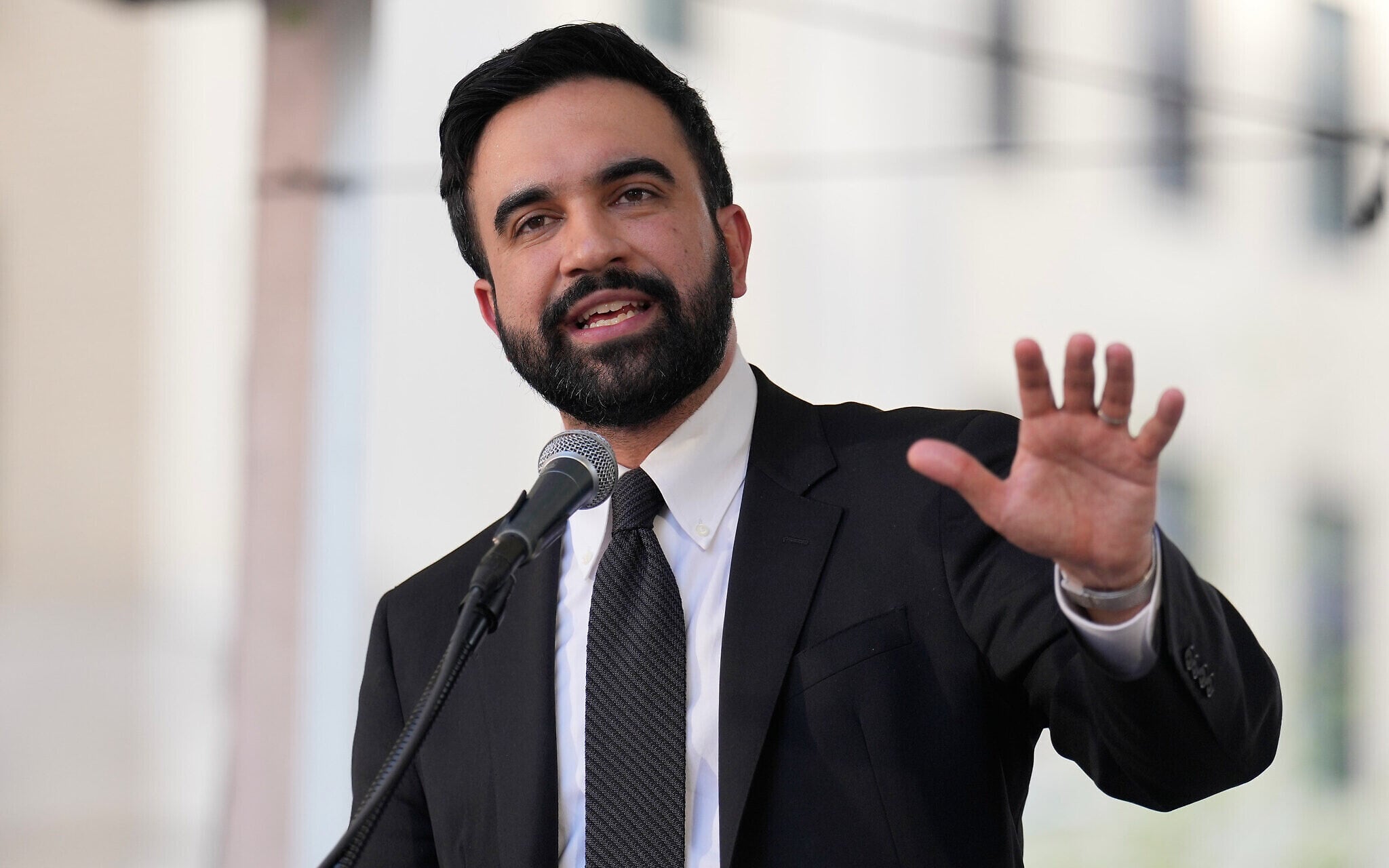
Mamdani vetoes school buffer zone bill amid rising tensions with Jewish groups and NYC Council
On April 24, 2026, New York City Mayor Zohran Kwame Mamdani vetoed a bipartisan bill establishing school buffer zones around protests, a move leading Jewish organizations condemned as a ‘profound failure’ to protect students from antisemitic harassment, reigniting tensions between the mayor’s office and the City Council over public safety, free speech, and the growing challenge of safeguarding educational environments amid rising ideological conflicts in urban centers nationwide.
The Veto That Split a Coalition
Mayor Mamdani’s rejection of Int. 1-B and Int. 175-B — bills designed to create 1,000-foot buffer zones around K-12 schools during demonstrations — came despite broad support from educators, parent-teacher associations, and civil rights groups who argued the legislation was essential to prevent intimidation and disruption of learning. The bills, sponsored by Council Members Lynn Schulman and Julie Won, had passed the City Council with a veto-proof majority of 42-7, reflecting rare bipartisan alignment in a chamber often divided along ideological lines. Mamdani cited concerns over potential infringements on First Amendment rights and argued existing laws, including harassment statutes and police discretion, were sufficient to address threats without restricting lawful assembly near educational institutions.
His veto, delivered just hours before the Council’s scheduled override vote, effectively killed the legislation for the session, prompting immediate backlash from advocacy groups who had spent over 18 months negotiating the compromise language. The Jewish Community Relations Council of New York (JCRC-NY) and the Anti-Defamation League (ADL) New York issued joint statements calling the veto ‘a profound failure of leadership’ that leaves students vulnerable to targeted harassment during politically charged demonstrations.
Historical Context: From Skokie to Sidney Hillman Plaza
The debate over buffer zones near sensitive locations is not new in American jurisprudence. In Madsen v. Women’s Health Center (1994), the Supreme Court upheld fixed buffer zones around abortion clinics as constitutional time, place, and manner restrictions, establishing a legal precedent later applied to funerals and religious institutions. However, efforts to extend similar protections to schools have faced steeper legal scrutiny, with courts often wary of overbroad restrictions on public forums.
In New York, the issue gained urgency following a series of incidents in 2024-2025 where pro-Palestinian and far-right demonstrators clashed outside schools in Brooklyn, Queens, and the Bronx, including a widely reported episode at PS 261 in Boerum Hill where students reported being followed and subjected to antisemitic slurs during a school dismissal. Though no arrests were made, the NYPD’s Hate Crime Task Force documented a 34% increase in bias-related incidents near educational facilities between 2023 and 2025, according to official NYPD data.
Geolocal Impact: How Buffer Zones Affect Municipal Operations
Had the bills passed, the buffer zone policy would have directly affected patrol protocols for the NYPD’s School Safety Division and required coordination with the Department of Education’s Office of Safety and Youth Development. Municipal lawyers warned that enforcement could strain already limited resources, particularly during large-scale demonstrations that frequently originate in Union Square or Washington Square Park and march past dozens of schools along routes like Fifth Avenue or Flatbush Avenue.
Beyond law enforcement, the veto has implications for urban planning and commercial activity. School buffer zones, if implemented, could influence foot traffic patterns for small businesses near educational institutions — particularly in densely populated districts like District 15 in Brooklyn or District 3 in Manhattan — where cafes, bookstores, and after-school tutoring centers rely on student and parent patronage. Conversely, some business improvement districts have expressed concern that overly restrictive zones could deter lawful protests that sometimes drive temporary economic activity.
“We’re not asking to silence dissent. We’re asking to protect children from being targeted on their way to learn. When a fifth-grader hears ‘Head back to Gaza’ shouted at them by an adult in a mask, that’s not free speech — it’s intimidation. And no child should have to run a gauntlet just to get to class.”
The Directory Bridge: Who Steps In When Public Policy Falters
When municipal action stalls on protecting vulnerable populations, the burden often shifts to specialized service providers who operate in the gap between policy and lived reality. In this case, families and school administrators seeking immediate, actionable responses to harassment incidents are increasingly turning to education rights attorneys who specialize in Title VI civil rights violations and can pursue remedies through federal complaints or litigation when local authorities decline to act.

Simultaneously, crisis intervention and trauma support counselors are seeing heightened demand from schools in affected districts, particularly those offering culturally competent care for Jewish, Muslim, and Arab students navigating identity-based harassment. These professionals help institutions develop responsive protocols that balance safety with inclusivity — a require that grows more acute as legislative solutions remain elusive.
Finally, school safety consultants with expertise in threat assessment and de-escalation training are being engaged by parent-teacher associations eager to implement preventive measures independent of citywide mandates. Their work often includes designing age-appropriate safety drills, training staff in bias recognition, and coordinating with private security firms during high-tension periods — services that, while not a substitute for public policy, offer critical stopgap protection.
Beyond the Veto: A National Ripple Effect
Mamdani’s decision has drawn attention far beyond New York’s five boroughs. Similar buffer zone proposals are under consideration in Los Angeles, Chicago, and Boston, where rising campus tensions have prompted municipal leaders to explore localized protections. Legal scholars warn that a patchwork of municipal approaches — some restrictive, some permissive — could create confusion for demonstrators and educators alike, potentially leading to inconsistent enforcement and legal challenges under the First Amendment.
At the same time, the veto underscores a broader dilemma facing urban leaders: how to uphold constitutional freedoms while fulfilling the duty to protect minors in publicly accessible spaces. As one constitutional law professor at Columbia University noted in a recent interview, ‘The tension isn’t between safety and speech — it’s between competing conceptions of what safety requires in a pluralistic democracy.’ Until that question is resolved at the state or federal level, cities like New York will continue to rely on a layered defense of legal advocacy, community support, and professional services to fill the void when legislative consensus fractures.
The true test of leadership, however, may not lie in vetoing bills, but in offering a better alternative. Until then, the directory of verified professionals who help communities navigate these fractures remains not just a resource — it is a necessity.