
LGBTQ+ Women Face Disparities in Healthcare Access and Treatment
Table of Contents
women experience significant disparities in healthcare, including unfair treatment, mental health challenges, and intimate partner violence.">
LGBTQ+ women in the United States face significant disparities in healthcare access and treatment compared to their non-LGBTQ+ counterparts, according to a recent study. The KFF Women’s Health Survey, conducted between May and June 2024, highlights these disparities, revealing higher rates of unfair treatment by healthcare providers, mental health challenges, and experiences with intimate partner violence among LGBTQ+ women aged 18-49. These findings underscore the need for improved healthcare practices and policies to address the unique needs of this population. According to the CDC, LGBTQ+ individuals often face barriers to healthcare, including discrimination and lack of provider knowledge, which contribute to these disparities.
Key disparities in Healthcare for LGBTQ+ Women
The KFF Women’s Health survey paints a concerning picture of the healthcare experiences of LGBTQ+ women. Here are some of the key findings:
- Disparities in Preventative Care: While HIV and STI testing rates are similar,fewer LGBTQ+ women receive Pap smears compared to non-LGBTQ+ women.
- Higher Rates of Disability: One in five LGBTQ+ women report having a disability, twice the rate of non-LGBTQ+ women.
- Unfair Treatment: A significant percentage (43%) of LGBTQ+ women report experiencing unfair treatment or disrespect from healthcare providers,citing reasons such as weight,gender,and age.
- Mental health Challenges: Half of LGBTQ+ women describe their mental health as fair or poor, compared to a quarter of non-LGBTQ+ women.
- Intimate Partner Violence: LGBTQ+ women report experiencing intimate partner violence at almost double the rate of non-LGBTQ+ women.
Did You No? According to a 2020 study by the Movement Advancement Project,31% of LGBTQ+ adults reported experiencing discrimination in healthcare settings.
Specific Healthcare Experiences
The survey delves into specific experiences that contribute to the overall picture of healthcare disparities. Such as, a larger share of LGBTQ+ women reported that healthcare providers ignored their requests or questions, made assumptions about them without asking, and didn’t believe they were telling the truth. These negative interactions can lead to mistrust and reluctance to seek necessary medical care.
Preventative Care and Access
while similar percentages of LGBTQ+ and non-LGBTQ+ women have received HIV and STI tests in the past two years, a smaller percentage of LGBTQ+ women have received Pap smears for cervical cancer screening. Additionally,15% of reproductive-age LGBTQ+ women report never having seen a doctor or nurse for an OBGYN exam,compared to 10% of non-LGBTQ+ women.
Disability and Mental Health
A significant portion of LGBTQ+ women report having a disability, with mental health conditions being the most prevalent. This is considerably higher than the rate among non-LGBTQ+ women. Furthermore, half of LGBTQ+ women describe their mental health as fair or poor, and many report needing mental health services but not receiving them.
Intimate Partner Violence
The survey reveals a concerningly high rate of intimate partner violence among LGBTQ+ women. Over one in three report experiencing IPV in the past five years, compared to 20% of non-LGBTQ+ women. This includes emotional, physical, and sexual abuse.
Contraception and Pregnancy
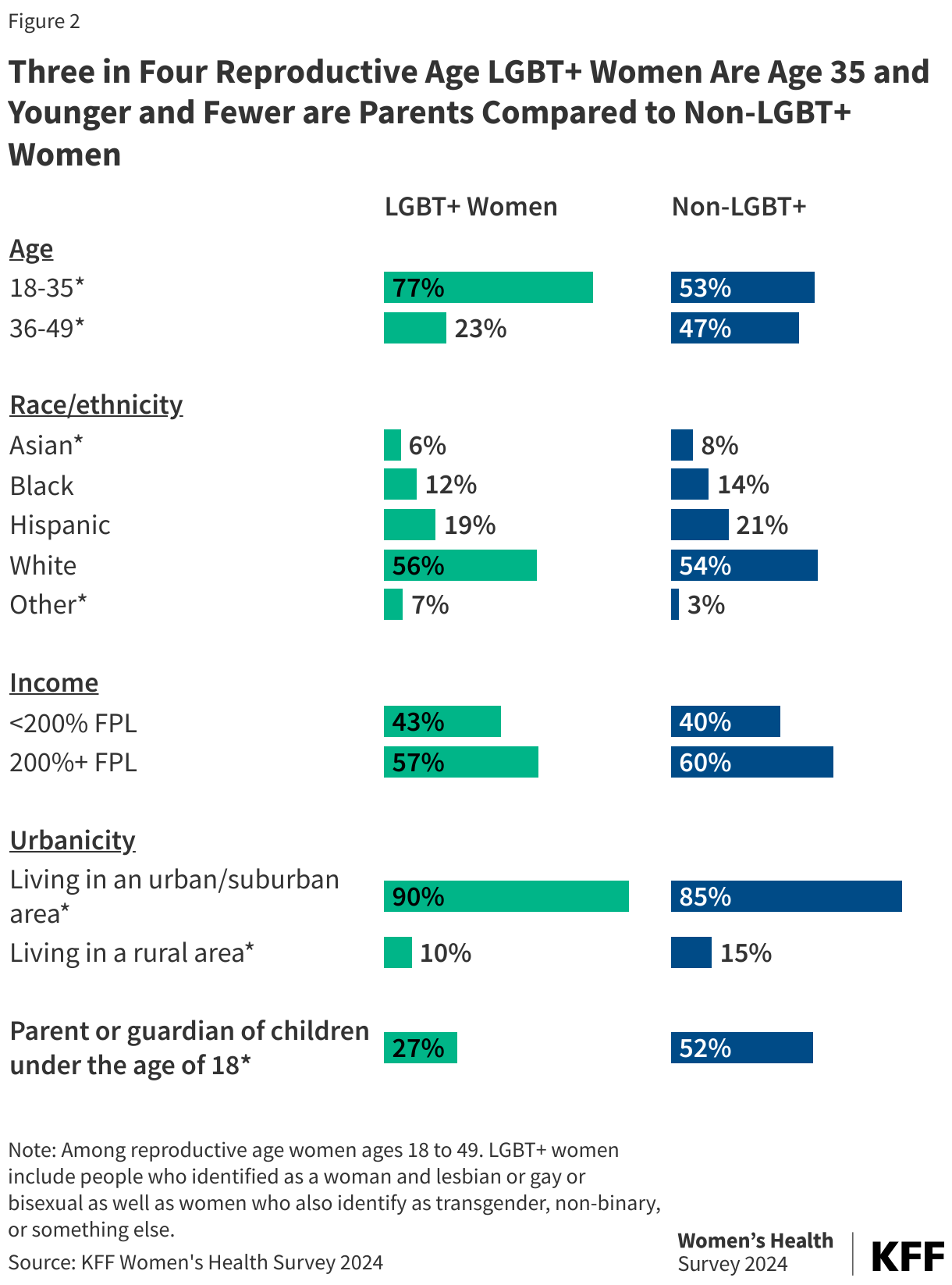
Contraception use is similar between LGBTQ+ and non-LGBTQ+ women. However, a smaller share of LGBTQ+ women report being pregnant or trying to conceive. Interestingly, a higher percentage of LGBTQ+ women use contraception for reasons other than preventing pregnancy.
Pro Tip: Healthcare providers can improve their interactions with LGBTQ+ patients by using inclusive language, asking about pronouns, and creating a welcoming environment.
Detailed Comparison of Healthcare Experiences
| Healthcare Experience | LGBTQ+ Women | Non-LGBTQ+ Women |
|---|---|---|
| Ever felt treated unfairly by a healthcare provider | 43% | 24% |
| mental health described as fair or poor | 50% | 27% |
| experienced intimate partner violence in the past 5 years | 33% | 20% |
| Never seen a doctor or nurse for an OBGYN exam | 15% | 10% |
These statistics highlight the urgent need for healthcare providers to address the specific needs and challenges faced by LGBTQ+ women.
What steps can healthcare providers take to create a more inclusive and supportive environment for LGBTQ+ patients? How can communities better support the mental health and well-being of LGBTQ+ women?
Understanding the Broader Context
The disparities highlighted in the KFF Women’s Health survey are not isolated incidents but rather part of a larger pattern of healthcare inequities faced by the LGBTQ+ community. These inequities are often rooted in systemic discrimination, lack of cultural competency among healthcare providers, and barriers to accessing insurance coverage. Efforts to address these disparities must include policy changes, provider training, and community-based support programs.
According to the Human Rights Campaign,LGBTQ+ individuals often face discrimination in healthcare settings,leading to poorer health outcomes.
Frequently Asked Questions
- Why do LGBTQ+ women face healthcare disparities?
- LGBTQ+ women face healthcare disparities due to factors such as discrimination, lack of provider knowledge, and barriers to accessing insurance coverage.
- What are some common experiences of unfair treatment reported by LGBTQ+ women in healthcare settings?
- Common experiences include being ignored by healthcare providers,having assumptions made about them without asking,and not being believed when reporting symptoms.
- How does intimate partner violence affect LGBTQ+ women?
- LGBTQ+ women experience intimate partner violence at higher rates than non-LGBTQ+ women, leading to physical, emotional, and psychological harm.
- What can healthcare providers do to improve care for LGBTQ+ women?
- Healthcare providers can use inclusive language, ask about pronouns, create a welcoming environment, and receive training on LGBTQ+ health issues.
- What resources are available to support the mental health of LGBTQ+ women?
- Resources include LGBTQ+ community centers, mental health professionals specializing in LGBTQ+ issues, and online support groups.
- How can policy changes address healthcare disparities for LGBTQ+ women?
- Policy changes can include non-discrimination laws, expanded insurance coverage, and funding for LGBTQ+ health programs.
Disclaimer: This article provides facts about healthcare disparities and is not intended to provide medical advice.Consult with a healthcare professional for personalized guidance.
Share this article to raise awareness about the healthcare challenges faced by LGBTQ+ women. What other questions do you have about LGBTQ+ healthcare?
