
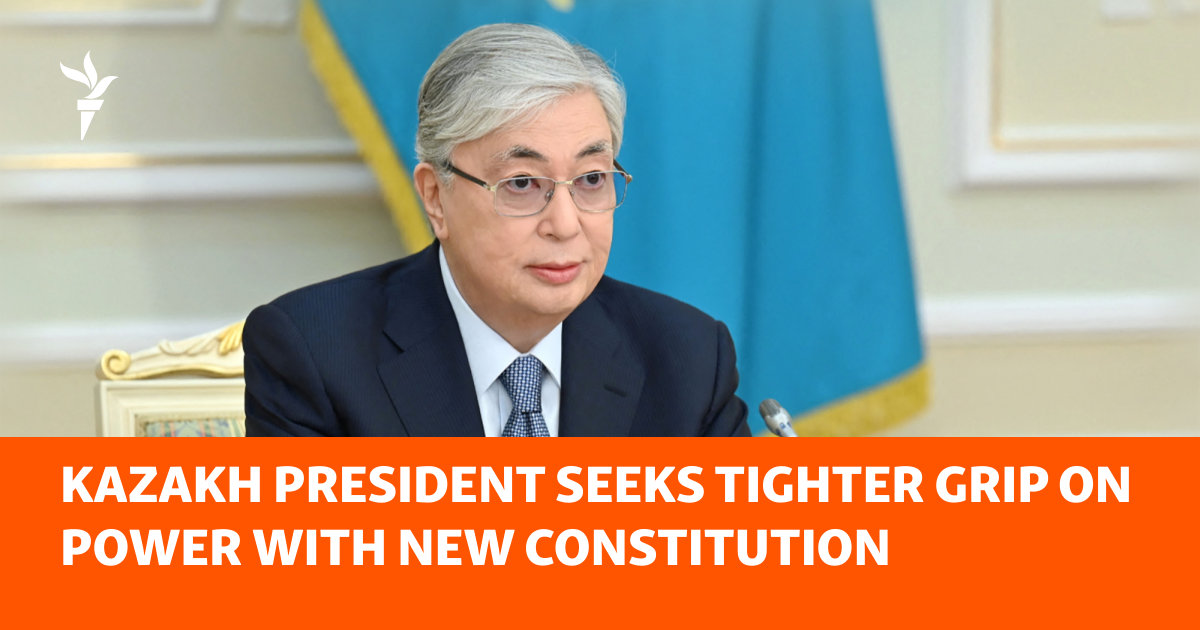
Kazakhstan will hold a nationwide referendum on a revised constitution on March 15, a move President Qasym-Zhomart Toqaev has framed as a reflection of the people’s will, but which critics contend is designed to consolidate his power.
Toqaev recently described the draft as “a new constitution,” emphasizing the need for changes that align with citizen expectations. The proposed changes, unveiled on January 31, follow a period of consultation involving experts and a review of over 10,000 citizen proposals submitted through online platforms, alongside public hearings.
Still, veteran legal expert Maidan Suleimenov dismissed the consultation process as a superficial exercise. “What is presented as national discussion is, in reality, a performance. Participation is symbolic,” he stated, arguing the draft constitution prioritizes the interests of those in power rather than genuinely representing the public’s desires.
Concerns over the process have been compounded by a crackdown on dissent. Activist Ermek Narymbay was detained on February 4 and held for two months following Facebook posts critical of the draft constitution. Other activists and journalists have reportedly received police summons, warnings, and requests to remove posts deemed to contain “false information.”
The draft constitution proposes a significant restructuring of Kazakhstan’s political system. It abolishes the current bicameral parliament in favor of a single-chamber legislature elected through party lists, a change that could disadvantage smaller opposition parties. A newly established People’s Council, comprised entirely of presidential appointees, would gain the authority to propose legislation.
The president’s powers are too set to expand. The draft allows for the appointment of a vice president, establishing a clear line of executive succession. It grants the president the power to issue decrees with the force of law should parliament be dissolved. While judicial procedures are being formalized, critics argue that executive control over appointments will prevent the judiciary from achieving true independence.
Legislator Yelnur Beisembayev has asserted that the reforms enjoy widespread support, claiming “Kazakhs support 98 percent of the provisions.” However, activists dispute this claim, citing the limited scope and representation within the consultation process.
Article 9 of the draft reaffirms Kazakh as the state language while maintaining Russian’s official status within state bodies. A minor amendment, made on February 10 by the Constitutional Commission, altered the phrasing regarding Russian’s status from “on equal footing” with Kazakh to “along with” Kazakh. Authorities have characterized this as a purely editorial adjustment to ensure consistency between the Kazakh and Russian texts.
However, the change has ignited debate, particularly regarding national identity and the legacy of Russian and Soviet influence. Some commentators suggest the altered wording subtly diminishes Russian’s implied status. Activists argue that even seemingly minor changes reflect broader questions about the cultural and political weight of each language, with Kazakh remaining less prevalent in urban centers, government institutions, and everyday life.
Civic campaigner Serik Aliuly contends that the ambiguous language hinders the full implementation of Kazakh in public life. “Citizens have to defend their right to access services in the state language. Removing or clarifying the ‘official language’ norm for Russian is a demand of our time,” he said.
Political scientist Dos Koshim and lawyer Meirman Kalmakhanuly echoed this sentiment, stating the wording reinforces perceptions of equality between Russian and Kazakh, hindering efforts to promote the leverage of Kazakh in official settings. Activist Zharkyn Kurentaev was detained prior to a planned press conference on the subject, highlighting the risks associated with public discussion of the constitution.
Supporters of maintaining Russian’s status emphasize the need for pragmatism, arguing it preserves social cohesion and avoids potential tensions with Russia, which has historically cited the protection of Russian speakers abroad as justification for intervention in neighboring countries. Moscow has pointed to Ukrainian language legislation as evidence of alleged “genocide” against Russian speakers in Ukraine, a claim used to justify its military actions.
Ermurat Bapi, a Kazakh lawmaker, cautioned against taking a confrontational approach to the language issue. “It is wiser for the majority to embrace their language with careful respect rather than turning it into a weapon of conflict,” he stated. Ethnic Russians comprise approximately 15 percent of Kazakhstan’s population.
Authorities appear cognizant of the potential for domestic unrest and a negative reaction from Moscow should Russian’s constitutional status be altered. The intensity of the debate underscores the complex relationship between language, identity, politics, and geopolitics within Kazakhstan.
